Every year, we go through this incredibly fun, sometimes maddening, exercise of trying to pick the 10 technologies that are going to define our future. It’s a huge debate, full of passionate arguments and a whole lot of coffee. We try to pinpoint the things that will truly change the way we live and work.
But here’s a little secret: the "reject pile" is often just as fascinating as the final list. These are the ideas that are right there on the edge, the ones that spark the most intense discussions. They might be a year or two too early, or maybe they’re facing one big hurdle they haven’t cleared yet.
So, before our big 2026 list comes out on January 12th, I wanted to give you a little peek behind the curtain. Let’s talk about four technologies that we seriously considered but ultimately didn't make the final cut. Think of it as a window into how we separate the hype from what's really about to happen.
The Tech That’s Almost There
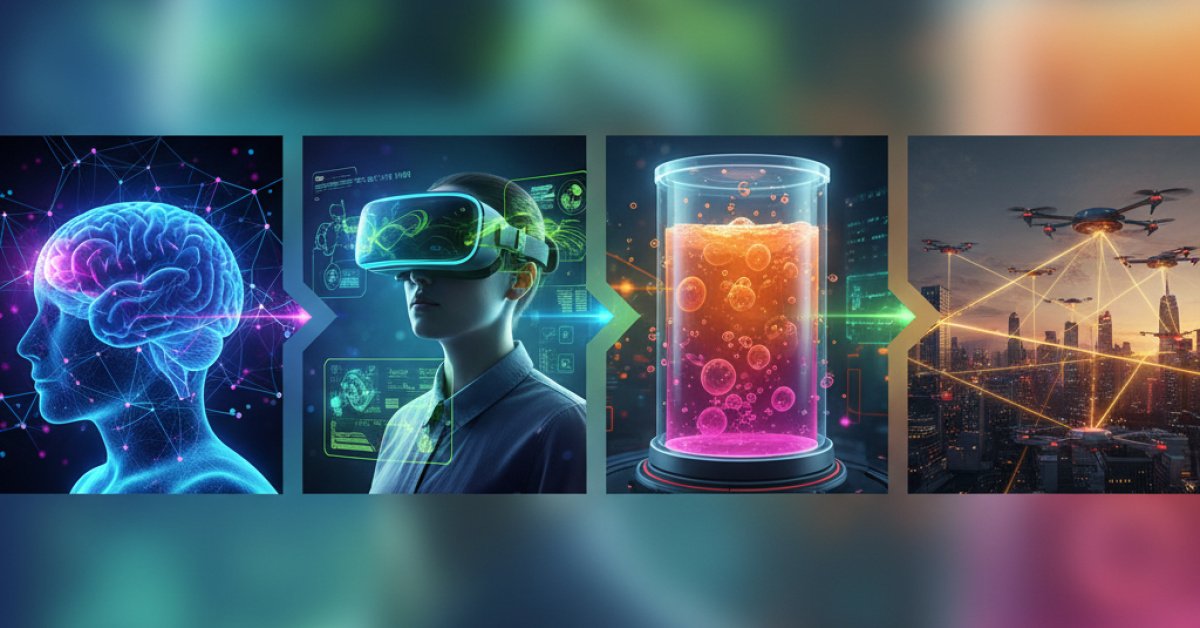
These four were all contenders, and honestly, they're all worth keeping a close eye on.
- Lab-grown wood: Imagine being able to "grow" a wooden table in a lab, without ever cutting down a tree. Researchers at MIT are literally culturing plant cells to create wood-like structures in a lab. It’s an amazing idea for sustainability, but it’s still very early days. We just don't know if it can scale up to replace the timber industry just yet. It's one to watch, for sure, but not quite a 2026 breakthrough.
- Super-efficient solar cells: We all know solar is huge, but what if we could make it drastically better? New cells using materials called perovskites are breaking efficiency records in the lab. The problem? They degrade pretty quickly out in the real world. Until they can last for a couple of decades on a rooftop, they’re not quite ready for prime time.
- AI for protein design: AI is already changing how we discover drugs, but designing entirely new proteins from scratch is the next frontier. This could lead to new medicines, new materials, you name it. We’re seeing incredible progress, but the tech is still largely in the research phase. It’s coming, but it’s not a "this year" thing.
- Better geothermal energy: Tapping into the Earth’s heat for clean energy is a brilliant concept. The challenge has always been drilling deep enough, cheaply enough. New drilling techniques are making it more plausible, but the massive upfront cost and complexity mean it’s not taking over the energy world in the next 12 months.
Thinking about these future-facing ideas is exciting, but let's be real—the present is where all the action (and chaos) is happening. And this week has been a wild one.
So, What’s Actually Going On With AI? It’s… Messy.
It feels like we can't go a day without hearing about AI, but the reality on the ground is getting complicated. It's not all sleek demos and world-changing promises.
For one, the internet is getting filled with what people are calling "AI slop." If you spend any time on Reddit, you've probably seen it. Moderators are getting exhausted trying to fight off a rising tide of nonsensical, AI-generated posts and comments that are just gumming up the works. It’s making some of our favorite online communities genuinely harder to enjoy.
And it’s not just social media. Even the scientific community is having a tough time. A recent piece in Nature highlighted how scientists have deeply mixed feelings about AI tools. Sure, they can boost productivity, but there's a growing worry about relying on them too much. Some computer science conferences are already seeing a decline in the quality of papers because of "AI slop," which is a scary thought. It’s one thing for a Reddit thread to be nonsense, but another entirely when it's scientific research.
This is all feeding into a bigger conversation about how AI is "enshittifying" the way we write. It’s sanding off the interesting, human edges of our language and replacing it with smooth, generic, and ultimately soulless text. The scariest part? A lot of people don’t even notice it’s happening.
Big Tech, Big Fines, and Big Headaches
Away from the world of algorithms, the human drama of the tech industry is in full swing.
You might have seen the massive news that Netflix is reportedly buying Warner Bros for a staggering $83 billion. If this gets approved, it would be one of the biggest mergers in Hollywood history, basically reshaping the streaming world as we know it. Naturally, it’s already raising eyebrows, with figures like Trump pointing out that Netflix is already a giant.
Meanwhile, over in Europe, X (the platform formerly known as Twitter) just got slapped with a $140 million fine from the EU. The charge? Failing to comply with the new Digital Services Act. In a move that surprised absolutely no one, Elon Musk’s response was… well, it was very Elon. He called for the EU to be abolished and, to really drive the point home, X apparently deleted the European Commission’s account. You can't make this stuff up.
And it's not just the giants. Governments are getting more involved, too. Australia is about to ban anyone under 16 from using social media. The law is set to kick in any day now, and as you can imagine, teens are already scrambling to find ways around it.
How Tech is Shaping Our Bodies and Our Planet
It’s easy to get lost in the corporate drama, but technology’s impact on our physical world is more important than ever.
Climate change is hitting hard, and a new report shows that critical risks are growing across the Arab region, with drought being the most immediate, devastating problem. It’s a stark reminder of what’s at stake. This connects to some fascinating research I was reading about how our bodies react to extreme temperatures. Scientists are trying to figure out the precise point when heat and cold go from just being uncomfortable to being deadly. It’s sobering stuff, but it’s essential work for helping us survive in a warming world.
On a more hopeful note, there are people using tech to fight back. Take cargo shipping. It’s a massive polluter, responsible for about 3% of the world's greenhouse-gas emissions. In the Marshall Islands, a nation on the front lines of rising sea levels, they’re exploring a surprisingly old-school solution: wind. By outfitting massive cargo ships with high-tech sails, they’re looking to decarbonize one of the world’s dirtiest industries. It’s a beautiful blend of ancient wisdom and modern engineering.
A Quick Peek Inside the Mind of a Tech CEO
Ever wonder what it’s like to be at the very top? Stephen Witt, who wrote a book on Nvidia’s rise, recently shared a glimpse into the mind of its founder, Jensen Huang.
“It’s hard to be Jensen day to day. It’s almost nightmarish. He’s constantly paranoid about competition. He’s constantly paranoid about people taking Nvidia down.”
It's a revealing quote, isn't it? A reminder that even at the pinnacle of success, the pressure is immense. And on a slightly funnier note, it seems some of that pressure manifests in… awkwardness. A recent report noted that more tech founders are taking etiquette lessons. The goal? To help them get better at "pretending to be normal." I'll just leave that one there for you to ponder.
Okay, Let's End on a Lighter Note
After all that, you might be tempted to agree with the premise of a recent New Yorker article: "Are we getting stupider?" It can certainly feel that way sometimes. But the good news is, there’s very little solid evidence to support it. So, let's take a deep breath.
We can still have nice things. It’s important to remember that. Here are a few little bits of fun and comfort I stumbled upon this week:
- Turns out, an air fryer can make an absolutely epic grilled cheese sandwich. I’m definitely listening.
- I’m with the author of this piece: AI does not get to ruin the em dash for the rest of us. It’s a hill I’m willing to die on.
- If you need a little visual joy, check out the art of Daniel Clarke. It’s just bursting with life and color.
It’s a wild world out there in tech. It’s messy, inspiring, scary, and hilarious all at once. But figuring it all out, one breakthrough (or almost-breakthrough) at a time, is what makes it so much fun.