It’s been one of those weeks where you look at the news and just think, "Wow, reality is getting weird." One minute you’re reading about a journalist who studies conspiracy theories, and the next, he’s living inside one. Then you blink, and someone is telling you that a brainless yellow blob might be the key to fixing our traffic jams.
Honestly, keeping up with the world of tech and AI can feel like trying to drink from a firehose. So, let's just slow down for a minute. I’ve sifted through the noise to pull out the stories that are genuinely fascinating, a little scary, and in one case, just wonderfully strange.
Let’s get into it.
What Happens When You Become the Story?
Imagine you’ve spent your entire career—a full decade—studying something from the outside. For journalist Mike Rothschild, that something is the dark, tangled world of conspiracy theories and online disinformation. He’s the guy who dives deep into things like QAnon, writes books about it, and even testifies before Congress. He knows this stuff inside and out.
It’s one thing to be an expert on hurricanes, watching them form on a satellite map. It’s another thing entirely to have one tear the roof off your own house.
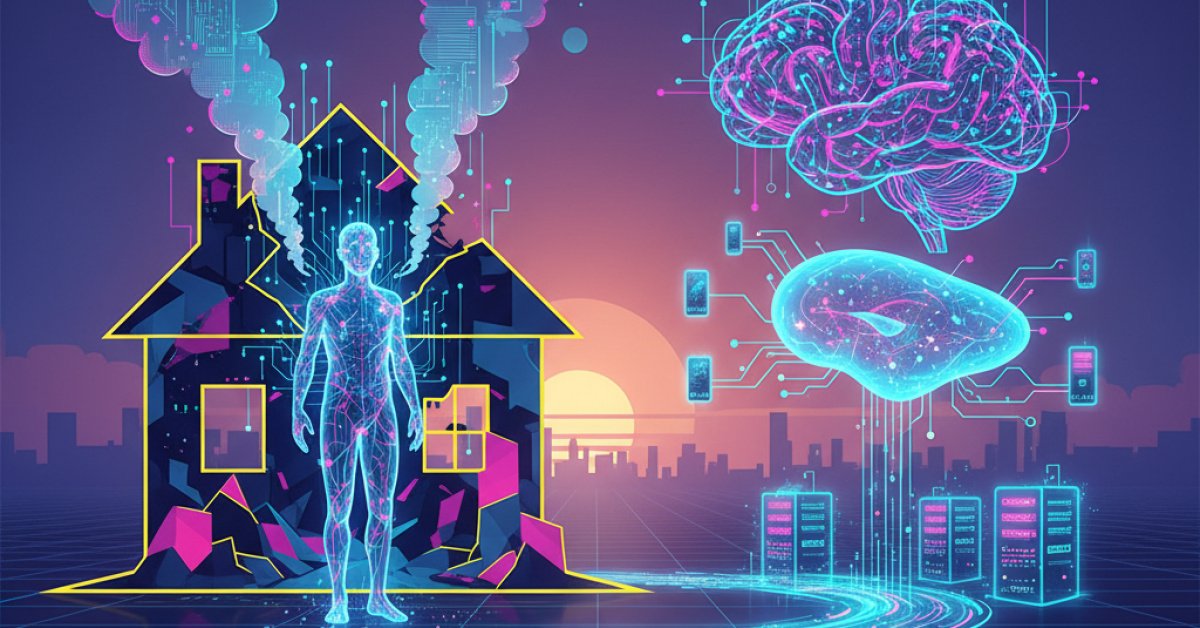
That’s exactly what happened to Mike. After a tragic fire destroyed his home in California, the internet did what it does best: it went wild. Suddenly, the very man who spent his life debunking baseless theories was at the center of them. The misinformation machine he’d studied for so long turned its sights on him, obscuring the real tragedy with a fog of speculation. It’s a powerful, and frankly terrifying, reminder of how quickly these narratives can spin out of control and consume real people's lives.
It's a personal story that really brings home the impact of the digital rumor mill. If you’re interested in hearing more about his experience, he's actually joining a roundtable discussion on November 20th to talk about how we can all navigate this new age of conspiracies.
Could a Brainless Blob Design a Better City?
Alright, let's switch gears from the all-too-human world of conspiracies to something... else. Something ancient and, believe it or not, incredibly smart in its own weird way.
I'm talking about slime mold.
Yeah, that yellow, brainless organism you might have seen in a nature documentary. It’s been on this planet for about 600 million years, which means it has a bit of an evolutionary head start on us. And a new startup called Mireta thinks this humble blob holds the secrets to building better cities.
It sounds like science fiction, but the logic is pretty cool. Slime mold is a master of efficiency. It can find the shortest, most resilient path between food sources, creating complex networks without any central command. So, what if we could translate that biological genius into an algorithm?
The team at Mireta is doing just that. They’re using the slime mold’s problem-solving "superpowers" to help design urban systems that are less congested, have better transit routes, and can better withstand disruptions from things like climate change. It’s a wild idea, but when you think about the traffic you sat in this morning, maybe taking a little advice from a 600-million-year-old organism isn’t so crazy after all.
The Quick-Hit News You Need to Know
Beyond those two big stories, a ton of other things happened this week. Here’s a quick rundown of what else caught my eye:
-
A Chilly Climate for COP30? It seems US government officials are planning to skip the big climate talks, and corporate execs are following their lead. This isn't a great look, especially as protestors are already making their voices heard in Brazil.
-
The UK's New AI Test. The British government is considering a new amendment that would let them test AI models specifically for their ability to generate child sexual abuse material (CSAM). It’s a grim but necessary step in a world where investigators are already using AI to find AI-generated abuse images.
-
Google Sues Hackers. Google is taking a group of Chinese hackers to court, claiming they’re selling software that enables massive text message phishing scams. You know, the kind of thing that tricks people into giving up their personal info.
-
The "Cryptoqueen" Saga Continues. A major player in the massive "cryptoqueen" Ponzi scheme has been jailed. Her name is Qian Zhimin, and she used money stolen from Chinese pensioners to buy crypto that’s now worth billions. It's a stark reminder of the dark side of the crypto world.
-
Carbon Capture's Dilemma. The very people who created carbon capture technology are now worried it's being misused. Their fear? That an overreliance on this tech will give countries a false sense of security and cause them to delay the hard work of actually reducing emissions.
-
AI vs. Animal Testing. In the UK, there’s a push to use AI and 3D-bioprinted human tissues to finally phase out animal testing. It's a promising development for science and ethics, though it comes at a time when the AI boom itself is starting to look a little shaky.
-
A Preventable Outbreak. Louisiana is currently dealing with a whooping cough outbreak that has tragically led to the deaths of two infants. It's a heartbreaking story about a disease that is entirely preventable with vaccines.
-
How We Really Use ChatGPT. Forget writing term papers. A recent look shows that a lot of people are turning to chatbots for emotional support and just to have someone—or something—to talk to. It really highlights our fundamental need for connection, even if it's with an AI.
-
Searching for Lost Continents. This is a cool one. Scientists have found a new mechanism that might explain why ancient continents vanished from the Earth. It’s a geological mystery story unfolding right beneath our feet.
-
Is AI Coming for Entry-Level Jobs? It seems so, especially in consulting firms that were once a go-to for recent grads. Gen Z is finding that some of the jobs they were counting on are now being handed over to AI.
A Quote That Stuck With Me
Amidst the climate talks, an Indigenous leader from the Tupinamba community in Brazil named Nato put it all in perspective. Protesting the potential sale of their land, he simply told Reuters: “We can’t eat money.”
One More Thing: The Power of K-Pop Fans
You might think of K-pop as just music, but the fans are a force to be reckoned with. What started as a South Korean phenomenon with bands like BTS and Blackpink has grown into a global community. These fandoms have become incredibly skilled at organizing online. They’ve learned to use their digital savvy for social change, raising money for charity, pushing political goals, and even shutting down white supremacist hashtags. It’s a fascinating look at how a passionate community can shape the digital world.
And Finally, a Little Breathing Room
After all that, we all deserve something nice. Here are a few things from around the web to brighten your day:
- Just some sucker fish hitching a ride on a whale and having the time of their lives.
- An argument for ditching in-flight WiFi and just enjoying the ride. I'm on board with this.
- This massive, interactive GIF is strangely mesmerizing.
- Apparently, the hottest new trend in perfume is smelling like a robot. I... have questions.
It's a lot to take in, I know. The world of technology is a mix of the profound, the problematic, and the wonderfully bizarre. The key is to stay curious and keep asking questions. Talk to you next time.