My voice tells a story. It’s got the cadence of Seoul, where I grew up, layered with the vocabulary of a decade spent in the tech world. It’s undeniably me. But lately, I’ve been wrestling with a question that feels straight out of a sci-fi movie: what if it wasn’t? What if, with the click of a button, I could smooth out the edges of my Korean accent and adopt, say, a generic American one?
This isn't just a hypothetical thought experiment anymore. We're living in an era where generative AI can create stunning images from a text prompt, write code, and now, clone and modify the very essence of our voice. The technology, often called AI voice conversion or real-time accent changing, promises to do just that—preserve the unique timbre and tone of my voice, but swap out the accent.
So, I decided to dive in headfirst. Part curiosity, part professional inquiry, I wanted to know: Can AI really erase my accent? And more importantly, if it can, what does that mean for me, for us, and for the very idea of identity? The journey was more surprising, and a little more unsettling, than I ever expected.
How Does This AI Voice Magic Actually Work?
Before I share my own results, let's pull back the curtain on the tech. This isn't just a fancy pitch-shifter you'd find in an old audio editor. We're talking about sophisticated AI models that have been trained on thousands of hours of speech data.
Think of it like this:
- The Blueprint: First, the AI needs a sample of your voice. This is the "source" audio. It analyzes everything that makes your voice yours—the pitch, the timbre, the rhythm, the subtle pauses. It creates a unique vocal blueprint.
- The Target Style: Next, you provide a "target" accent. This doesn't have to be a specific person's voice. Instead, the AI has learned the general phonetic patterns, intonations, and vowel sounds of different accents (like General American, British RP, Australian, etc.) from its vast training data.
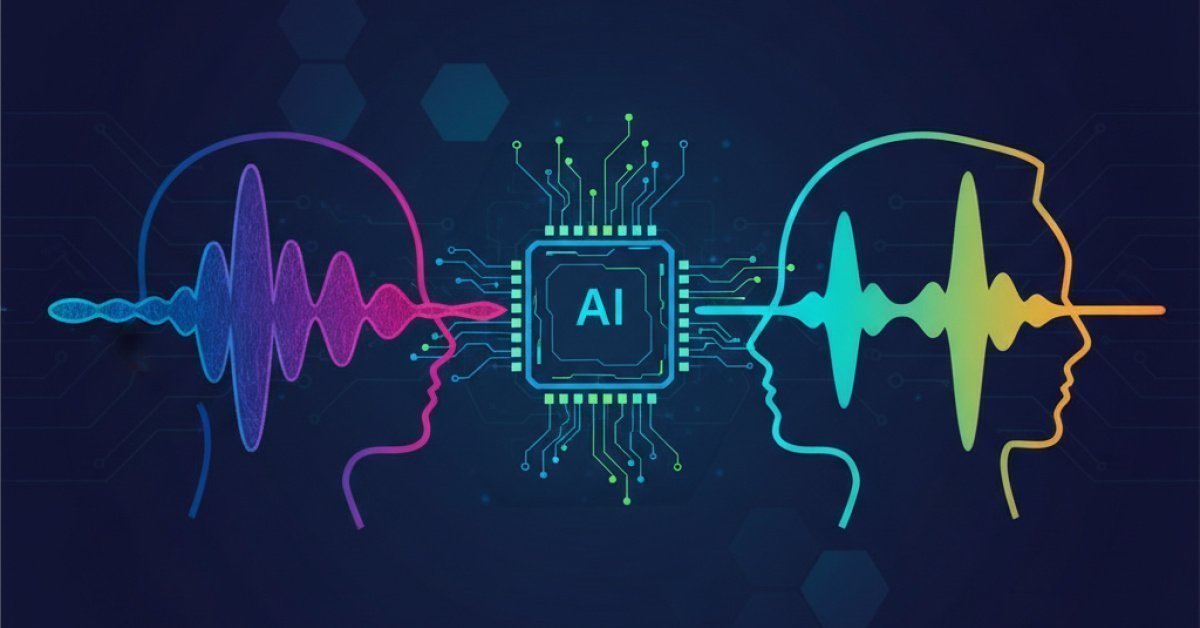
- The Conversion: This is where the magic happens. The AI takes your vocal blueprint and "re-performs" your words using the phonetic rules of the target accent. It’s a process called speech-to-speech (S2S) synthesis. The goal is to keep the "who" (your unique voice) but change the "how" (the way you pronounce the words).
Tools like ElevenLabs, Resemble AI, and a host of others are at the forefront of this. They use generative AI to not just mimic, but to create entirely new audio that blends your vocal identity with a new accent. It’s a bit like a deepfake for your voice, but instead of putting your voice into someone else’s mouth, it’s putting a different accent into your own.
The Big "Why": Who Needs an AI Accent Changer?
The first question that pops into most people's minds is, "Why would you even want to do that?" Your accent is part of you! And that's true. But the motivations are more complex and varied than you might think.
The Professional Edge
In our hyper-connected global economy, communication clarity is king. For professionals in international call centers, a neutral or localized accent can reduce friction and improve customer satisfaction. Imagine a support agent in Manila being able to speak to a customer in Texas with a seamless local accent, making the conversation feel more natural and efficient.
It also extends to sales, global team meetings, and corporate training. The idea is to remove any potential communication barrier, ensuring the message is what gets heard, not the accent it's delivered in.
Bridging Social and Personal Gaps
Let's be honest: accent bias is real. People make snap judgments based on how others speak. For some, modifying an accent is about navigating social situations more easily, reducing the constant "Sorry, could you repeat that?" or simply feeling less like an outsider.
It's not about shame or erasing one's heritage. For many, it's a pragmatic choice to reduce a small but persistent daily friction. It's about having the option to code-switch vocally, just as many people already do with language.
The Creator's New Toolkit
For content creators, podcasters, and filmmakers, this technology is a game-changer.
- Dubbing: An actor can record lines in their native language, and AI can instantly dub it into dozens of others, all while retaining the actor's original vocal performance and emotion.
- Voice Acting: A single voice actor could potentially perform roles requiring a wide range of accents without years of specialized training.
- Consistency: A YouTuber could use it to ensure a consistent, clear accent for a global audience, regardless of where they're from.
Putting AI to the Test: My Accent-Changing Experiment
Okay, theory time is over. I decided to try it myself. I chose a popular platform known for its high-quality voice synthesis and got to work.
The process was surprisingly simple. I recorded a 30-second clip of myself talking about my day. I spoke naturally, in my normal Korean-inflected English. Then, I uploaded the clip and selected the target: "American Accent." I held my breath and hit "Generate."
A few seconds later, a new audio file appeared. I put on my headphones and pressed play.
The voice that came through was… bizarre. It was me, but not me. The pitch was mine. The pacing was mine. The slight hesitation before certain words was mine. But the vowels were different. The "r" sounds were harder. The entire melody of the speech had shifted from Seoul to somewhere in the Midwest. My own voice was speaking to me in an accent I didn't have.
The first listen was just plain weird. It felt like hearing an incredibly talented impersonator doing a "me." The technology wasn't perfect—there were a few syllables that sounded slightly robotic, a tiny bit of digital artifacting if you listened closely. But to a casual listener? It was shockingly convincing. It was my voice, just filtered through a different cultural and linguistic lens.
The Uncanny Valley of Voice
After the initial shock wore off, I was left with a mix of awe and unease. This technology is powerful, but it walks a very fine line.
The Upside: A World of Clearer Communication?
There's no denying the potential benefits. This could be an incredible tool for accessibility, helping people with speech impediments communicate more clearly. It could break down barriers in international business and diplomacy. In creative fields, it unlocks possibilities we could only dream of a few years ago. It gives people an option, a tool to use as they see fit.
The Downside: Erasing Identity and the Risk of Misuse
But here's the catch. When I listened to my "American" voice, I felt a strange sense of loss. The accent I've carried with me my whole life is a map of my journey. It's the sound of my parents, my schooling, my move across the world. To hear it scrubbed away, even digitally, felt like erasing a part of my story.
It also raises the question of whether we're just feeding into linguistic prejudice. Instead of learning to appreciate and understand diverse accents, are we creating a tool that encourages everyone to conform to a perceived "standard"? It feels like a technological solution to a human problem—the problem of bias.
And, of course, there's the elephant in the room: deepfakes and misuse. The same technology that can change an accent can be used to make it sound like anyone said anything. The potential for scams, misinformation, and fraud is enormous. We're building incredibly powerful tools, and we need to be just as serious about building the guardrails to go with them.
Are We Witnessing the End of Accents?
So, back to my original question. Can AI erase my accent? Technically, yes. The experiment proved that. But the bigger question is, should it?
I don't think this technology will lead to the "end of accents." Our accents are too deeply woven into the fabric of our communities and identities to simply disappear. You can't digitize the feeling of home.
What's more likely is that accents will become more fluid, another setting we can adjust depending on the context. You might use your natural accent with friends and family, but toggle on a "Standard American" accent for a business presentation to a global audience. The voice will become another part of our digital persona, customizable and adaptable.
For me, the experiment was a powerful reminder that my voice is more than just a series of sound waves. The quirks and imperfections, the unique melody shaped by my life in Korea and my life in tech—that's what makes it mine. The AI-generated version was technically impressive, but it was hollow. It had my sound, but it didn't have my story. And for now, that's a trade-off I'm not willing to make.