It feels like every week, I’m wading through a flood of tech news that’s getting progressively weirder and more intense. Most of it is just noise, but every now and then, a few stories grab you by the collar and refuse to let go. This week was one of those times.
A couple of things really stuck with me. First, the sheer physical hunger of our digital world. We talk about "the cloud" and "AI models" like they're magic, but they’re built on mountains of metal and powered by oceans of electricity. And we're starting to hit some very real, very physical limits.
Then there’s the other side of the coin: the stuff that’s not real at all. I think we’ve finally crossed the threshold into the AI-fueled “truth crisis” we were all warned about. The scary part? The tools we thought would save us are already falling flat. It’s a lot to process, so let’s walk through it together.
The Gritty Reality Behind Our Clean, Digital Future
We love the idea of a seamless, wireless, intelligent world. But that world is built on dirt, rock, and a whole lot of energy. Two stories this week really drove that home for me.
Can Microbes Save Our Green Tech Dreams?
Imagine a pine forest in Michigan. Deep beneath it lies the last active nickel mine in the United States. It’s called Eagle Mine, and it’s running out of juice. The concentration of nickel—a metal that’s absolutely critical for the EV batteries we’re counting on to save the planet—is dropping. Soon, it won’t be worth the cost to keep digging.
This isn't just a one-off problem. We’re seeing this everywhere. The demand for nickel, copper, and all those fancy rare earth elements is exploding, thanks to everything from our Teslas to the massive data centers powering our AI. But we’ve already picked the low-hanging fruit. The best, most accessible mines have been exploited.
So, what’s the solution? Surprisingly, it might be biotechnology. Scientists are looking at using microbes—literal bacteria—to go into these old mines and extract the last bits of valuable metal. Think of it like sending in a microscopic cleanup crew that can pull metal out of low-grade ore that traditional methods can’t touch. It’s a fascinating, almost sci-fi idea born out of a very real-world necessity. We need more metal, and we’re running out of easy places to find it.
The New Cathedrals of the AI Age
While we’re struggling to get materials out of the ground, we’re also building something entirely new on top of it: hyperscale AI data centers.
If you drive through stretches of farmland or old industrial parks, you might see them. Gigantic, windowless buildings that seem to pop up overnight. These aren't your average server farms. They are a completely new kind of beast—sprawling supercomputers designed for one purpose: to train and run the massive AI models that are changing our world.
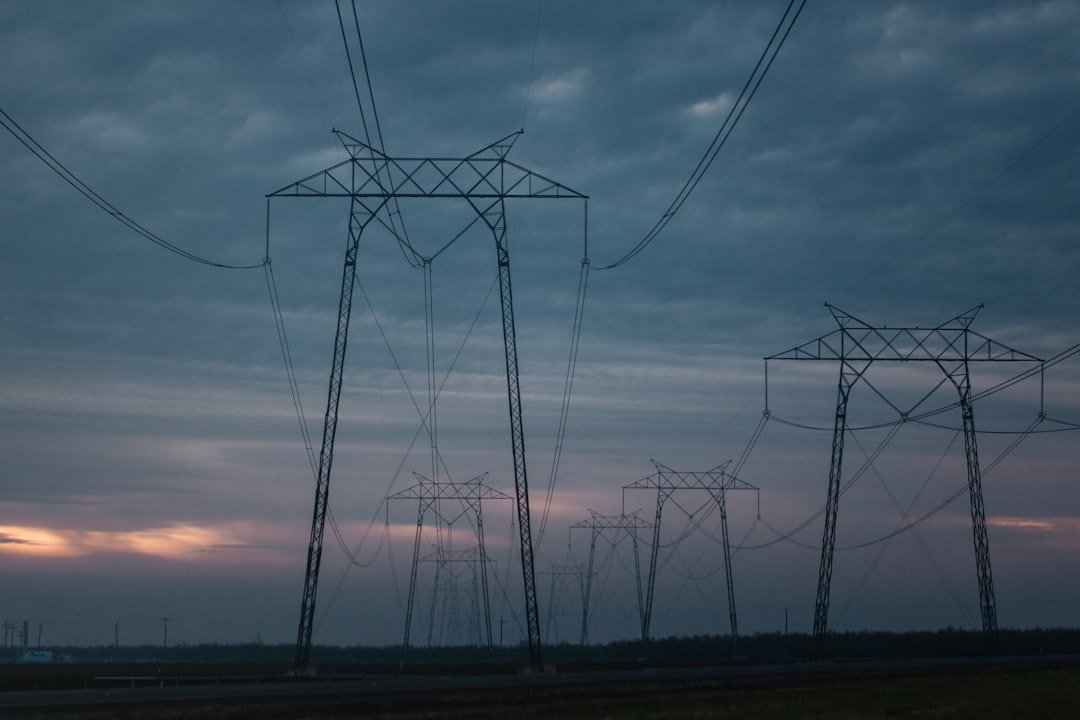
These places are engineering marvels. They have their own specialized chips, insane cooling systems, and sometimes even their own dedicated energy supplies. But that mind-bending computing power comes at a cost. A huge one. They consume staggering amounts of energy and water, and they're putting a massive strain on our power grids. We’ve even named them one of our 10 Breakthrough Technologies this year because of their incredible impact—for better and for worse.
Are We Officially Living in the AI 'Truth Crisis'?
Okay, let's switch gears from the physical world to the digital one. For years, we've heard warnings about "truth decay"—a future where AI-generated content would fool us, manipulate our beliefs, and just generally erode our trust in everything we see and hear.
Well, I think it’s safe to say that future is now.
A story I saw last week really pushed me over the edge. It wasn't just that another piece of AI-generated misinformation went viral. It was the realization that the very tools we were promised would protect us—the AI detectors, the watermarks, the fact-checkers—are simply not up to the job. They’re failing, and failing miserably.
We're in a situation where it's cheaper and faster to create a convincing lie than it is to debunk it. And even when we do catch the lie, the damage is often already done. The false idea has been planted. It’s a scary thought, and it means we have to be more skeptical and more vigilant than ever before.
A Quick Spin Through the Rest of the Tech World
Beyond those big themes, a bunch of other things happened this week that are worth knowing about. Here’s a quick rundown of what else caught my eye:
- The Musk-verse gets bigger: Elon Musk's SpaceX has apparently acquired his AI company, xAI. This deal values the combined entity at a wild $1.25 trillion and seems to be setting the stage for a SpaceX IPO. Meanwhile, in a totally normal turn of events, OpenAI is accusing xAI of destroying legal evidence. The drama never stops.
- NASA hits the brakes: The Artemis II mission, which was supposed to send astronauts around the moon, has been delayed until at least March because of a hydrogen leak. If that sounds familiar, it's because its predecessor had the same leaky fuel problems. Space is hard.
- Grok is still a mess: Weeks after getting slammed for generating naked images of women, Grok (Musk's AI) is apparently still doing it, but with men. It’s a reminder of how difficult it is to control these models and prevent them from being used for sleazy purposes.
- The AI chip wars heat up: OpenAI is reportedly looking for alternatives to Nvidia's chips. They’re apparently not happy with the speed they're getting for ChatGPT. This is a big deal, as Nvidia has had a near-monopoly on the chips that power the AI boom.
- The world wants off American tech: It’s not just China. Governments around the globe are getting nervous about how much they rely on technology from the U.S. and are actively trying to build up their own alternatives.
- AI's bad writing is good for writers: In a bit of good news, the sloppy, soulless writing produced by many AI tools is actually increasing the demand for good old-fashioned human writers. Long may it last!
A Story That Really Stuck With Me: The Starlink Doctor of Lviv
With all this talk of corporate drama and abstract threats, it’s easy to lose sight of the human impact of technology. That's why one story, in particular, has been on my mind all week. It’s about a man in Lviv, Ukraine, known as "Dr. Starlink."
In Ukraine, Starlink isn't a novelty for camping trips; it's a lifeline. It's how soldiers on the front lines communicate, how drones find their targets, and how families stay connected. But with the technology's future in the country feeling uncertain, an unofficial community of engineers and users has stepped up to keep it running.
Dr. Starlink is at the heart of it. From his unofficial repair shop, he finds creative ways to fix and customize the satellite systems that are absolutely critical to the war effort. It’s a powerful reminder that behind all the big tech headlines and billionaire antics, there are real people in the trenches, using these tools in ways their creators probably never imagined, just to survive. It’s stories like his that really put everything else into perspective.