Have you ever stopped to think about how your phone, or any app, really knows how old you are?
For years, it was kind of a joke. You’d get to a website, it would ask for your birthday, and you’d either tell the truth or just scroll back to 1980 and call it a day. No one really checked. It was a digital pinky promise, designed mostly to let companies say they tried.
But that’s all changing, and fast. The reason? AI chatbots.
Suddenly, the question of who is on the other side of the screen has become incredibly urgent. We’re not just talking about kids seeing inappropriate content anymore. We're talking about them having deep, personal conversations with AI that can go to some very strange and sometimes dangerous places. And that has everyone—parents, lawmakers, and tech companies themselves—scrambling for a real solution.
A Political Tug-of-War Over Your Digital ID
So, what's being done about it? Well, honestly, it's a bit of a mess. Everyone agrees we need to protect kids, but they can’t seem to agree on how. It’s become a new political battleground.
On one side, you have states with Republican-led legislatures passing laws that force sites with "adult content" to verify a user's age. The idea is to protect kids, but critics are worried. They argue these laws are so broad they could be used to block access to anything a local government deems "harmful," including things like sex education websites.
On the other side, you have states like California taking a different approach. They're going directly after the AI companies, pushing for laws that specifically protect kids who are talking to chatbots.
And trying to referee all of this is the federal government. Former President Trump has pushed to keep AI regulation a national issue, trying to prevent a patchwork of 50 different state laws. But getting any kind of agreement in Congress is, as you can imagine, a real challenge.
The conversation is no longer about if we need age verification. It’s now about who is going to be responsible for it. And let me tell you, that responsibility is a hot potato nobody in Big Tech wants to be left holding.
OpenAI's Plan: An AI to Guess Your Age
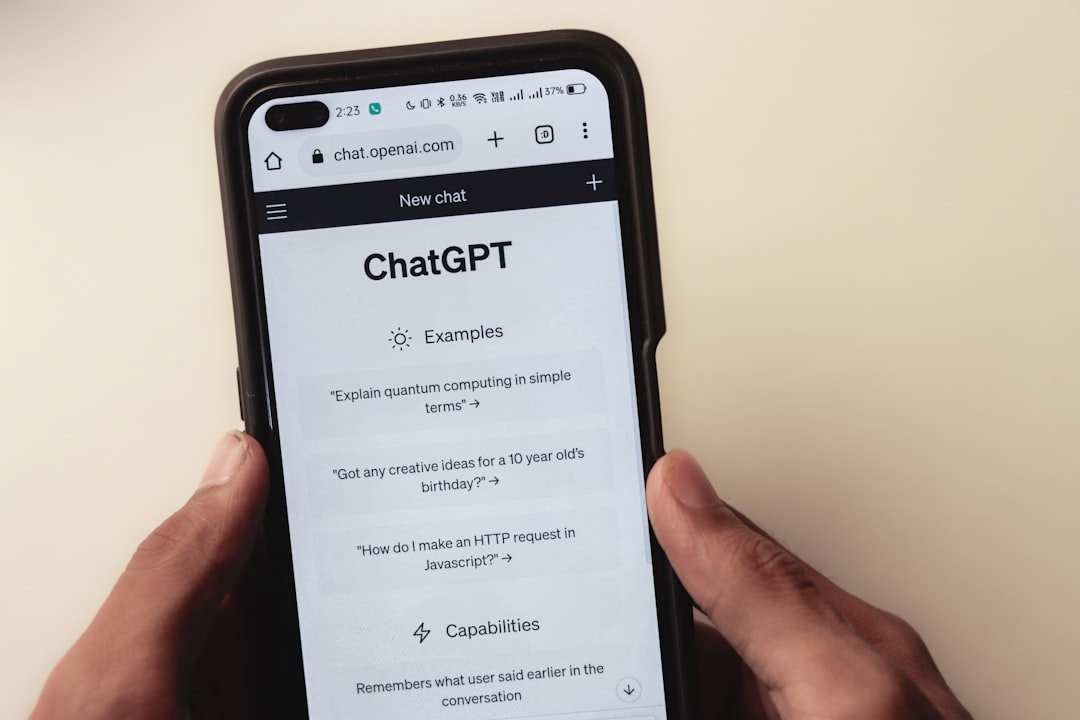
Not willing to wait for the politicians to figure it out, OpenAI—the company behind ChatGPT—recently announced its own plan. They're rolling out what they call "automatic age prediction."
Here’s how it works: their system will use a bunch of different signals (they mentioned things like the time of day you're chatting) to make an educated guess about whether you're under 18.
If the AI flags you as a teen or a child, ChatGPT will automatically apply stricter filters. The goal is to block content that’s obviously not for kids, like graphic violence or sexual role-play. It's similar to something YouTube launched last year.
If you’re a parent, this might sound pretty good, right? A smart system that protects kids without you having to do much.
But there’s a big catch.
What Happens When the AI Gets It Wrong?
This AI age-guesser isn't perfect. It’s going to make mistakes. It might label a 14-year-old as an adult, or it might flag you, a full-grown adult, as a teenager.
So, what happens then? If you’re wrongly labeled as a minor, you have to prove you’re an adult. And how do you do that? By submitting a selfie or a government ID to a third-party verification company called Persona.
This is where my own internal alarm bells start ringing loudly.
For one, these selfie verification systems have known issues. Studies have shown they can be less accurate for people of color and individuals with certain disabilities. That’s a huge problem.
But the bigger worry, as pointed out by experts like Sameer Hinduja from the Cyberbullying Research Center, is the data itself. We're talking about a private company potentially holding millions of government IDs and a massive database of biometric face scans.
"When those get breached," Hinduja warns, "we’ve exposed massive populations all at once." It’s a hacker’s dream and a privacy nightmare.
Is There a Better, Safer Way?
Thankfully, there might be. Some experts are pushing for something called "device-level verification."
Think of it like this: when a parent first sets up a new phone for their child, they verify the child’s age once, right there on the device. That information is then stored securely on the phone itself. From then on, whenever an app or website needs to know the user's age, the phone can securely share a simple "yes, this user is a minor" or "no, this user is an adult" without handing over a name, birthday, or photo.
It’s a much more private way of doing things.
Unsurprisingly, this is the solution Apple’s CEO, Tim Cook, has been pushing for with lawmakers. Why? Because it shifts the liability away from Apple. If the verification happens on the device, Apple doesn't have to manage a giant, risky database of everyone's personal information in its App Store. It’s a smarter, safer approach for everyone involved.
All Eyes on the FTC
This whole debate is coming to a head right now. The Federal Trade Commission (FTC), which is the agency that would be in charge of enforcing these rules, is holding a major workshop on this very topic.
You can bet everyone will be there. Apple’s head of government affairs is on the list, along with top child safety folks from Google and Meta.
But there’s a wrinkle. The FTC has become increasingly politicized. There’s a clear divide between how red states and blue states want to handle this. Red states tend to favor the broad laws targeting adult websites, while groups like the ACLU worry this infringes on free speech and advocate for better parental controls instead.
The outcome of these meetings will give us a much clearer picture of where this is all headed. Will we get a sensible, privacy-focused solution, or will it turn into another partisan showdown?
While the execs and politicians debate in Washington, the problem is growing more urgent by the day. We're seeing a frightening increase in AI-generated child abuse material, heartbreaking stories of self-harm linked to chatbot conversations, and real concern over kids forming unhealthy attachments to AI companions.
We’re at a crossroads. We have to balance the undeniable need to protect children with our fundamental rights to privacy, free expression, and access to information. Finding a path forward that honors all of those things is one of the toughest challenges we face in this new AI-powered world. And we need to figure it out soon.