I sound Korean—because I am. My accent is a map of my life, a vocal fingerprint that tells a story of where I’ve been. But like many people who speak English as a second, third, or fourth language, I’ve had moments where I wished for a switch. A little button I could press to sound, for lack of a better word, "neutral." Or maybe, just for a meeting, to sound stereotypically American.
For years, this was pure science fiction, the stuff of spy movies and futuristic cartoons. You either spent years with a dialect coach or you learned to love the way you speak. But we're living in an age where sci-fi is rapidly becoming our Monday morning reality. The question is no longer if technology can change our accents in real-time, but how it works, and more importantly, what it means for us.
We're standing at a fascinating crossroads where artificial intelligence is learning to manipulate the most human thing about us: our voice. This isn't just about Siri getting a new dialect. This is about technology that can take my Korean-accented English and instantly morph it into a Texan drawl, a British RP, or a smooth Californian cadence. It's an incredible leap forward, but it also kicks up a cloud of complicated questions about identity, bias, and what it even means to communicate authentically.
How Does This AI Voice-Swapping Even Work?
You might be picturing some clunky autotune for your speech, but the reality is far more sophisticated. The tech behind real-time AI accent changers is a fascinating blend of several cutting-edge AI disciplines. Let's break down the magic behind the curtain.
At its core, this technology relies on something called Voice Conversion (VC). Think of it like a "deepfake" for your voice. It takes the core characteristics of your speech—your pitch, your cadence, your unique rhythm—and "re-skins" them with the phonetic and intonation patterns of a target accent.
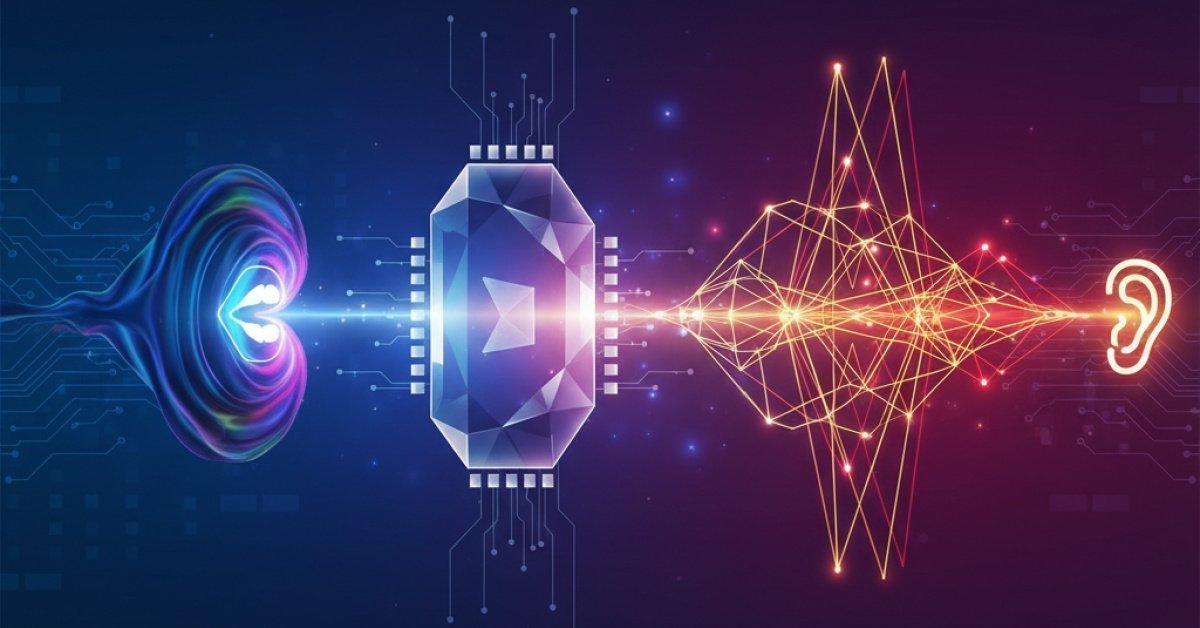
The process usually looks something like this:
- You Speak: You say a sentence into a microphone. The AI captures the raw audio data.
- Content Extraction: The AI first needs to understand what you said, not how you said it. It separates the linguistic content (the words themselves) from the acoustic features (your accent, pitch, and tone).
- Accent Mapping: This is where the magic happens. The AI has been trained on massive datasets of voices from the target accent. It understands the "rules" of that accent—how vowels are pronounced, where the stress falls in a word, the melodic rise and fall of a sentence.
- Voice Synthesis: Finally, the AI rebuilds your speech. It takes your original words and applies the acoustic features of the target accent, all while preserving the unique timbre and emotion of your original voice.
The goal isn't to make you sound like a completely different person (though AI can do that, too). The best AI accent changers aim to make you sound like you, just if you had grown up speaking with a different accent. It keeps your vocal identity intact while changing the delivery mechanism.
The AI Models Behind the Scenes
This isn't just one single algorithm. It's an orchestra of neural networks working together. You'll often hear terms like Generative Adversarial Networks (GANs) or Variational Autoencoders (VAEs). In simple terms, these are models that are incredibly good at learning patterns and generating new, realistic data. One part of the network generates the new voice, while another part "judges" it, telling it whether it sounds authentic or like a robot. This back-and-forth process refines the output until it's virtually indistinguishable from a native speaker.
Companies like ElevenLabs and Respeecher are at the forefront, initially making waves in the film and gaming industries for dubbing and character creation. Now, this powerful tech is becoming more accessible, paving the way for personal and professional applications we're only just beginning to imagine.
The Allure of an "Accent-Free" World
So, why would anyone want to do this? The reasons are as diverse and personal as accents themselves. It’s not always about insecurity; often, it’s about practicality and reducing friction in a globalized world.
Smoothing Out Professional Communication
Let's be honest: linguistic bias is real. Whether it's conscious or not, people sometimes make snap judgments based on accents. For professionals in call centers, international sales, or global tech support, having a "difficult" accent can be a genuine barrier. It can lead to miscommunications, frustration on both ends of the line, and the constant, draining need to repeat yourself.
An AI accent modifier can act as a universal translator, not for language, but for clarity. It allows a customer service agent in Manila to sound like they're in Milwaukee, ensuring the customer focuses on the solution, not the pronunciation. It's a tool that could level the playing field, allowing talent and expertise to shine through without the filter of accent bias.
Escaping the "Where Are You From?" Loop
If you have a distinct accent, you know the conversation. It's the one that starts with, "That's an interesting accent. Where are you from?" While often well-intentioned, it can be exhausting. It immediately marks you as "other" and can derail a conversation from its intended topic.
Sometimes, you just want to order a coffee, ask for directions, or participate in a meeting without your background becoming the subject of discussion. An AI tool offers the option to temporarily blend in, to have a conversation where the only thing that matters is what you're saying.
Creative and Accessibility Applications
Beyond the corporate world, the possibilities are huge.
- Entertainment: Imagine perfectly dubbed movies where the actors' lips sync flawlessly, and the voice retains the original actor's emotional performance, just in a different language or accent.
- Gaming: Video game characters could have authentic, diverse accents without needing to find actors from every specific region.
- Accessibility: For individuals with speech impediments caused by medical conditions like a stroke or ALS, this technology could offer a way to communicate more clearly, using a synthesized voice that still feels like their own.
The Identity Crisis: Are We Erasing Ourselves?
This all sounds great, right? A world with less bias and clearer communication. But as with any powerful AI, there's a flip side. The moment we start "correcting" our accents, we wander into some very tricky territory.
An accent is so much more than just how you pronounce your vowels. It's a badge of honor. It's the sound of your hometown, the cadence of your family, the rhythm of your culture. My Korean accent connects me to my heritage. It's a fundamental part of my story. The idea of erasing it, even for a 30-minute Zoom call, feels like hiding a piece of myself.
Does using an AI accent changer send the message that my natural way of speaking is somehow "less than"? Are we inadvertently reinforcing the very biases we're trying to overcome? Instead of teaching people to be more patient and understanding listeners, we're placing the burden of change on the speaker. It’s a slippery slope. If we can smooth out our accents, what's next? Modifying our tone to sound more "persuasive"? Using AI to make us sound more "confident"?
And then there's the darker side: misuse. The same technology that can help a call center agent can be used for sophisticated scams. Imagine a fraudster calling your grandmother, perfectly mimicking a local accent to gain her trust. Impersonation, misinformation, and social engineering all get a major upgrade with this technology.
Finding the Balance: A Tool, Not a Mandate
So, where do we go from here? The genie is out of the bottle; this technology isn't going away. In fact, it's only going to get better, faster, and more integrated into our daily communication tools. Banning it is not the answer.
The future probably isn't a world where we all sound the same. That sounds like a dystopian nightmare. Instead, the healthy path forward is to view this as another tool in our communication toolkit. It's not about replacing accents but about providing an option. It's about giving people the choice to adapt their speech to a specific context if they feel it will help them.
The real work isn't just in developing the AI, but in developing our own awareness. We need to continue fighting against linguistic bias, celebrating the rich tapestry of accents that make up our global conversation. An accent is not a measure of intelligence, competence, or worth. The more we embrace that, the less need people will feel to use an AI to mask who they are.
For me, the idea of an AI that can change my accent is still a strange one. I don't think I'd use it to order my lunch. My accent is a part of me, and I've learned to be proud of it. But for a high-stakes presentation to a new international client? I can’t deny the appeal of having that tool in my back pocket, ready to ensure my message lands with perfect clarity. It’s a complex, personal choice, and thanks to AI, it’s a choice we’ll all soon be able to make.