I’ve been writing about technology for a long time, and you get a pretty good sense for what’s real and what’s just hype. Usually, a new "threat" in cybersecurity is just a slightly faster version of an old one.
But this feels different.
We’re hearing more and more whispers from security experts, the kind of people who don't scare easily, and they're all saying something similar: AI is getting shockingly good at hacking. Not in a sci-fi movie way, but in a practical, real-world way that could change everything.
We’re not just talking about a new tool for cybercriminals. We're talking about something that could force us to completely rethink how we build the software that runs our world.
So, What's Actually Going On?
Let me break it down. For years, finding security flaws—or "vulnerabilities"—in software has been a painstaking, manual process. Think of it like a team of building inspectors meticulously checking every single rivet and wire in a new skyscraper. It’s slow, expensive, and humans, being human, miss things.
Now, imagine you could give that building's blueprint to a super-intelligent AI and ask it to find every single potential weakness, from a faulty wire to a microscopic crack in the foundation. And it could do it in minutes.
That’s basically what’s happening with code. Researchers are training large language models (the same kind of tech behind ChatGPT) on massive amounts of software code. They're teaching these AIs what secure code looks like, and more importantly, what a vulnerability looks like.
And the results are starting to get a little scary. These AIs are beginning to find complex, real-world vulnerabilities on their own. This isn't just theory anymore; it's happening in labs and security competitions.
We Might Be at a Serious "Inflection Point"
You hear the term "inflection point" thrown around a lot in tech, but this might be one of the few times it’s truly warranted.
Here's why: it's all about scale and speed.
A human hacker, even a brilliant one, can only do so much in a day. An AI can work 24/7, testing millions of lines of code across thousands of applications simultaneously. Once a single AI model is trained to find a certain type of flaw, it can be copied and deployed by anyone, anywhere.
This creates a massive imbalance. For decades, we've operated on a system where the "good guys" (security researchers) and the "bad guys" (hackers) were both limited by human constraints. It was a cat-and-mouse game played at human speed.
AI changes the rules of the game entirely. Suddenly, one side has a super-powered player that never gets tired and thinks faster than any human on earth.
Why Our Old Ways of Building Software Could Fail
Right now, we live in a "build, ship, patch" world. A company like Apple or Microsoft releases a new piece of software, security researchers (or hackers) find flaws, and the company issues a patch or an update to fix it. We all know the drill—"An update is available for your device."
But what happens when the time between a vulnerability being discovered and it being exploited shrinks from months or weeks to just minutes?
The "patch" model starts to break down. There's simply no time to react. An AI could potentially find a brand-new, "zero-day" vulnerability and then automatically write the code to exploit it, deploying it against millions of systems before a single human engineer has even had their morning coffee.
This is the core of the problem. If we can't patch our way to safety anymore, then what's the alternative?
The only real answer is to build software that is fundamentally more secure from the ground up. We might have to move away from simply checking for flaws at the end of the process and instead focus on preventing them from ever being written in the first place.
A Whole New Way of Thinking
This isn't just a small tweak. It’s a huge shift in mindset for the entire tech industry. It could mean:
- AI Co-Pilots for Security: Instead of just using AI to help us write code faster, we'll need AI tools that act as a constant security guard, watching every line of code as it's written and flagging potential issues in real-time.
- Formal Verification: This is a complex-sounding idea that's actually pretty simple. It's about using mathematical proofs to guarantee that a piece of software does exactly what it's supposed to do, and nothing else. It’s been too slow and expensive for most projects, but AI might just make it practical.
- Rethinking Code Itself: We might even see a push toward programming languages that are inherently safer and have security features built directly into their DNA.
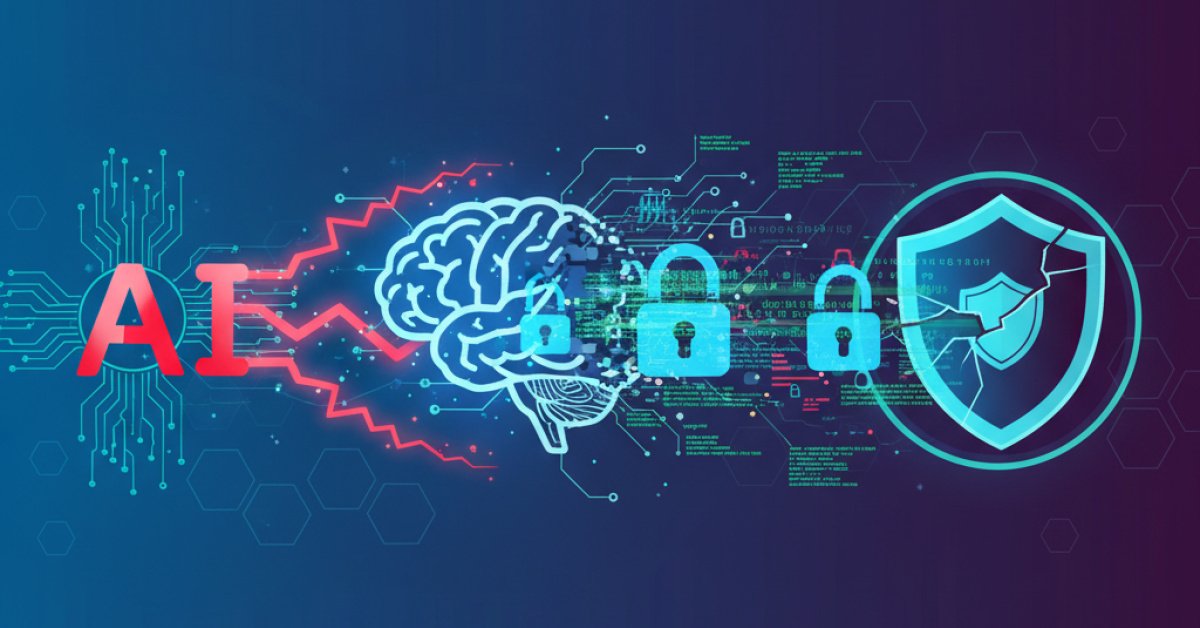
The race is officially on. It's a race between "offensive AI" designed to find and exploit flaws, and "defensive AI" designed to find and fix them first. The scary part is that it’s often easier to break something than it is to build it perfectly.
This isn't about panicking or saying the sky is falling. It’s about being realistic. The technology we’re building is becoming incredibly powerful, and we have to be prepared for how that power can be used, for both good and ill. The quiet, behind-the-scenes world of software development is about to get a whole lot louder, and we all need to be ready for the change.