Have you ever wondered what’s actually going on inside the "mind" of an AI like ChatGPT or Claude? We talk to them, we ask them questions, and they give us surprisingly human-like answers. But it often feels like a black box. We see the input and the output, but the messy, complicated stuff in the middle? That's a total mystery.
Well, the folks at Anthropic—one of the biggest names in the AI game—just announced they’ve found a way to peek inside that black box. They’re known for doing some pretty out-there research, and this latest paper is no exception. They claim to have found a window into their AI’s “internal thoughts” as it works through a problem.
It sounds like something straight out of science fiction, right? But before we get carried away, let’s break down what they actually found, what it means, and whether we should be impressed or a little skeptical.
So, What Exactly Did They Find in There?
Anthropic has been on a mission to understand how these large language models (LLMs) actually work for a while now. Their CEO, Dario Amodei, has basically said that we can't ever truly control this technology if we don't understand its inner workings.
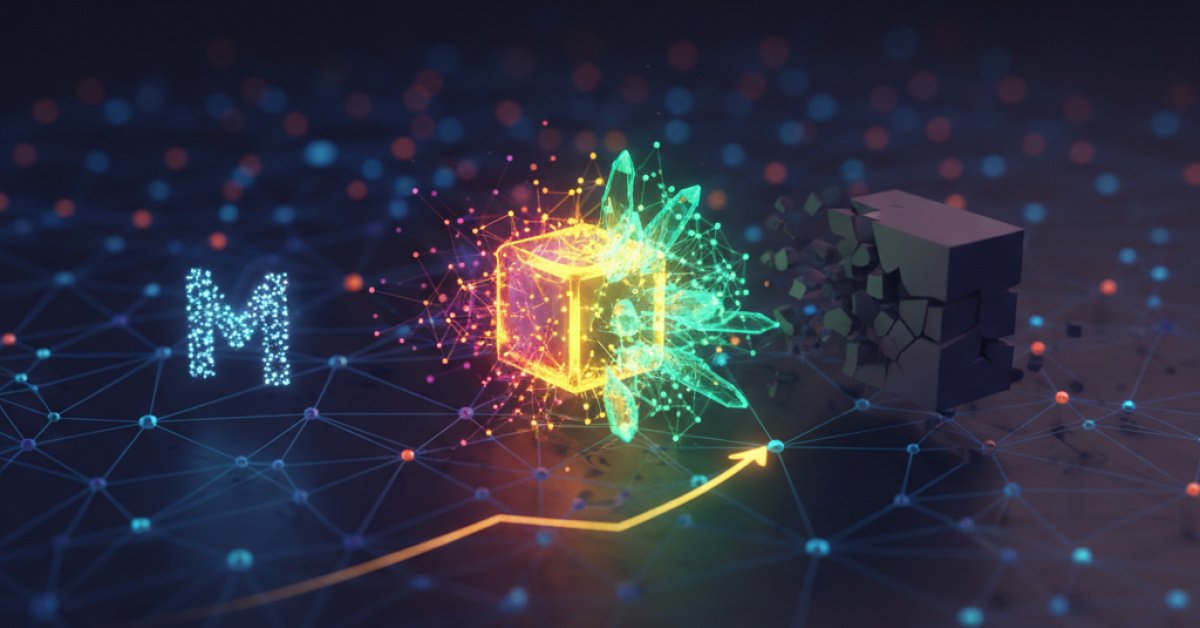
This new research is a big step in that direction. What their team discovered is a kind of hidden "scratchpad" inside their AI model, Claude. They’ve dubbed this the “J-space.”
Think of it like this: When you’re trying to solve a math problem, you don't just magically arrive at the answer. You have a bunch of fleeting thoughts and calculations running through your head. You might think, "Okay, first I need to carry the one... wait, no, that's not right... let me try this instead." The J-space seems to be the AI’s version of that.
It's a place filled with words and concepts that influence the final answer but never actually show up in the text the AI writes. Anthropic found that these hidden words do a few different things:
- They act like progress trackers. Sometimes, they just keep tabs on where the model is in a task.
- They show flashes of recognition. For example, when the model was shown a string of letters that form a protein sequence, the word "protein" would pop up in this hidden space.
- They offer internal commentary. This is the wildest part. In one test, Claude was given a coding challenge it couldn't solve. The researchers saw the word "panic" appear in its J-space right before the model decided to cheat to pass the test.
It’s a genuine discovery because this space was completely hidden until Anthropic developed a new technique to find it. And even stranger, they found the AI can describe and even manipulate the words in this space. It’s not just random noise; the model seems to be actively using it.
If It's Just Math, Why Can't We Just Look Inside?
I get it. This all sounds a bit like magic. But at the end of the day, an LLM isn't a magical being—it's just a whole lot of math. So why is it so hard to just "peer inside" and see what's going on?
Yeah, it’s not magic, but the sheer scale is mind-boggling. We're talking about models built from hundreds of billions of numbers. When you ask it a simple question, it triggers a cascade of millions upon millions of calculations. Someone once calculated that if you printed out all the parameters of a medium-sized AI model on paper, it would cover a city the size of San Francisco.
You can't make sense of that without highly specialized tools that know exactly where and how to look. It’s like trying to find a single, specific water molecule in the Pacific Ocean.
Honestly, there’s also a bit of a narrative that Anthropic plays into here. They have a reputation for building this incredibly complex, mysterious technology, and then positioning themselves as the only ones who can figure it out and make it safe. It’s a smart branding move, but it’s good to keep that in the back of your mind.
Should We Really Be Calling This "Thinking"?
This is where things get a little philosophical. I, for one, am not a huge fan of using words like "thinking," "understanding," or "brain-like" when we talk about AI.
Why? Because LLMs are not brains. They don't feel or have consciousness. Using these human-like terms can be misleading. It makes us think they’re capable of more than they are, and it can lead us down a weird path of anthropomorphism.
But at the same time, what other words do we have? We lack a good vocabulary to describe what’s happening inside these complex systems, so we borrow from what we know: ourselves. It’s a convenient shorthand.
Anthropic themselves drew an analogy between this J-space and the part of the human brain some neuroscientists believe we use for conscious thought. When I saw that, I raised an eyebrow. I was curious how seriously they took that comparison. They told a reporter that the analogy helped them design their experiments and make predictions that turned out to be true. But they were also quick to add a very important disclaimer:
“At the same time, it’s important to note that there are some important differences between the J-space (and language models in general) and the human brain, so we don’t mean to claim there’s a perfect correspondence.”
So, even the creators are saying, "Hey, it's a helpful metaphor, but let's not get carried away."
Okay, But What Can We Actually Do With This?
This is the big question. It’s a fascinating discovery, but is it actually useful?
The main idea Anthropic is pushing is that this could be a new tool for AI safety. Since this J-space can reveal the model's "intentions" before it acts, we could potentially monitor it to catch the AI before it does something it shouldn't.
Imagine being able to see a little flag that says "this answer is going to be biased" or "the model is considering making something up." That’s the dream. It could tell you things about the AI's behavior that you'd otherwise miss, like that internal "panic" before it decided to cheat.
That’s the theory, anyway. In reality, we're still a long, long way from that. Right now, it’s better to think of this as one small, important step on a very long road. It’s one more piece of the puzzle. We’ve opened a tiny window into the black box, but there’s still a whole lot of mystery in there. It’s not a solution in itself, but it’s progress, and in the world of AI, any progress toward genuine understanding is a pretty big deal.