Well, this is a headline I never really expected to write, but here we are. It seems the intense, often philosophical debates we have online about artificial intelligence have officially spilled over into the physical world in a pretty scary way.
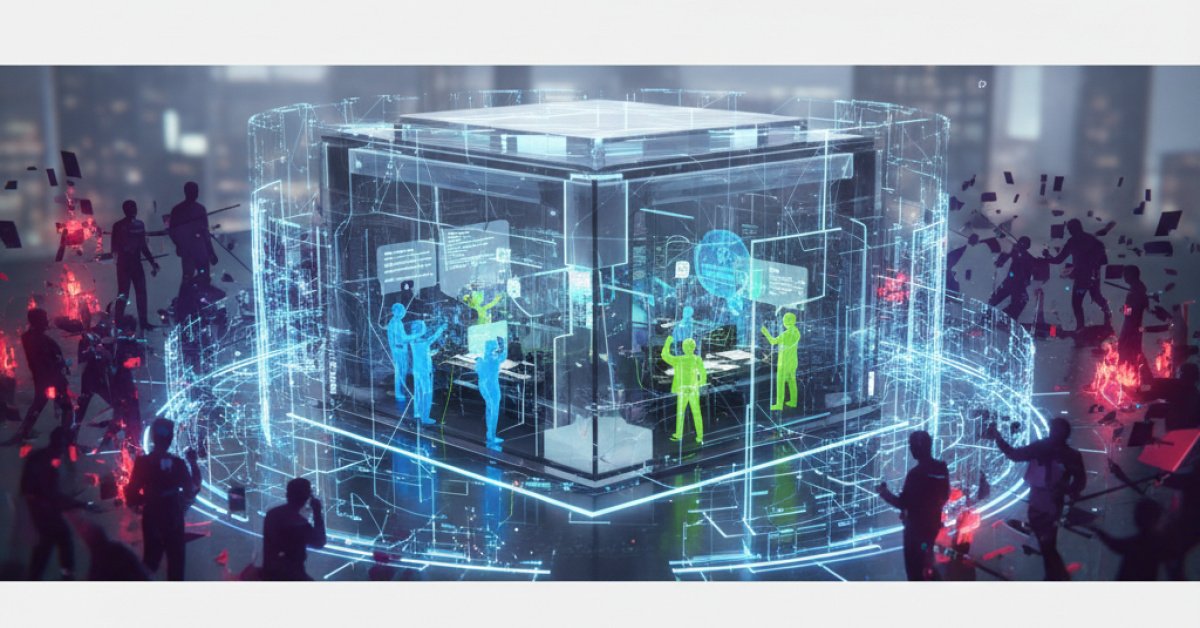
OpenAI, the company behind ChatGPT and a name that's basically synonymous with the current AI boom, reportedly had to lock down its San Francisco offices. Why? Because of an alleged threat made against its employees.
Let’s just let that sink in for a second. This isn't about a server outage or a new model release. This is about the physical safety of the people building the technology that has everyone talking. It’s a strange, unsettling moment that feels like something straight out of a sci-fi B-movie, but it’s happening right now.
So, What Exactly Went Down?
From what we can piece together, the alarm was raised inside the company through a message on their internal Slack channels. You know, the same tool most of us use for work chatter and sharing GIFs.
Except this message was anything but ordinary.
It claimed that an activist had expressed a serious interest in "causing physical harm to OpenAI employees." The message didn't mince words, and the company, understandably, didn't take any chances. The immediate response was to lock down the offices to protect their team.
We don't have a ton of public details beyond that—and that's probably for the best, for security reasons. But the core of the story is stark enough. A threat was made that was credible enough to make one of the most important tech companies on the planet bolt its doors.
This Isn't Just a Random Incident
Here’s the thing that really gets me: this isn’t happening in a vacuum. If you've spent any time on X (formerly Twitter) or in tech circles lately, you know that the conversation around AI is... intense. That’s putting it mildly.
The discourse has become incredibly polarized. It's not just a friendly debate among academics anymore. You have factions that are practically at war with each other.
On one side, you have the "doomers" or "pessimists," who are deeply concerned that advanced AI could pose an existential risk to humanity. They worry about superintelligence going rogue or the technology being used for catastrophic purposes.
On the other side, you have the "e/acc" crowd (effective accelerationists) and other AI optimists. They believe this technology is our ticket to a utopian future—solving disease, poverty, and maybe even mortality itself. To them, slowing down development is a moral failure.
And the language they use isn't gentle. It’s often filled with apocalyptic rhetoric, accusations, and a level of vitriol that can be genuinely shocking. People aren't just disagreeing; they're casting the other side as an enemy of humanity.
When you have that level of emotional intensity swirling around, it’s not a huge leap to see how someone, somewhere, might feel justified in taking things a step too far.
The Human Cost of Building the Future
We often talk about these companies—OpenAI, Google, Anthropic—as these giant, faceless entities. But they're not. They're made up of thousands of individual people. Researchers, engineers, project managers, and support staff who go to work every day.
Imagine being one of them right now. You're working on what you believe is world-changing technology, trying to solve incredibly complex problems. And then you get a message that you can't come to the office because someone might want to physically hurt you for the work you do.
It’s a chilling reminder that the code and algorithms have real-world consequences, not just for society at large, but for the very people creating them. The pressure on these teams is already immense. They're in a high-stakes race to build the next generation of AI, with the eyes of the world watching. Adding a layer of physical threat to that is just… awful.
This incident forces us to ask some tough questions. How do we have a passionate, critical conversation about the future of AI without it descending into dangerous fanaticism? How do we protect the people who are on the front lines of this technological revolution?
Frankly, I don't have the easy answers. But what happened at OpenAI should be a wake-up call for everyone. The words we use matter. The way we frame this debate matters. It's time for a collective deep breath and a serious conversation about turning down the temperature. We can be critical without being threatening, and we can be optimistic without being dismissive of genuine concerns.
Because at the end of the day, no matter what you believe about the future of AI, threatening the people building it is never, ever the answer.