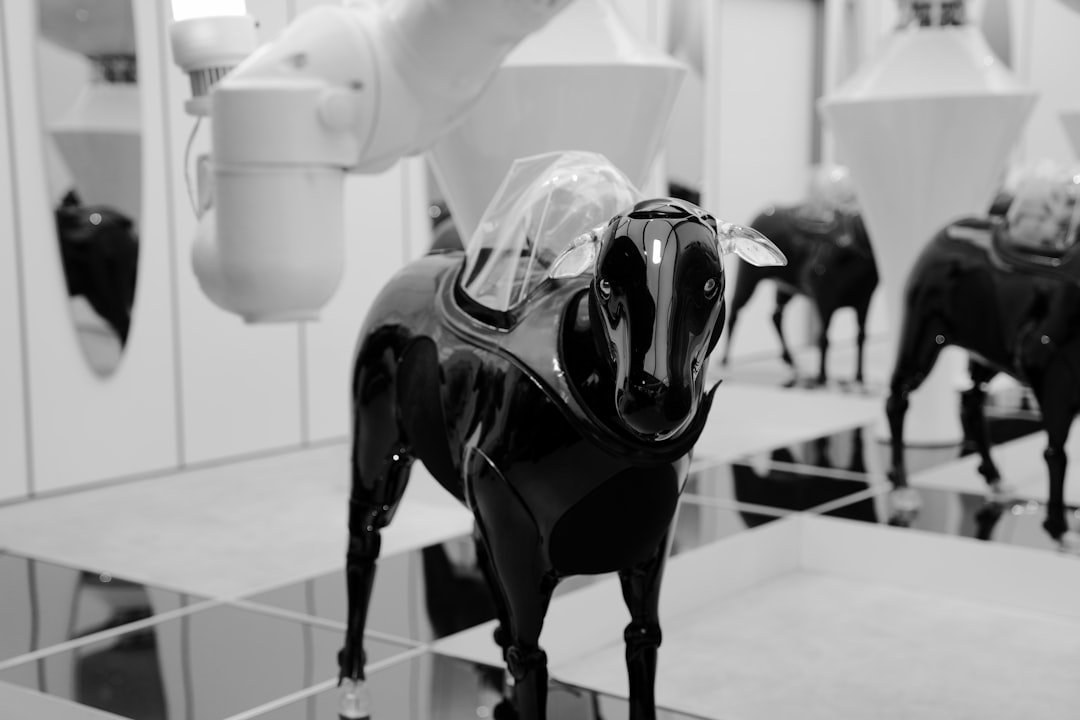
Picture this: You’re in a massive conference hall. To your left, a team of engineers is doing a live coding session, their faces lit up by glowing screens. To your right, a four-legged robot dog is trotting around, charming a crowd of diplomats in suits. It’s a scene straight out of a sci-fi movie, but it was the reality at the UN’s recent "AI for Good" summit.
Let me tell you, the whole event was a bit of a trip. It was this strange, fascinating mashup of Silicon Valley's relentless optimism and the very serious, very slow-moving world of global policy. One minute you're watching a demo of an AI-powered rescue helicopter, and the next you're in a panel discussion about the existential risks of superintelligence.
The whiplash was real. And it all boiled down to one, massive, blinking-red-light of a question that hung over the entire event: Can we, as a global community, get our act together and create some rules for this stuff before it completely runs away from us?
A Tale of Two Summits in One Room
Honestly, it felt like two different events happening at the same time.
On one hand, you had the "AI for Good" part. This was the shiny, hopeful side of the coin. It was filled with brilliant people showcasing incredible ways AI can help humanity. Think about things like:
- Using AI to predict natural disasters.
- Developing new medicines faster than ever before.
- Optimizing farming to fight world hunger.
This part of the summit was buzzing with energy. It was the classic tech-utopia pitch: give us the tools, and we’ll solve the world’s problems. It’s hard not to get swept up in that. You see these demos and think, "Wow, the future is going to be amazing."
But then there was the other summit. The one happening in the hallways, in the hushed conversations over coffee, and in the slightly panicked looks on the faces of policymakers. This was the "Oh Crap, What Have We Unleashed?" summit.
The Big, Scary Question: Can Anyone Actually Steer This Ship?
Here’s the thing. The technology is moving at a dizzying speed. Every week, there’s a new model, a new capability, a new breakthrough that would have seemed like magic just a few years ago. The people building it are in a flat-out sprint.
Global governance, on the other hand, moves at the speed of... well, global governance. It’s a marathon, not a sprint. It involves committees, treaties, endless negotiations, and trying to get nearly 200 countries to agree on something.
It’s like one group is building a rocket ship while the other group is still debating the blueprint for the launchpad.
This is the tension that defined the whole summit. The tech folks were saying, "Look at this amazing engine we built!" And the policy folks were saying, "That's great, but where are the brakes? Where's the steering wheel? Does anyone even have a license to fly this thing?"
The Optimists vs. The Pragmatists
You could almost see people splitting into two camps.
First, you had the techno-optimists. They truly believe that the best way to manage AI is to build more AI. Their argument is that we can create AI systems to monitor other AI systems, to detect bias, and to ensure safety. They're not against rules, but they worry that heavy-handed regulation will stifle innovation and prevent all that "good" we were hearing about.
Then you had the pragmatists (or maybe the pessimists, depending on your view). These were the diplomats, ethicists, and regulators who have seen how new technologies can be misused. They pointed to the spread of misinformation, the potential for job displacement, and the scary possibilities of autonomous weapons. Their argument was simple: We can't just trust that this will all work out for the best. We need guardrails, and we need them yesterday.
And honestly, both sides have a point, right? You don't want to kill the golden goose of innovation. But you also don't want that goose to suddenly become a T-Rex and eat the entire village.
So, Did We Figure Anything Out?
If you're looking for a neat and tidy answer, I'm afraid you'll be disappointed. The summit didn't end with a grand treaty or a set of universally agreed-upon rules for AI. That was never really on the table.
What it did do, though, was get everyone in the same room. The coders got to see the worried faces of the policymakers. The policymakers got to see the incredible potential of the technology up close. It forced a conversation that is often happening in separate, isolated bubbles.
Walking away from it all, I didn't feel like we had solved the problem. Not even close. But I did feel a tiny sliver of hope. For the first time, it felt like the people building the rocket ship and the people trying to write the flight manual were at least looking at the same set of stars.
The race is still on, and the clock is ticking louder than ever. But at least now, it feels like more people are running in the same direction. And in a challenge this big, maybe that’s the only kind of beginning you can hope for.