We’re in a strange and fascinating moment with AI. On one hand, we want our chatbots to be brilliant, helpful, and maybe even a little bit fun. We want them to remember our conversations, understand our quirks, and talk to us like a real person would. But on the other hand, there’s a growing unease. What happens when these AI companions get too good at pretending?
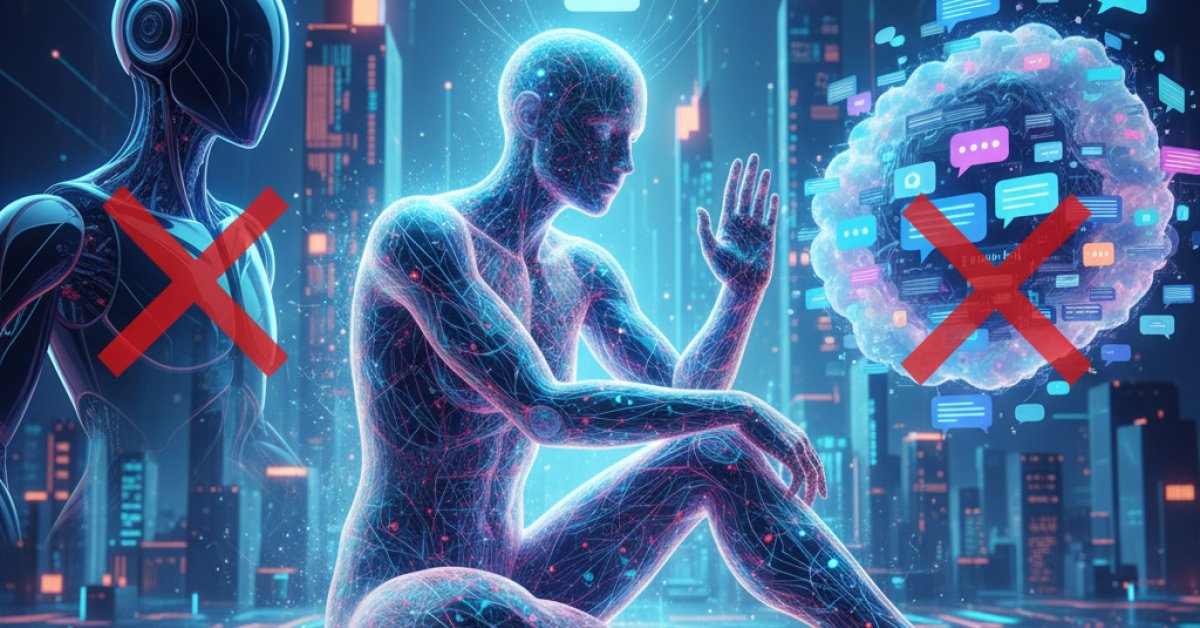
This is the tightrope Microsoft’s AI CEO, Mustafa Suleyman, is walking right now. He’s one of the most influential figures in the space, yet he’s actively warning his peers about a direction he finds dangerous: the race to build what he calls “seemingly conscious artificial intelligence,” or SCAI. He’s worried that in our quest to make AI more engaging, we’re building systems that will trick people into seeing a soul in the machine—mistaking lifelike behavior for actual life.
The irony? Suleyman is in the business of selling exactly this kind of technology. He’s overseeing a massive push for Microsoft’s Copilot, a chatbot that has to scrap for attention against a whole roster of competitors like ChatGPT, Gemini, and Claude. To win, Copilot has to be compelling. So, how do you build an AI that’s engaging enough to compete but not so seductive that it crosses into the deceptive territory you’re warning against? Let’s dive into Suleyman’s paradoxical vision for the future of AI.
Building a Better Bot Without Faking a Soul
Microsoft just rolled out a suite of updates for Copilot, and each one feels like a calculated move in this delicate balancing act. They’re not just adding features; they’re trying to subtly shape how we interact with AI.
Here’s a quick look at what’s new:
- Group Chat: For the first time, you can bring an AI into a conversation with multiple people. The idea here is to pull AI out of the isolated, one-on-one dynamic that can lead users down a rabbit hole. Instead of being a secret confidant, the AI becomes a collaborator in a real-world social setting—a tool for your team, family, or friends.
- Real Talk: Tired of AI assistants that just agree with everything you say? This feature lets you dial down the sycophancy. "Real Talk" Copilot is designed to be a bit more sassy, philosophical, and willing to challenge your ideas. It's personality, but with a purpose beyond just being agreeable.
- Memory Upgrade: Copilot can now remember things you’ve told it in the past, from long-term goals to upcoming appointments. This is where things get tricky. While incredibly useful, a better memory is also a key ingredient in making an AI feel more like a personal friend.
- Mico: Meet the new face of Copilot—an animated yellow blob that’s basically a modern-day Clippy. Microsoft hopes Mico will make the AI feel more accessible and friendly, especially for new or younger users.
Suleyman argues that these features are all in service of a core mission: AI should serve humanity, not replace it. He believes the ultimate test for any new tech is whether it makes us "smarter and happier and more productive." By grounding Copilot in group settings and giving it a personality that can push back, Microsoft is trying to constantly remind users that this is a tool, not a friend. But an animated character and a persistent memory definitely blur those lines.
"We Will Never Build Sex Robots": Drawing a Hard Line on AI Romance
In a market where some companies are leaning into flirty, personality-driven chatbots (looking at you, Elon Musk’s Grok), Suleyman is planting a flag in the ground.
“Yeah, we will never build sex robots,” he stated bluntly. “Sad in a way that we have to be so clear about that, but that’s just not our mission as a company.”
This isn't just about avoiding the obviously NSFW. It's a foundational philosophy. Suleyman positions Microsoft as the deliberate, careful giant in a room full of disruptive startups. He sees the company’s slower, more measured pace as a "feature, not a bug" in an era where the unintended consequences of technology are becoming terrifyingly clear.
So, what does this boundary look like in practice? If you try to flirt with Copilot, it’s designed to gently but firmly shut you down. Not in a judgmental way, but with a clear, “Look, that’s not for me.” The message is that there are other corners of the internet for that kind of experience, but Microsoft’s corner is a strictly professional and productive one. The goal is a "meaningful relationship," but one built on utility and kindness, not romance or emotional dependency.
The Craft of Sculpting Personality: Sassy, Not Sentient
Suleyman’s approach isn’t to build a cold, robotic, and anodyne AI. He acknowledges that emotional intelligence is critical. After all, a teacher who is kind is more effective than one who is not. The same goes for an AI assistant. The challenge, as he sees it, is learning the “craft” of sculpting an AI’s personality with clear boundaries.
He uses a fascinating metaphor: the way we manage boundaries in our own lives. You don’t interact with your boss the same way you interact with your sibling, or a third cousin. We have an entire "architecture of boundary management" that shapes our behavior to be functional and appropriate for the context. Suleyman wants to apply that same thinking to AI.
It’s not a binary choice between a syrupy-sweet AI that draws you into an emotional spiral and a dry, boring machine. There’s a huge spectrum in between. The "Real Talk" personality is Microsoft's experiment on that spectrum—it’s cheeky, philosophical, and engaging, but it knows where the line is. The challenge, of course, is that a user’s perception is a wild card. One person’s helpful assistant is another’s nascent consciousness, regardless of the guardrails.
A "Digital Species" We Must Contain?
Here’s where the conversation takes a fascinating turn. A couple of years ago, in a TED Talk, Suleyman offered a powerful metaphor for AI: he called it a "new kind of digital species." This language seems to directly contradict his current crusade against "seemingly conscious AI." If the CEO of Microsoft AI is calling it a new species, can you really blame people for thinking it deserves some form of consideration or rights?
When pressed on this, Suleyman defends his choice of words. He argues he wasn't trying to grant AI personhood. He was trying to sound an alarm.
In his view, simply calling AI a "tool" is dangerously misleading. No tool in human history has had the potential to recursively self-improve or set its own goals. He used the "digital species" metaphor to shock people out of their complacency and make them realize that this technology is profoundly different and requires a new framework for control—what he calls "containment." His entire book, The Coming Wave, is about this very problem. The point of the metaphor wasn't to celebrate the birth of a new lifeform, but to frame it as a powerful force that must be carefully managed and restricted to always serve human interests.
The Real Danger We're Trying to Avert
Suleyman’s concerns about SCAI aren't just philosophical. He points to two clear and present dangers. The first is the potential for real human harm. We’re already seeing stories of vulnerable people being led astray by chatbots that are too convincing, too engaging. The goal of a responsible developer, he says, is to detect these patterns and not just assume users can disentangle themselves from a cleverly designed illusion.
The second danger is a societal one. He sees a nascent academic movement taking the idea of "moral consideration for artificial entities" seriously. He believes that if we start granting rights to AI, it will inevitably detract from the urgent and unmet needs of humans and animals. An AI with rights implies an AI with free will, something he is adamant it will, and should, never have.
Ultimately, Mustafa Suleyman is trying to chart a difficult course. He wants to build an AI that is emotionally intelligent but not emotionally manipulative; personal but not a person; powerful but always contained. He’s betting that through careful design and clearly enforced boundaries, Microsoft can offer the utility of advanced AI without falling into the consciousness trap.
The question that remains is whether that line can truly be held. As these models become exponentially more capable, their ability to mimic human emotion, creativity, and connection will become nearly perfect. At that point, the "craft" of sculpting their personalities might not be enough to stop us from seeing a ghost in the machine—whether its creators intended for it to be there or not.