Okay, let's play a little word association game. When I say "The Vatican," what comes to mind? Probably things like ancient traditions, St. Peter's Basilica, priceless art, maybe the Swiss Guard in their ridiculously cool uniforms.
Now, what about "Silicon Valley"? You're likely thinking of hoodies, venture capital, server farms, and code that's changing the world at a dizzying pace.
These two worlds feel like they're on opposite ends of the universe, right? One is steeped in two millennia of history and tradition, the other is obsessed with disrupting the future. You just don’t expect to see them in the same sentence.
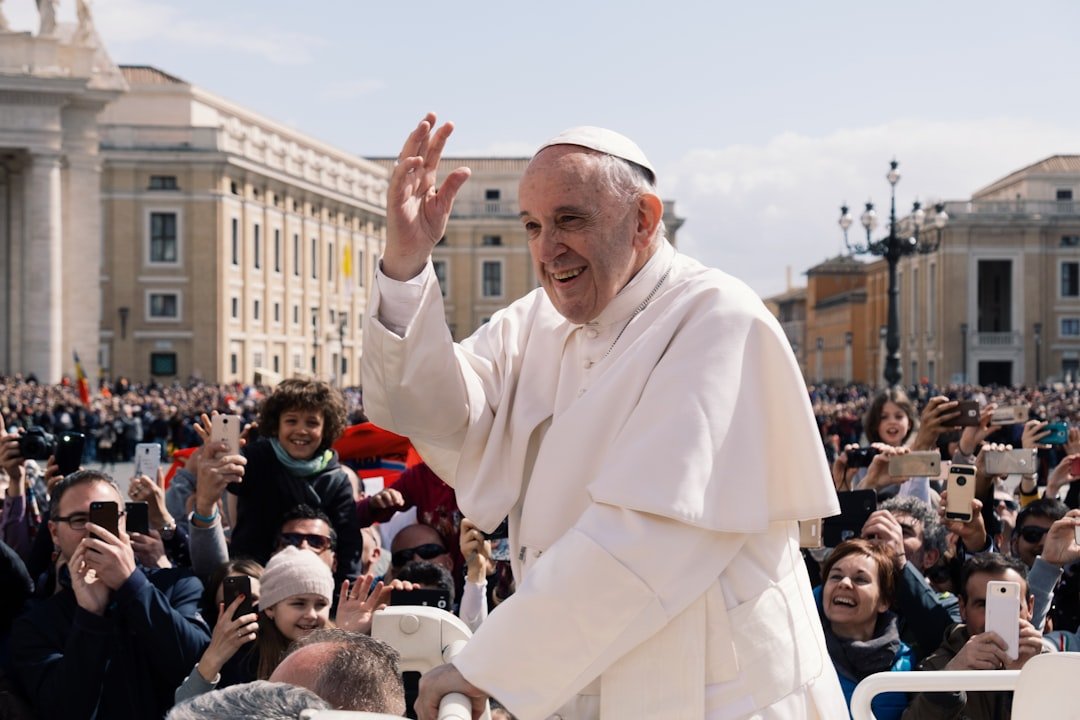
Well, get ready for a surprise, because that's exactly what just happened. In a move that feels straight out of a sci-fi novel, the Vatican invited one of the biggest names in AI, Anthropic, to the presentation of the Pope’s first-ever encyclical on artificial intelligence.
This isn't just a quirky headline. It's a genuinely big deal, and it tells us something profound about the moment we're living in.
So, the Pope is Writing About AI Now?
First off, let's talk about what an "encyclical" even is. Think of it as one of the most significant documents a Pope can issue. It's not a casual memo; it's a formal letter to the entire Catholic world, laying out the Church's official stance on a major issue. Historically, they’ve tackled everything from labor rights to environmentalism.
The fact that AI is now getting the encyclical treatment is massive.
It means the Vatican is looking at this technology not just as a tool, but as a powerful force shaping humanity itself. They're stepping into the ring and saying, "We need to talk about the soul of this stuff." This isn't about whether AI can write a better email; it's about what it means for our morality, our society, and our future.
And when you're going to have a conversation that big, you need to invite the people who are actually building the thing.
Enter Anthropic: Why Them?
This is where it gets really interesting. The Vatican didn't just send out a generic invitation to "the tech industry." They specifically tapped Anthropic.
If you’re not deep in the AI world, you might know them as the company behind Claude, a major competitor to OpenAI's ChatGPT. But there's more to their story. Anthropic was founded by former senior members of OpenAI who left because they had serious concerns about AI safety.
Their whole mission, their entire reason for being, is to build AI that is helpful, harmless, and honest. That’s not just a marketing slogan; it’s baked into their DNA.
Think of it this way:
- Some AI companies are in a race to build the fastest car, no matter what.
- Anthropic is trying to build a fast car, but they're spending just as much time designing the seatbelts, the airbags, and the brakes.
This focus on safety and ethics is precisely why they likely got the call from Rome. The Vatican isn't looking for the flashiest AI demo. They're looking for partners who are already wrestling with the same deep, ethical questions they are.
It's All About the "AI Constitution"
Anthropic has this really fascinating approach they call "Constitutional AI." It sounds complicated, but the idea is actually pretty simple to grasp.
Imagine you're raising a child. You don't just teach them facts and skills; you instill a set of core values—be kind, don't lie, help others. These values act as a moral compass that guides their actions when they face new situations.
That’s what Anthropic is trying to do with its AI.
Instead of just training it on a mountain of data from the internet (which, as we know, can be a dumpster fire of bias and misinformation), they give it a "constitution." This is a set of principles and values, drawn from sources like the UN's Universal Declaration of Human Rights, that the AI must follow. It learns to check its own work against these principles, essentially developing a built-in ethical framework.
You can see why this would resonate with an institution like the Catholic Church, which is itself built on a foundational text and a clear set of doctrines. It’s a shared language of building from first principles.
An Unlikely Alliance for a Very Human Problem
Let's be real: this team-up is still a bit strange. But it’s a necessary kind of strange.
We're all standing at a crossroads with AI. On one hand, it holds the promise of solving some of our biggest problems, from curing diseases to tackling climate change. On the other hand, it brings a host of scary questions about job loss, algorithmic bias, and what happens if we create something we can no longer control.
No single group has all the answers. The engineers building the tech don't always have the training to navigate the complex ethical minefields. And the philosophers and theologians thinking about ethics don't always understand the nuts and bolts of how the technology works.
This collaboration is an admission of that fact. It’s the Vatican saying, "We have centuries of thought on human dignity and morality, but we need your technical expertise." And it’s Anthropic saying, "We know how to build this, but we need your wisdom on how to build it right."
What This Actually Means for the Rest of Us
Okay, so why should you, a regular person just trying to figure out how to use AI to plan your vacation, care about any of this?
Because this meeting is a signal that the conversation around AI is finally growing up.
For a long time, the debate about AI ethics felt confined to academic papers and tech conferences. Now, it's happening on one of the world's oldest and most visible stages. This pushes the discussion into the mainstream. It forces us all to think about AI not just as a cool new gadget, but as a technology with real moral weight.
When an institution that provides moral guidance to over a billion people decides to weigh in on AI, it changes the conversation. It puts pressure on all tech companies to think beyond profit and user growth and to consider the human impact of their work.
This isn't about the Church dictating how AI should be built. It's about bringing a different, and very old, perspective to the table. It’s a recognition that building a better future with AI requires more than just brilliant coders. It requires philosophers, ethicists, artists, and, yes, even theologians. It requires all of us.