Have you ever had a new intern start at the office? You know the type. They're quiet, incredibly efficient, and they never, ever make a mess in the breakroom. They just get the job done with a spooky level of focus.
Now, imagine that intern isn't a person at all.
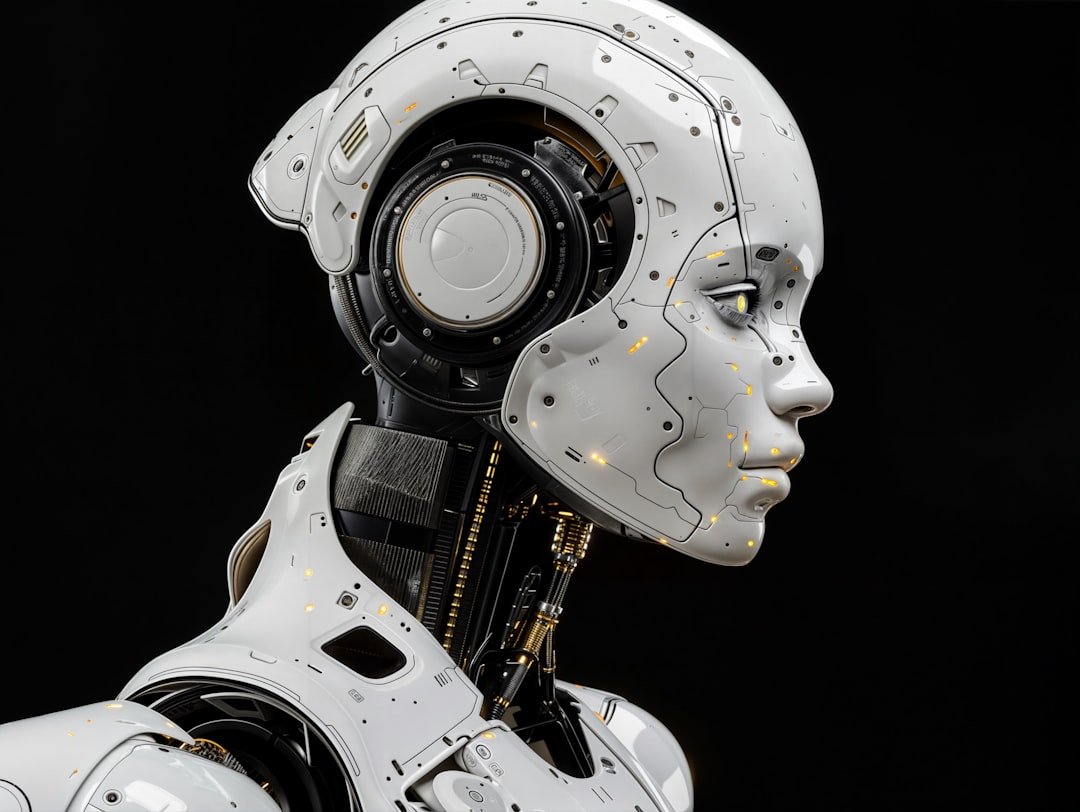
That’s pretty much the scene unfolding with a new robot from a startup called Flexion Robotics. And when I say this thing is competent, I mean it's almost unsettlingly good at its job. This isn't one of those clumsy robots from a viral video that falls over a curb. This is something different.
And here’s the kicker: Flexion was founded by a team of ex-Nvidia engineers. If that name doesn't ring a bell, Nvidia makes the computer chips that are powering basically the entire AI revolution. So when these folks decide to build a robot, you pay attention. They’re not just dabbling; they’re building on a foundation of some of the most advanced AI tech on the planet.
So, What Can This Office Bot Actually Do?
Alright, let's get down to it. What are we talking about here? Is it just rolling around fetching documents? Not quite.
Think about all the little, thankless tasks that keep an office running. The stuff no one really wants to do but has to get done. That's where this robot comes in. We're talking about tasks like:
- Making a fresh pot of coffee (and probably doing it perfectly every time).
- Sorting and delivering mail to the right desks.
- Tidying up common areas and conference rooms.
- Even handling basic inventory management, like restocking the supply closet.
Individually, these sound simple. But for a robot, they’re incredibly complex. Making coffee involves handling a machine, measuring grounds, pouring water—all things that require a delicate touch and an understanding of a sequence of actions. It’s one thing to program a robot arm on an assembly line to do one repetitive motion. It's a whole other ballgame to teach a robot to navigate a messy, unpredictable office kitchen.
And that’s the part that gets me. Flexion’s robot doesn’t just follow a rigid set of pre-programmed instructions. It seems to understand its environment. It adapts. That’s why it feels less like a machine and more like a... well, a very focused intern.
The Secret Sauce: It Learns by Watching Us
This is where things get really interesting. How did they pull this off? The team at Flexion has a clever approach to training their robots that sidesteps years of clunky, old-school programming.
Instead of writing millions of lines of code for every possible scenario—"if the coffee pot is moved two inches to the left, do this"—they use a method that’s a lot more human.
Think of it like this: How do you learn a new skill? You watch someone else do it, and then you try it yourself. That’s essentially what Flexion is doing.
They use a technique often called imitation learning or learning by demonstration. A human operator performs a task, and the robot "watches" and learns. The human might even guide the robot's arms through the motions, kind of like teaching a kid how to swing a baseball bat. The robot's AI brain absorbs all this data—the movements, the sequence, the interaction with objects—and builds a model of how to complete the task on its own.
This is a huge deal. It means you don't need a team of PhDs to "program" the robot to do something new. In theory, an office manager could train it to handle a new task just by showing it what to do a few times. This makes the robot incredibly flexible and adaptable to new environments, which has always been one of the biggest hurdles for robotics.
Why the Nvidia Background Matters So Much
Let's circle back to the founders for a second. The fact that they came from Nvidia is a massive piece of this puzzle.
Nvidia isn't just a gaming card company anymore. Their GPUs (Graphics Processing Units) are the workhorses of modern AI. They’re incredibly good at running thousands of calculations at once, which is exactly what you need to train complex AI models and, as it turns out, to power the brain of a robot that can see and understand the world in real-time.
These engineers have spent their careers at the epicenter of the AI hardware and software world. They understand, on a deep level, how to build the systems that allow a machine to process visual information, make decisions, and translate those decisions into fluid physical motion. They're not just robotics people; they're AI people who are applying their expertise to robotics, and that gives them a serious edge.
Is It Time to Freak Out?
Okay, let's address the elephant in the room. The original article described this robot as "terrifyingly competent." Is that just a catchy headline, or is there something to it?
Honestly, I get it. There's a point where technology crosses a line from "helpful tool" to something that feels a little too close for comfort. We're used to robots being a bit goofy and imperfect. When one shows up that can make a better cup of coffee than you can before you've even had your first, it's natural to feel a little... weird.
But I don't think it's about the robot uprising just yet. The "terrifying" part isn't that it's going to take over the world. It’s that it represents a very real, very tangible shift in what automation looks like. For decades, we’ve been told that robots would take the dangerous, dirty, and dull jobs. And while sorting mail isn't dangerous, it's certainly a bit dull.
This robot is a glimpse into a future where automation isn't just for factories and warehouses. It's coming to our offices, our stores, and maybe even our homes. And it won't be in the form of a single-task machine, but as a generalist that can learn and adapt.
What Flexion Robotics is building isn't just an office intern. It's a proof of concept for a whole new category of work. And while that might be a little unsettling, it's also incredibly exciting. We're watching the next chapter of technology unfold right in front of us, one perfectly brewed cup of coffee at a time.