Hey, let's talk.
Sometimes, keeping up with the world of technology feels like trying to drink from a firehose, doesn't it? One minute, we’re talking about a new chatbot, and the next, we're debating the future of energy for the entire planet. It’s a lot to take in.
That’s why I like to take a step back and just focus on what’s genuinely interesting and important. What are the big questions we should be asking? And what are the little stories that reveal something bigger about where we're headed?
Today, we're going to touch on a few things that have been on my mind, from how we even define "nature" anymore to what the next version of AI is actually going to look like.
What Do We Even Mean By "Nature" Anymore?
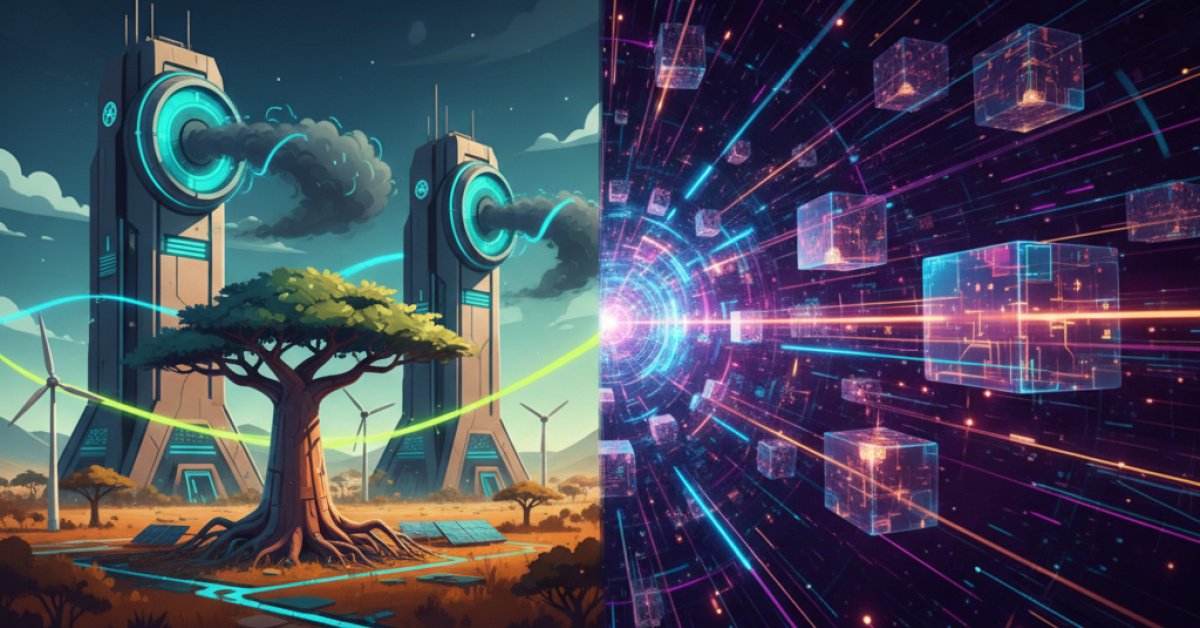
When you think of "nature," you probably picture a place completely untouched by people. A pristine forest, a remote mountain peak. But here's a tough pill to swallow: that world barely exists today.
Seriously. We're finding microplastics in animals deep in the rainforest. The Arctic Ocean, a place that should be defined by its natural cycles of light and dark, is now flooded with artificial light from human activity. Our footprint is literally everywhere.
So, if that’s the case, what is nature now? And here’s the big one: should we be using our technology to try and "fix" it or make it more "natural"?
This is a massive, thorny question. We’re seeing stories about birds that are losing their ability to sing their native songs, wolves that aren't quite wolves anymore, and even grass that isn't really grass. It forces us to confront how technology has fundamentally changed our planet—and whether it holds the key to repairing some of that damage. It’s a debate we’re going to be having for a long, long time.
So, What's Next for ChatGPT and Friends?
Remember late 2022 when ChatGPT dropped? It felt like the world shifted overnight. Suddenly, this AI chatbot was writing emails, coding, and planning vacations for millions of us. The entire tech industry went into a frenzy, with every major player racing to build their own version.
The hype was unreal. Large language models (LLMs) were crowned the future of, well, everything.
But now that the initial dust has settled, people are starting to ask: what’s the next big thing? The answer is surprisingly simple: more LLMs. But better.
Let's call them LLMs+. The focus now is on making these models cheaper to run, way more efficient, and even more powerful. Think of it like the evolution of the smartphone. The first iPhone was incredible, but the real magic happened in the following years as it got faster, the camera got better, and the battery lasted longer. That’s the phase we’re entering with AI. It’s less about a brand new invention and more about refining the incredible one we already have.
Will Fusion Power Ever Be Cheap? Let's Not Get Ahead of Ourselves.
Fusion power is one of those technologies that sounds like pure science fiction. It promises a future with a steady, clean, zero-emissions source of electricity. It’s the dream. But even if we get the science right and build the plants, a new study is throwing a little cold water on the excitement.
The big question isn't just "can we do it?" but "can we afford it?"
A research team recently looked into fusion's "experience rate." It's a simple idea: for many technologies, the cost goes down by a certain percentage every time we double our capacity to produce it. Think of solar panels or computer chips. They got dramatically cheaper as we made more of them.
The team’s findings suggest that we shouldn't count on fusion power being cheap, at least not for a while. It’s a sobering but necessary reality check. Getting to a clean energy future is one thing, but making it economically viable for everyone is a whole other challenge.
The Quick Hits: Other Stories on My Radar
Beyond those big topics, a bunch of other things happened that are worth knowing about. Here’s a quick rundown of what caught my eye:
- Trump and the Anthropic Ban: Trump has hinted he might be open to reversing the ban on U.S. investments in Anthropic, the AI company with ties to China. What this actually means is anyone’s guess, but it’s a situation worth watching.
- SpaceX is Making its Own GPUs: To power its massive AI ambitions, SpaceX is apparently planning to manufacture its own graphics processing units (GPUs). This is a huge move that shows just how central AI is becoming to Elon Musk's plans.
- Tencent Enters the AI Chat: Chinese tech giant Tencent just rolled out its first major AI model, and a former OpenAI researcher is leading the charge. The global AI race is heating up, and China is a massive player.
- The AI Workplace Divide: A new report shows that high earners are adopting AI tools much faster than others, which could make workplace inequality even worse. It’s a classic story: new tech benefits those at the top first.
- Samsung Workers Want a Cut: Over at Samsung, thousands of employees in the chip division are demanding a 15% share of the operating profit from AI. It's a clear sign that the people building the hardware for the AI boom want their piece of the pie.
- AI for... Mediocre Hackers? Apparently, AI is helping less-skilled Korean hackers pull off multi-million dollar heists. They're using it to "vibe code" their malware, making it easier than ever to get into the cybercrime game.
- Betting on Yourself (Literally): The prediction market Kalshi had to suspend three political candidates—a Democrat, a Republican, and an independent—for betting on their own election outcomes. Wild.
- A Robot Ping-Pong Champion: For the first time, a robot is beating elite human players at ping-pong. The Sony AI system was trained using reinforcement learning, and it’s another milestone for machines in complex physical tasks.
- Crypto Scammers Target Ships: In a bizarre and dangerous scheme, crypto scammers are luring massive ships into the Strait of Hormuz with false promises of safe passage. It’s a strange new frontier for digital crime.
- "Age Tech" is on the Rise: From apps and wearables to remote monitoring, technology designed to help us age comfortably at home is a growing field. It could be a huge help in filling gaps in elder care.
A Quote That Stuck with Me
Speaking of Musk and SpaceX, an investor had a pretty blunt take on the company’s shifting priorities from Mars to AI. Ross Gerber, CEO of an investment firm that owns SpaceX shares, told the New York Times:
“It’s a hallucinogenic business plan.”
You have to admit, it’s a memorable way to describe the whiplash of following Musk’s ventures.
One Last Thing: A Grim but Powerful Use of Tech
On a more serious note, there’s a story about how rapid DNA analysis was used after the horrific fires in Maui. When hundreds of people were missing, this technology became a vital tool for identifying victims, sometimes in just a few hours.
It’s a grim subject, but it shows how forensic breakthroughs can bring some small measure of closure to families in the worst moments imaginable. It also, unfortunately, prepares us for a more volatile world where mass-casualty events are becoming more frequent. It's a powerful, if somber, reminder of the role technology plays in every aspect of our lives, even the most tragic.
And on that note, let's end with something a little lighter. Even with all the heavy news, we can still find some cool stuff online.
- Want to know where plants came from? Check out this fascinating dive into botanical history.
- Tired of regular Google? Here’s how to use its reference desk to find things search engines usually miss.
- Ever wonder why duct tape is so sticky? Watch it get deconstructed to see the physics behind it.
- And finally, just listen to this: Radiohead covering Joy Division. It’s as good as you’d imagine.
There’s always a lot going on, but hopefully, this helps you feel a little more caught up. Talk soon.