It feels like every week, another company drops a new AI coding agent, promising to revolutionize how we build software. You've got tools from OpenAI, Anthropic, Google, Cognition, and a dozen others, all vying for a spot in your workflow. For developers, it's a mix of excitement and whiplash. For enterprises, it's a security and management nightmare.
Which agent do you standardize on? How do you control what they can access? What happens when your team is using five different tools with five different security models? It’s the Wild West, and everyone is handing out keys to the entire codebase.
This is the exact problem GitHub is tackling with its latest, and arguably most strategic, announcement: Agent HQ. Instead of throwing another hat in the ring, GitHub is making a bold play to become the ringmaster. They’re not building just another proprietary agent; they're building the one platform to rule them all.
Welcome to the "Wave Two" of AI Development
Remember when AI in coding just meant better autocomplete? That was "wave one," according to GitHub's COO, Mario Rodriguez. It was groundbreaking, sure, but it was just the beginning. GitHub's own stats show that 80% of new developers use Copilot in their first week, so that wave has clearly crested.
We're now paddling into "wave two." This era isn't about just completing a line of code. It's about agents—autonomous, intelligent entities that can understand tasks, plan solutions, and execute complex changes across your repository. It's multimodal, it's agentic, and it’s a whole new ballgame.
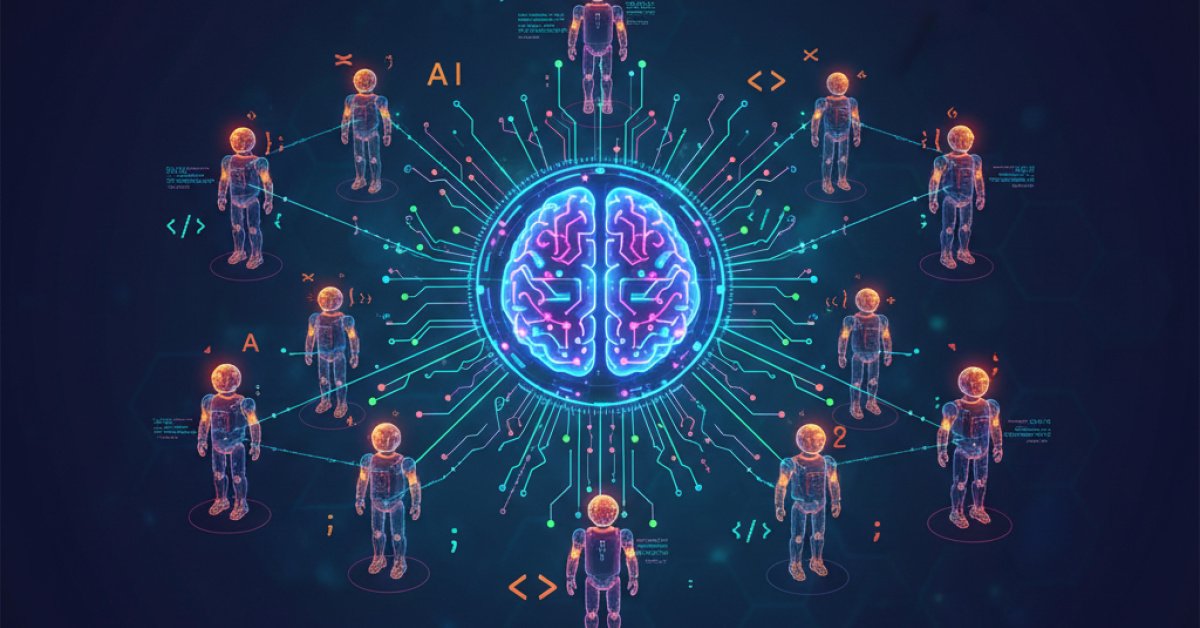
Agent HQ is GitHub's answer to this new era. It transforms the platform you already use for version control and collaboration into a unified control plane for a whole fleet of AI agents. Think of it less as a new tool and more as an orchestration layer that sits on top of everything you already do.
What is Agent HQ, Really? A Central Hub for AI Agents
So, what does this look like in practice? Over the next few months, you’ll be able to access and deploy coding agents from Anthropic, OpenAI, Google, Cognition, xAI, and others directly within GitHub. And the best part? They'll be available as part of your existing paid GitHub Copilot subscription.
GitHub isn't asking you to abandon your favorite tools. Instead, it’s inviting them all to the party and giving you a single place to manage them.
The beauty of this approach is that it all happens on familiar ground. Developers still work with the core concepts they know and love: Git, pull requests, issues, and GitHub Actions. What changes is the intelligence layer on top. Now, instead of just human developers operating within this framework, you have a team of AI agents working alongside them, all governed by the same rules.
Mission Control: Your Command Center for AI Development
At the heart of Agent HQ is a new interface called Mission Control. The name is fitting. It’s a unified command center that gives you a single pane of glass to manage all your AI workers.
From this central hub—which appears consistently across the GitHub web UI, VS Code, mobile apps, and the command line—you can:
- Assign work to multiple agents simultaneously.
- Track the progress of ongoing tasks.
- Manage permissions and access controls for each agent.
This solves one of the biggest headaches of the current multi-agent world: context switching and fragmented oversight. No more hopping between different UIs or trying to remember which agent has access to which repository. It’s all in one place.
Finally, Enterprise-Grade Security for AI Agents
Let's talk about the elephant in the room: security. When a developer uses a standalone tool like Cursor or grants Claude access to a repo, they're often handing over incredibly broad permissions. It's an all-or-nothing approach that makes security teams sweat.
Agent HQ flips the script by baking enterprise-grade governance directly into the platform.
Granular Permissions, Not Admin Keys
Instead of giving an agent keys to the entire kingdom, Agent HQ compartmentalizes access at the branch level. An agent operating through this system can only commit to designated branches, and it does so using a tightly locked-down GitHub token.
Sandboxed and Secure by Design
Every agent runs within a sandboxed GitHub Actions environment, complete with firewall protections. As Rodriguez explains, this means that even if an agent were to "go rogue," the firewall would prevent it from accessing external networks or exfiltrating your data unless you've explicitly configured it to do so.
All agent activity is wrapped in the same identity controls, branch permissions, and audit logging that enterprises already rely on for their human developers. This is a massive step up from the current free-for-all.
The Technical Differentiators That Make It Work
Beyond just managing third-party agents, GitHub is rolling out two powerful technical capabilities that set Agent HQ apart.
Custom Agents via AGENTS.md
This might be the most impactful feature for large teams. You can now create a source-controlled file in your repository called AGENTS.md. This file lets you define specific rules, tools, and guardrails for how GitHub Copilot behaves within that project.
For example, you could specify:
- "Always use our in-house logging library."
- "Generate table-driven tests for all new API handlers."
- "Follow these specific formatting guidelines."
This permanently encodes your organization's standards and best practices, eliminating the need for developers to constantly refine their prompts. When a new developer clones the repo, they automatically inherit these custom agent rules. It’s a brilliant way to ensure consistency and quality at scale.
Native Support for the Model Context Protocol (MCP)
VS Code is getting a new GitHub MCP Registry, which standardizes how agents communicate with external tools and services. MCP is an emerging industry standard, and by building native support, GitHub is positioning itself as the central integration point.
This means developers can discover and enable MCP servers with a single click, allowing them to build custom agents that can, for example, query a database, call an internal API, or check a monitoring dashboard—all without each agent needing its own bespoke integration logic.
Smarter Workflows are Coming to VS Code
The agentic revolution is also changing the developer experience right inside the editor. GitHub is shipping two new capabilities that focus on planning and quality control.
First, Plan Mode allows developers to collaborate with Copilot to map out a step-by-step project plan before a single line of code is written. The AI asks clarifying questions to ensure the requirements are fully understood. Once the plan is approved, you can execute it locally or hand it off to a cloud-based agent. This simple step aims to slash the wasted effort that comes from jumping into code too soon.
Second, GitHub's code review feature is getting an agentic upgrade. It will now leverage the powerful CodeQL engine—previously used mostly for security scanning—to proactively identify bugs and maintainability issues in agent-generated pull requests. This creates an automated quality gate, ensuring that AI-written code is reviewed by another AI before it ever reaches a human.
What Should Your Enterprise Do Now?
If your organization is already juggling multiple AI coding tools, Agent HQ offers a clear path toward consolidation without forcing you to pick a single winner. You get vendor flexibility and a unified security model, a combination that's been missing until now.
So, where do you start? Mario Rodriguez's advice is simple: begin with custom agents.
The AGENTS.md capability is rolling out now, and it's the perfect first step. It allows you to immediately start codifying your team's unique knowledge and processes, shaping your software development lifecycle to be more personalized and efficient. Once you have that foundation, you can begin layering in third-party agents to expand your team's capabilities. The future of software development isn't just about humans or AI; it's about both, working together seamlessly, securely, and smartly. GitHub is building the mission control to make that future a reality.