It feels like every other week there’s some new whiplash-inducing headline about AI, doesn’t it? One minute we're marveling at a new creative tool, and the next, we're deep in a debate about ethics, jobs, and who exactly is supposed to be writing the rules for all this powerful new tech.
Well, the rule-making question just got a whole lot more complicated.
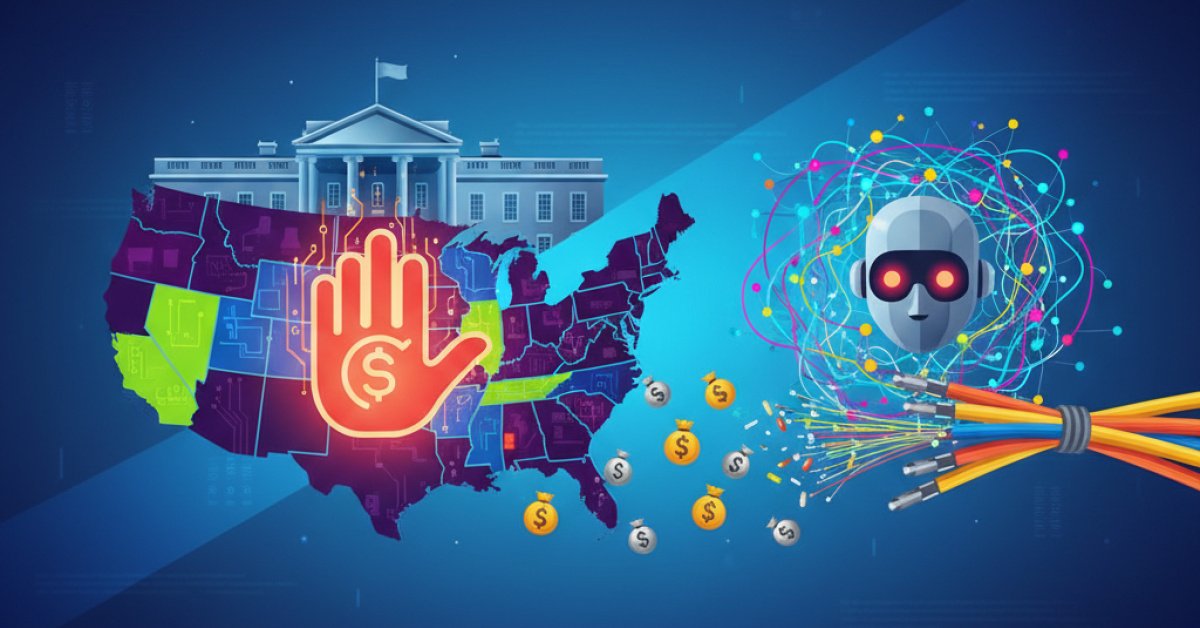
The White House just dropped an executive order that basically draws a line in the sand between the federal government and individual states when it comes to regulating artificial intelligence. And honestly, it’s a pretty aggressive move that could have huge consequences for how AI develops across the country. Let’s unpack what’s going on, because this isn't just political noise—it's something that could affect everything from our digital rights to our internet access.
So, What's in This Executive Order, Anyway?
Alright, let's get straight to it. This order does two big, very pointed things. It’s not some vague policy statement; it has real teeth.
First, it’s creating a new task force within the Department of Justice. Think of this as a dedicated legal team with one specific mission: to monitor and, more importantly, challenge state-level AI laws. This isn't about collaboration. It’s about confrontation.
Second, and this is the part that really makes you sit up and pay attention, it directs the Commerce Department to use a pretty heavy-handed tool: money. Specifically, it gives them the power to pull future broadband funding from any state that passes what the order calls “onerous” AI legislation.
So, you’ve got a legal threat on one hand and a financial threat on the other. It’s a classic carrot-and-stick approach, except it feels like it’s all stick.
Why Is This Happening Now? The Bigger Picture
To understand this move, you have to understand the quiet tug-of-war that’s been happening behind the scenes. For a while now, states like California, Colorado, and others have been stepping up to the plate, trying to create their own rules to protect consumers from the potential downsides of AI—things like biased hiring algorithms or misuse of facial recognition.
From their perspective, they’re just doing their job, protecting their citizens where the federal government has been slow to act.
But from the perspective of big tech companies and, it seems, the White House, this creates a massive headache. Imagine trying to run a business where you have to follow 50 different sets of rules for your AI products. It would be a logistical nightmare. They call this the "patchwork problem," and they argue that it stifles innovation and makes it impossible to compete.
This executive order is a clear attempt to stop that patchwork from ever being stitched together. It's the federal government planting its flag and saying, "Hey, we're going to be the ones in charge here. Everyone else, fall in line."
Let's Talk About the Money: The Broadband Funding Threat
This is the part of the order that’s really going to cause some sleepless nights for state governors.
Broadband funding is a huge deal. We’re talking about billions of dollars that states rely on to get high-speed internet to rural and underserved communities. It’s not just about streaming movies; it’s about access to education, healthcare, and jobs. It’s critical infrastructure.
Now, imagine you’re a state lawmaker. You’re hearing from your constituents who are worried about AI’s impact on their lives. You want to pass a law to, say, require transparency in how AI is used for loan applications. But now, you have to ask yourself: Is protecting our citizens with this law worth losing millions of dollars in federal funding that we desperately need to connect our communities?
And what does "onerous" even mean? The word is so vague, and that feels intentional. It creates a chilling effect. States have no clear line they can’t cross, so the safest bet might be to just… do nothing. To wait for the federal government to act, whenever that might be.
A Legal Showdown Is Brewing
While the money is the immediate threat, the Justice Department task force is the long-term one.
This isn't just a group that will write a report. The order gives them the authority to actively go after state laws in court. This sets the stage for some major legal battles that pit states' rights against federal authority.
It’s a classic American political debate, but it’s being applied to the most modern technology we have. Do states have the right to protect their citizens in the way they see fit, even if it creates a complex business environment? Or does the federal government have the authority to create a single, unified set of rules for the sake of the national economy and innovation?
There’s no easy answer here, and I have a feeling we’re going to see this play out in the courts for years to come.
What Does This All Mean for the Future of AI in the U.S.?
When you step back, it’s hard not to feel like this is a pivotal moment. This executive order could seriously slow down the momentum we’ve seen at the state level for AI regulation. States that were once leading the charge might now hit the brakes, worried about the potential consequences.
The big question is whether that’s a good or a bad thing.
On one hand, a single, clear set of federal rules could be a good thing for everyone. It would provide certainty for businesses and could, in theory, offer a baseline of protection for all Americans, not just those living in proactive states.
On the other hand, what if that federal baseline is too weak? States often act as "laboratories of democracy," trying out new ideas that can later be adopted nationally. If you shut down that experimentation, you might end up with a one-size-fits-all approach that is heavily influenced by industry lobbyists and doesn’t truly protect people.
Honestly, it feels like we're being pushed toward a choice between a chaotic but potentially innovative patchwork of state laws and a uniform but possibly watered-down federal law.
What happens next is anyone's guess. We’ll be watching closely to see how states respond. Will they back down, or will they call the bluff and challenge the order in court? One thing is for sure: the fight over who gets to write the rules for our AI future is just getting started.