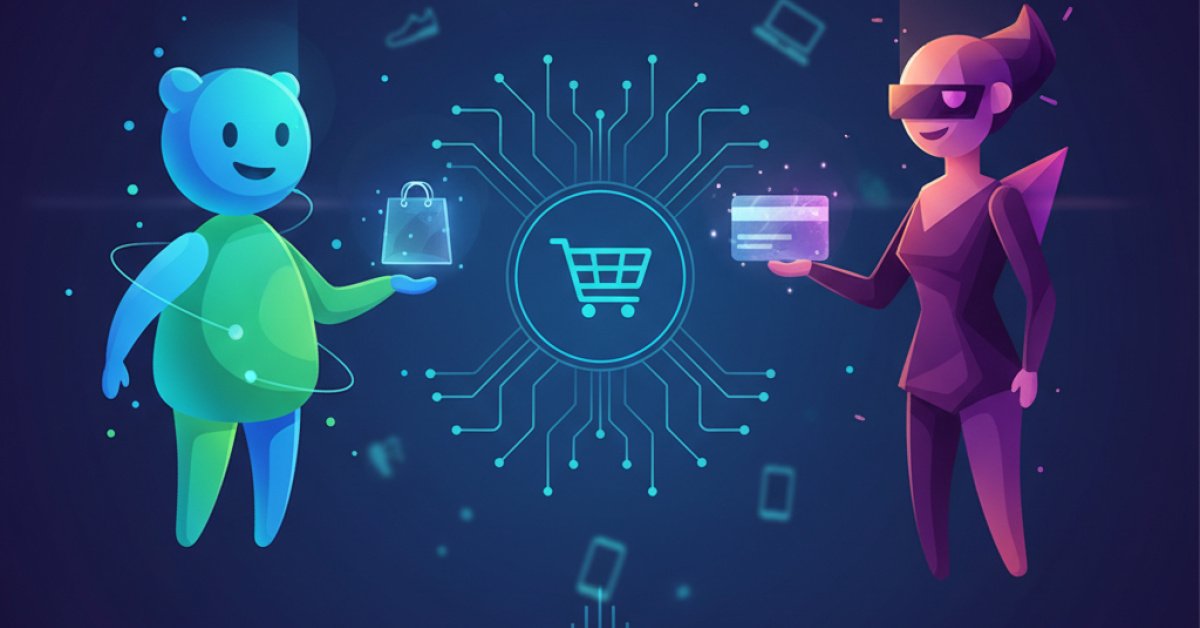
You know the feeling. You ask your favorite AI assistant, "Hey, find me a good pair of noise-canceling headphones for under $200." It does a pretty decent job, pulling up reviews and options. But then... it just dumps a pile of links on you.
And just like that, the magic is gone. Now it’s on you to click each link, check if they’re in stock, hunt for a coupon code, create an account, enter your shipping address for the tenth time this month, and pull out your credit card. The AI did the fun part—the discovery—and left you with all the chores.
It feels like we're right on the edge of something amazing, but we keep hitting this invisible wall. Well, Google’s AI team thinks they have a way to tear that wall down. It’s called the Universal Commerce Protocol, or UCP, and it’s a genuinely fascinating attempt to fix this broken part of online shopping.
The Real Problem? Everyone Speaks a Different Language
So why is this so hard? Why can't your AI just... buy the thing?
Google’s engineers call it the "N by N integration bottleneck." That sounds a bit technical, but the idea is simple. Think of it like this: every single online store (Walmart, Etsy, your local boutique) has its own unique way of handling checkout. And every AI platform (like Gemini, or an assistant built into your phone) has its own way of operating.
For an AI to actually buy something from a store, they need a custom-built translator just for that specific conversation. Now multiply that by thousands of stores and dozens of AI platforms. It's a complete mess. No one wants to build a million different translators. It’s just not practical.
This is the problem UCP is designed to solve. It’s not another app or a new AI. It’s a shared language—an open standard—that everyone can agree to use. Instead of building countless one-off connections, businesses and AI platforms just need to learn one language: UCP.
So, Who's Part of This Conversation?
To make this work, UCP defines four key roles. Let’s think of it like a well-coordinated pit crew for your online purchase.
- The Platform: This is your AI assistant, the one orchestrating everything. It could be Gemini, an AI feature in Google Search, or any other agent you’re chatting with. It’s the crew chief, calling the shots.
- The Business: This is the store you're buying from, like Target or Wayfair. They’re the ones with the products and are ultimately responsible for the sale. They’re the car in the pit lane.
- The Credential Provider: This is the secure vault that holds your personal info, like your shipping addresses and payment details. Think of it as your digital wallet. It hands the right tools to the crew at the right time.
- The Payment Service Provider: This is the one who actually handles the money—think Stripe, PayPal, Visa, or Mastercard. They make sure the payment is authorized and processed securely. They’re the fuel person, making the transaction happen.
By clearly defining who does what, UCP creates a trusted and organized flow where everyone knows their job.
The Building Blocks of an AI-Powered Purchase
Okay, so we have the players. How do they actually talk to each other? UCP gives them a simple but powerful vocabulary built on three core ideas:
- Capabilities: These are the main actions, or "verbs," of commerce. Things like
Checkout,IdentityLinking(so the AI can prove it's acting for you), andOrder(for tracking and updates). The store tells the AI, "Here are the things I'm capable of doing." - Extensions: Think of these as modifiers or "adjectives." They add extra detail to a capability. For example, you can extend a
Checkoutwith aDiscountsextension to apply a coupon code, or aFulfillmentextension to choose your shipping method. - Services: This is the "how." It’s the communication channel they use. It could be a standard REST API, a special protocol for large language models, or even a direct agent-to-agent chat. The beauty is, the underlying language of "Checkout" stays the same no matter how they choose to talk.
This structure is incredibly flexible. It allows a simple transaction like buying a t-shirt, but it can also scale to handle complex orders for travel, food delivery, or other services.
Let's Walk Through It: Buying Shoes Without Clicking a Link
This all sounds a bit abstract, so let's make it real. Imagine you ask your AI assistant to buy those headphones we talked about earlier. Here’s what the UCP-powered flow would look like, right inside your chat window.
- Discovery: First, your AI agent checks the store's public UCP profile. It instantly sees that the store supports checkout, identity linking, and order tracking. It knows what's possible.
- Handshake: If you’ve shopped there before, the agent uses a secure standard called OAuth 2.0 to say, "Hey, I'm working on behalf of Jane Doe, and she's given me permission to make a purchase." This is the digital handshake.
- Building the Cart: The agent sends the headphones you want to the store’s
Checkoutservice. The store’s system replies with a complete checkout object—the price, taxes, shipping options, everything. - Applying the Magic: Your agent can now work for you. It might automatically apply a loyalty discount it found or use an extension to change the shipping to two-day delivery. It then shows you the final total and asks, "Ready to buy?"
- Secure Payment: Once you say "yes," the payment part kicks in. Your AI doesn't see your actual credit card number. Instead, it works with your Credential Provider and the Payment Service Provider to use a secure, one-time token for this specific purchase. It's all handled behind the scenes.
- Confirmation and Tracking: The payment goes through, the business confirms the order, and you get a notification right in the chat. From then on, the
Ordercapability will send updates—when it ships, when it's out for delivery—all to the same conversation.
From your perspective, you never left the chat. No new tabs, no logging in, no re-entering your address. You just had a conversation, gave your consent at the key moments, and the purchase happened.
Okay, But Is It Secure?
This is probably the first question on your mind. Letting an AI spend your money sounds a little scary, right?
The UCP team has clearly thought a lot about this. The entire system is built with security at its core. It uses something called the Agent Payments Protocol, which separates the "what" from the "how" of payments.
Your payment details (like your credit card number) are kept safe with a Credential Provider. The AI agent never touches them. When it's time to pay, the agent gets a cryptographically signed "mandate"—basically, a provable permission slip from you for a very specific purchase amount. This mandate is then used by the Payment Service Provider to process the transaction.
This design is smart because it creates a verifiable, cryptographic audit trail. Both the AI platform and the business have proof of exactly what you authorized. This drastically reduces the risk of fraud or an agent going rogue, because every step requires explicit, provable consent.
This Isn't Just a Google Project
Here’s what makes me genuinely optimistic about UCP: it's not some closed-off Google system. It’s an open-source standard, and they’ve been building it with some of the biggest names in e-commerce and payments from day one.
We're talking about Shopify, Etsy, Wayfair, Target, and Walmart on the retail side. And on the payments side, you’ve got Visa, Mastercard, Stripe, and PayPal already on board.
When you see that level of industry-wide collaboration, you know it's not just a "what if" experiment. This is a serious attempt to build the foundational plumbing for the next generation of commerce. It’s about moving AI assistants from being simple search tools to being true, helpful agents that can actually get things done for us in the real world. And frankly, it's about time.