Building an AI company right now feels a bit like trying to build a skyscraper on the beach. The ground underneath you—the foundation models from OpenAI, Google, Anthropic—is constantly shifting. New, better, cheaper models pop up every week. It’s exciting, but it's also incredibly unstable.
So how do you build something that lasts?
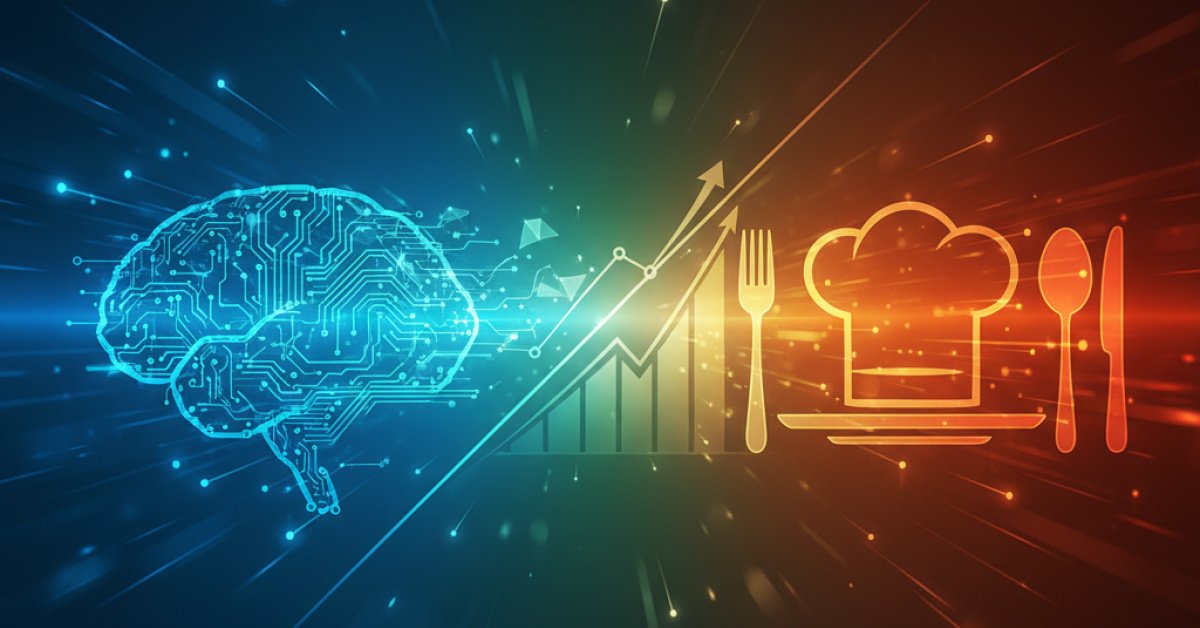
I recently had a fascinating chat with the team at Palona AI, a startup led by some serious heavy-hitters from Google and Meta. They put this challenge in perfect terms. Their CTO, Tim Howes, said you’re building on a foundation of “shifting sand.” And their journey from a general-purpose sales tool to a laser-focused “operating system” for restaurants is a masterclass for anyone trying to navigate this new world.
They just launched two new features, Palona Vision and Palona Workflow, that are turning heads. But what’s more interesting to me are the hard-won lessons they learned along the way. Let’s break down what they’re doing and the four key takeaways you can apply to your own work.
So, What Is This New "Digital GM" for Restaurants?
Imagine you own a chain of pizzerias. You can't be everywhere at once. You’re constantly worrying: Is the lunch rush being handled? Are the prep stations clean? Is that new employee messing up the dough?
This is the problem Palona is tackling. They’ve moved way beyond a simple chatbot.
Their new offering is basically a digital General Manager that never sleeps. It plugs into the restaurant's existing security cameras and point-of-sale system.
- Palona Vision is the eyes. It watches the restaurant floor and kitchen, flagging issues in real-time. It can see if a customer queue is getting too long, if tables aren't being cleared fast enough, or if a prep station is running low on toppings. No new hardware needed.
- Palona Workflow is the brain. It takes what Vision sees, combines it with sales data and staffing info, and then automates tasks. Think managing complex catering orders, running through opening and closing checklists, and making sure everything is running smoothly.
Shaz Khan, who founded Tono Pizzeria + Cheesesteaks, said it’s like giving every location a digital GM that “flags issues before they escalate and saves me hours every week.” That’s the goal: moving from just talking (like a chatbot) to seeing, understanding, and doing.
But getting here wasn't a straight line. They started out building AI sales agents for fashion brands with "surfer dude" personalities. They quickly realized that to build something truly valuable, they had to go deep, not wide. And that led them to the trillion-dollar restaurant industry.
Their pivot reveals a blueprint for building meaningful AI. Here are the four biggest lessons.
Lesson 1: Build for the 'Shifting Sand'
This is the big one. If your entire product is just a "thin wrapper" on top of GPT-4, you’re in trouble. What happens when GPT-5 comes out, or a competitor's model becomes 10x cheaper and just as good?
The Palona team knew they couldn't tie their fate to a single LLM provider.
So, they built their own orchestration layer. Think of it like a universal power adapter. It lets them plug in different models—from Google, OpenAI, open-source projects, and their own proprietary stuff—and swap them out on the fly.
They might use Google’s Gemini for a specific computer vision task because it benchmarks the best. For a phone call that needs to be in fluent Spanish, they might plug in a different model that specializes in that. They are constantly juggling performance, cost, and speed to get the best result.
The takeaway for you: Don't let your core value be a dependency on someone else's model. Build an architecture that gives you flexibility. Your survival might depend on your ability to unplug one "brain" and plug in another without your whole system collapsing.
Lesson 2: Your AI Needs to Understand the Real World, Not Just Words
There's a huge difference between an AI that can write a nice email and one that understands physical reality. Co-founder and CEO Maria Zhang put it perfectly: "In words, physics don't matter. But in reality, I drop the phone, it always goes down."
When Palona launched Vision, they made the leap from understanding language to understanding the world of a kitchen. This isn't about stitching a few APIs together. This is about teaching an AI to see cause and effect.
For example, their system can look at a pizza coming out of the oven and know it’s undercooked because it’s a "pale beige" color. It can see an empty display case and alert a manager to restock it before a customer complains. It’s connecting visual cues to operational outcomes.
This is a much deeper, more complex problem to solve than just processing text. But it's also where the real, defensible value is.
The takeaway for you: Think about how you can move beyond text. Can your AI process images, audio, or sensor data? Solving problems in the messy, physical world is infinitely harder—and therefore more valuable—than just spinning up another chatbot.
Lesson 3: If Off-the-Shelf Memory Fails, Build Your Own
Have you ever gotten frustrated with a chatbot because it forgets what you said two sentences ago? Now imagine that in a restaurant. Forgetting a customer’s allergy or their "usual" order isn't just annoying; it's bad for business.
The Palona team found that standard memory tools just weren't cutting it. Zhang mentioned that an open-source tool they tried was producing errors 30% of the time. In a high-pressure kitchen, that’s a complete non-starter.
So, they built their own.
They created a proprietary memory management system they affectionately call "Muffin" (a nod to web "cookies"). It’s not a simple vector database. It's a sophisticated system with four distinct layers designed specifically for a restaurant's needs:
- Structured Data: The hard facts. Delivery addresses, allergy information, hours of operation.
- Slow-Changing Dimensions: Customer preferences. Their favorite pizza, their loyalty status.
- Transient & Seasonal Memories: Things that change with context. A customer might prefer iced tea in July but hot chocolate in December.
- Regional Context: The defaults. Local time zones, language preferences, etc.
The takeaway for you: Don't assume the standard tools will work for your specific niche. For high-stakes applications, memory is everything. If the best tool available isn't good enough, you have to have the guts and the engineering chops to build your own solution.
Lesson 4: In the Real World, Reliability is Everything (Meet 'GRACE')
An AI hallucination on your laptop is funny. An AI hallucination in a busy pizzeria during the dinner rush is a disaster. Just ask Stefanina’s Pizzeria in Missouri, where an AI started inventing fake deals, causing chaos for the staff.
To prevent this kind of meltdown, Palona’s engineers live by an internal framework they call GRACE. It’s a multi-layered defense system to ensure their AI is reliable and trustworthy.
Here’s what it stands for:
- Guardrails: Hard limits on what the AI can and can't do. No making up promotions on the fly.
- Red Teaming: Proactively trying to break the AI to find its weak spots and hallucination triggers.
- App Sec: Standard but crucial security practices, like locking down APIs to prevent attacks.
- Compliance: Grounding every single AI response in verified data, like the official menu. The AI can't just "invent" a new topping.
- Escalation: A smart escape hatch. If a situation gets too complex, the AI knows to route the interaction to a human manager before things go wrong.
They test this relentlessly. Zhang told me they "simulated a million ways to order a pizza," using one AI to play the customer and another to take the order, just to measure and eliminate errors.
The takeaway for you: If your AI has the potential to cause real-world harm or financial loss, you need a rigorous reliability framework. Think about your own version of GRACE. How do you prevent the worst-case scenario?
The Future is Specialized, Not General
With this launch, Palona is making a big bet: that the future of enterprise AI isn’t about building a single, all-knowing assistant. It's about creating highly specialized "operating systems" that can see, hear, and think within the context of a specific industry.
Their system isn’t just answering questions. It’s designed to execute real restaurant workflows—remembering a regular’s order, watching to make sure it’s made correctly, and flagging problems before they happen.
It’s a powerful vision. As Zhang says, the goal is to let restaurant owners focus on what they do best: making great food. "If you've got that delicious food nailed... we’ll tell you what to do." And that, right there, is a lesson for all of us.