It feels like if you blink, you miss about a year’s worth of progress in technology and AI. Keeping up can feel like trying to drink from a firehose. So, let's just slow down for a minute and talk through some of the genuinely fascinating things happening right now.
This week, two stories really jumped out at me. One is about a tiny startup making a massive claim that could completely change the game for AI models like ChatGPT. The other is a deeply human story about how connecting our brains directly to computers is moving from science fiction into something that's changing real lives, right now.
Let's get into it.
Did a Tiny Startup Just Fix AI's Biggest Headache?
Okay, imagine you're trying to get a thousand cars through a single toll booth. It doesn't matter how fast the cars are; they're all going to get stuck in a massive traffic jam. For almost a decade, that's kind of been the problem with the large language models (LLMs) that power everything from chatbots to image generators. There's a mathematical bottleneck in how they work that forces them to do a staggering number of calculations for every single answer.
This makes them incredibly slow, expensive, and power-hungry. It's the main reason running these powerful AI models costs a fortune.
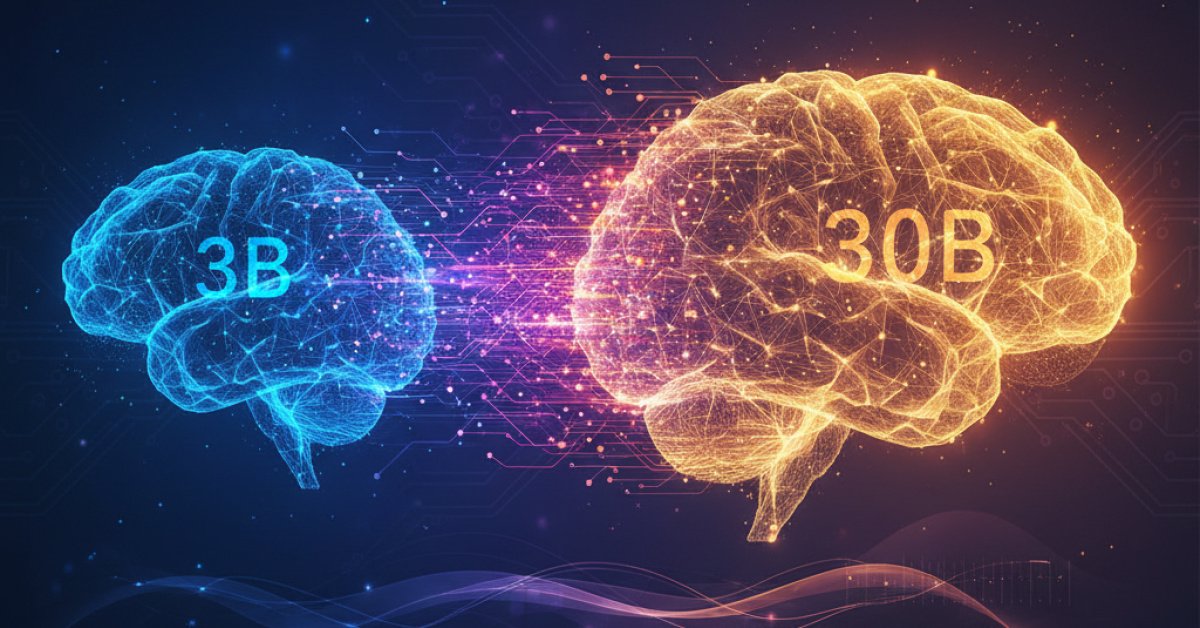
But then, a startup you've probably never heard of, Subquadratic, popped up last month with a bombshell claim: they say they’ve solved it. They claim to have broken through that mathematical traffic jam.
Their big idea is a new method that drastically slashes the number of computations the AI needs to make. Think of it as opening up a hundred new toll booths on that highway. The result? They're promising an LLM that's way faster, way cheaper, and uses a tiny fraction of the energy of anything else out there.
Now, whenever a small company makes a claim this big, the first reaction from experts is, understandably, a healthy dose of skepticism. And there was plenty of it. But Subquadratic has started sharing their work, showing their math, and... it looks like they might actually be onto something. We're not there yet, and some researchers are still not fully convinced, but it’s a development that has everyone in the AI world paying very close attention.
Connecting Brains to Computers Isn't Sci-Fi Anymore
While one team is trying to speed up artificial brains, others are making incredible leaps in connecting our own brains to technology. I read a story this week about Casey Harrell, a man with ALS who calls himself the "first power user" of a brain implant.
And when you hear what it's allowed him to do, you understand why. The device, a brain-computer interface (BCI), has let him keep his job, reconnect with friends and family, and even read to his daughter. He told the reporter it’s been "nothing short of revolutionary."
This isn't just a one-off, isolated experiment anymore. Over the last couple of years, the number of people volunteering for BCI trials has skyrocketed. In fact, this year China became the first country to approve a BCI for actual medical use.
The technology is getting so much better, so much faster. Engineers can now build in more features than ever before, moving these devices from the lab and slowly but surely towards the open market. It’s a powerful reminder that behind all the hype and headlines, this technology has the potential to give people back their lives.
A Quick Spin Through the Rest of the Tech World
Of course, those weren't the only things happening. Here are a few other important, weird, and fascinating stories that caught my eye.
Big Tech, Big Problems
It seems like there's always drama brewing at the tech giants. At Amazon, a group of engineers who spoke out at public meetings, asking for limits on new data center construction, say they're now under investigation by the company. They're worried they could be fired and have filed a complaint with Seattle's Office for Civil Rights.
And speaking of big tech and big government, Bernie Sanders has a wild new idea. He's proposing legislation that would give the public direct ownership of AI companies through a sort of "AI sovereign wealth fund." It would be funded by a one-time tax on these companies' stock and would make annual payments directly to Americans.
Geopolitics and Secret Tech
The global chess match over technology is getting more intense. A new report found that investors in China, some with ties to military contractors, secretly bought stakes in SpaceX before its big IPO. At the same time, the U.S. is worried that China may have gotten its hands on one of the most advanced chip-making machines from the Dutch company ASML.
On a slightly terrifying note, researchers say they've finally figured out how Russia's mysterious nuclear-powered missile works. They called the whole concept "a terrible idea," but admit it's not an impossible one.
The Human Element
It turns out that relying too much on AI might be making some of us... worse at our jobs. Early studies suggest that professionals like doctors and engineers who lean too heavily on AI might see their own skills start to weaken. It's a phenomenon being called "deskilling."
And in a funny twist, after a period of trying to use as much AI as possible ("tokenmaxxing"), some tech workers are now trying to use as little as possible. The spiraling costs of running these models mean they're now focused on "tokenminning" to save money.
And for the Truly Bizarre...
Just when you think you've seen it all, a company has invented a robotic, self-driving toilet. Called the Xiaoban, it brings the bathroom to you, then cleans and empties itself. I have so many questions.
Quote of the Week
And for a dose of pure tech-billionaire drama, a new book recounts a conversation between Donald Trump and Elon Musk. Trump apparently mocked his fellow billionaires, saying:
“They hated me. They were doing everything they could to knock me down. And look at them now.”
He was talking about Mark Zuckerberg and Jeff Bezos. Oof.
Let's Talk About Food (and Tech)
All this got me thinking about how we use technology for fundamental things, like feeding ourselves. The pandemic really showed us how fragile our global food system is. Those weaknesses are, ironically, the result of decades of technological advances like globe-spanning shipping and massive refrigeration networks.
But technology itself isn't the bad guy here. Powerful tools like genetic modification could be used to create stronger, more resilient local farms and a healthier food system for everyone. The problem is, they're usually designed to maximize profits, not to serve people.
The real challenge isn't inventing new tech; it's making sure the tech we have serves human well-being and food security first. It’s a question of priorities, and it’s one we need to get right.
And Finally, Some Cool Stuff to Brighten Your Day
Before you go, I found a few things this week that are just plain neat. We can still have nice things, right?
- This fascinating video gives you a peek into the covert, real world of Japan's shinobi (ninjas).
- If you've ever wondered if there's a better way to tie your shoes, this incredibly obsessive archive has you covered with over 100 different methods.
- One of the world's biggest digital collections of plants and fungi is now online and free for everyone to explore.
- And if you just need something beautiful to listen to, a grand orchestra did a stunning cover of Michael Jackson's "Human Nature" at the legendary Abbey Road Studios.
That's all for now. It's a wild world out there, but it's never boring. Talk soon.