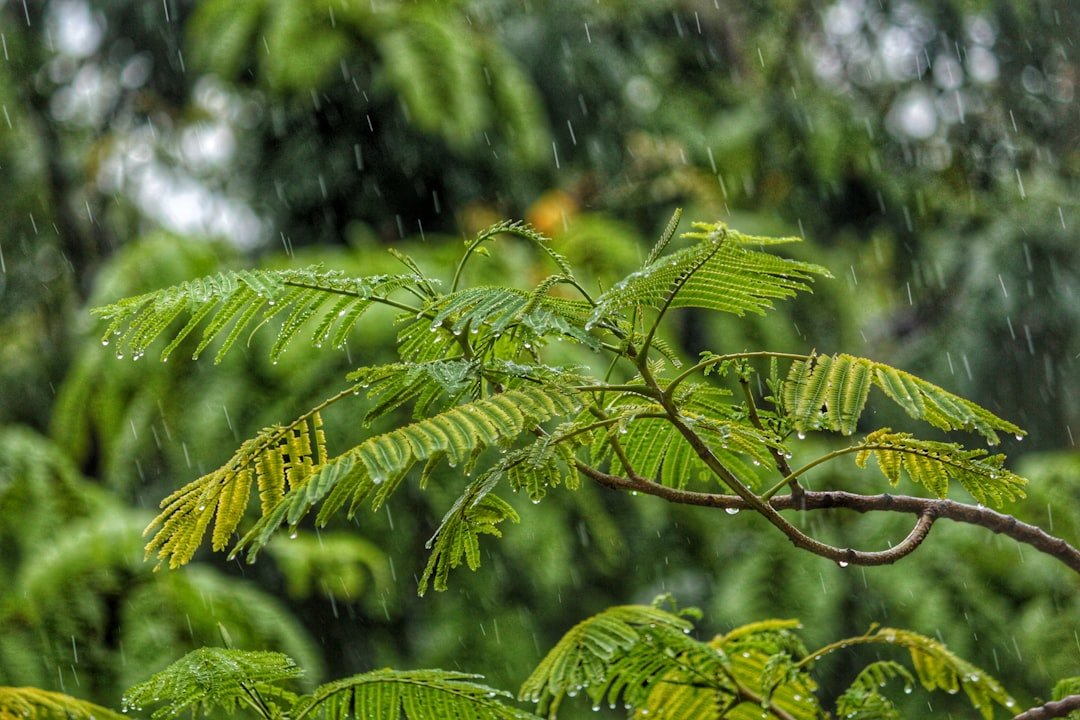
Have you ever just sat by a window and listened to the rain? There’s something so calming about the gentle pitter-patter on the glass or the soft drumming on the soil outside. It’s a sound we humans find relaxing.
But what if I told you we’re not the only ones listening?
It sounds a little out there, I know. But some engineers at MIT just stumbled upon something incredible: the first real evidence that plants can actually sense sounds in their natural environment. And not just any sound—the very specific patter of falling rain.
This isn't just a quirky little fact. It’s a discovery that could change how we think about the hidden world of plants.
So, What Did the Scientists Actually Find?
Alright, let's get into the details of this fascinating experiment. The team at MIT, led by Professor Nicholas Makris and former grad student Cadine Navarro, decided to focus on something simple: rice seeds.
They set up a scenario you might find in nature—rice seeds submerged in a bit of shallow water. Then, they started dripping water onto the surface, mimicking the sound and vibration of a gentle rain shower.
And the results were pretty stunning. The seeds that were exposed to these rain-like vibrations germinated between 30% and 40% faster than the seeds left in silence. Think about that for a second. Just the sound of rain was enough to give these seeds a major head start.
They were careful to make sure it wasn't the extra water reaching the seeds, but the vibrations traveling through the water. It was the sound waves themselves that were acting as a wake-up call.
How in the World Does a Seed "Hear" Anything?
This was the part that really got me. A seed doesn't have ears, so what's going on here? How is it "hearing" these vibrations? The answer is surprisingly clever and all comes down to physics.
Inside a plant seed, there are these incredibly tiny, dense organelles called statoliths. The best way to think of them is like the little ball inside a can of spray paint. Their main job is to sense gravity—they settle at the bottom of a cell, telling the plant which way is down so it knows to send its roots in the right direction.
But the MIT researchers figured out they have a second job.
When a raindrop hits the ground or a puddle, it sends out sound waves—tiny vibrations that travel through the soil and water. The researchers found that these vibrations are just strong enough to physically shake the seed.
And when the seed shakes, what happens to those little statoliths inside? They get jostled around, rattling inside the cell like that ball in the spray paint can. This rattling is the signal. It’s a physical trigger that tells the seed’s internal machinery, "Hey! It's raining. Time to wake up and get growing!"
But Why Does This Even Matter for a Plant?
This is where it all clicks into place. This isn't just a neat party trick for plants; it’s a brilliant survival strategy that has evolved over millions of years.
Imagine you're a tiny seed buried in the soil. Your biggest challenge is knowing when the time is right to sprout. If you sprout too early when it's dry, you'll wither and die. If you're buried too deep, you'll run out of energy before you can reach the sunlight.
So, how do you know you're at the perfect depth with enough water to survive? You listen for the rain.
If a seed is close enough to the surface to feel the vibrations from raindrops, it’s a pretty safe bet that it’s not buried too deep. The sound acts as a confirmation: "You're in a good spot, and there's fresh water available. Go for it!"
As Nicholas Makris put it, “What this study is saying is that seeds can sense sound in ways that can help them survive.” He added, “The energy of the rain sound is enough to accelerate a seed’s growth.” It's an ingenious, built-in system for giving itself the best possible chance at life.
Is It Just Rice, or Are Other Plants Listening, Too?
The big question now is whether this is a special skill unique to rice, or if the entire plant kingdom has been listening in on us this whole time.
The researchers at MIT strongly suspect that this isn't a one-off phenomenon. The mechanism—using statoliths to sense vibrations—is common in the plant world. It’s very likely that many other types of seeds are using this same acoustic trick to time their germination.
It really opens up a whole new way of looking at the environment. We tend to see plants as passive, silent things, but this study suggests they are constantly sensing and responding to their world in ways we're only just beginning to understand.
So, the next time you find yourself caught in a spring shower, take a moment. Remember that beneath your feet, a silent symphony is playing out. The vibrations you feel are sending a message to countless seeds, telling them that it's their time to grow. It’s a pretty amazing thought, isn't it?