Have you ever been using an AI tool and felt that slight, frustrating pause while it "thinks"? That little spinning wheel is the enemy of a good user experience. For businesses trying to deploy AI at scale, that lag isn't just annoying—it's incredibly expensive. Every millisecond of compute time costs money and energy.
Well, it looks like NVIDIA and Mistral AI just decided to take a sledgehammer to that problem.
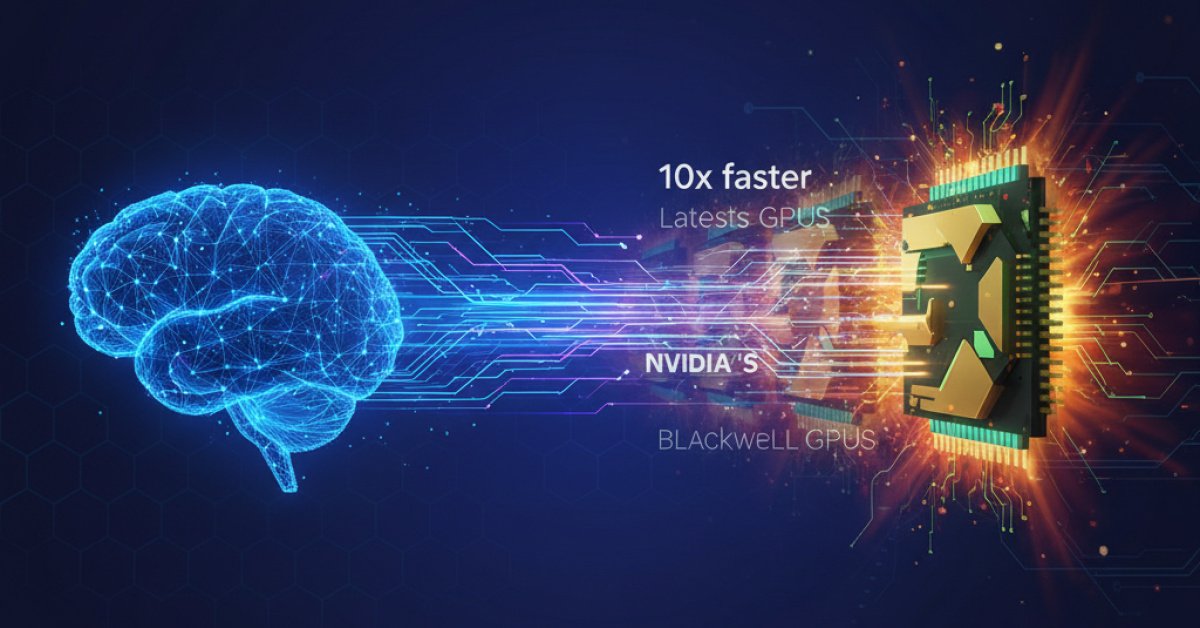
They’ve deepened their partnership, and the result is pretty staggering: Mistral’s brand-new family of open models runs up to 10 times faster on NVIDIA’s latest Blackwell-based systems. This isn't just a small, incremental update. It's a genuine leap forward that could change how we build and use powerful AI agents.
Let's break down what’s happening here, why it matters, and how they actually pulled it off.
A Generational Leap in Speed and Efficiency
For a while now, the AI world has been moving past simple chatbots. We're now building complex agents that need to reason, understand long documents, and perform multi-step tasks. The problem? This kind of heavy lifting makes inference—the process of actually running the model to get an answer—a huge bottleneck.
This is where the new NVIDIA GB200 NVL72 systems come in. Think of them as the absolute top-of-the-line engine for AI. By optimizing the new Mistral 3 models specifically for this hardware, the two companies have achieved that mind-boggling 10x performance boost compared to the last generation.
But here’s the kicker: it’s not just about raw speed. It’s about efficiency.
For data centers, power consumption is a massive concern. These new systems are designed to be incredibly energy-efficient, delivering over 5,000,000 tokens per second for every megawatt of power used. For you and me, that translates to a lower cost for every word the AI generates, making sophisticated AI more accessible and sustainable. It’s a win-win.
Meet the New Brains: The Mistral 3 Family
So, what are these new models that are running so fast? Mistral has unveiled a whole new family, designed to cover everything from massive data center tasks to running AI locally on your laptop.
Mistral Large 3: The Heavyweight Champion
This is the new flagship, and it’s a beast. It’s a state-of-the-art model designed for the most complex reasoning tasks.
- Model Type: A sparse Mixture-of-Experts (MoE) model. Think of an MoE like having a team of specialized experts instead of one generalist. It’s more efficient because it only activates the "experts" it needs for a given task.
- Total Parameters: 675 Billion (with 41 Billion active at any time)
- Context Window: A huge 256,000 tokens. That’s enough to process a very, very long book in one go.
Trained on NVIDIA’s Hopper GPUs, Mistral Large 3 is built to compete with the top closed-source models out there, but with the flexibility that comes from being open.
Ministral 3: The Nimble and Powerful Series
Not every task needs a heavyweight. For things running on your PC or on an edge device like a robot, you need something smaller and faster. That’s where the Ministral 3 series comes in.
These are smaller, "dense" models (meaning all their parameters are active at once) that are optimized for speed.
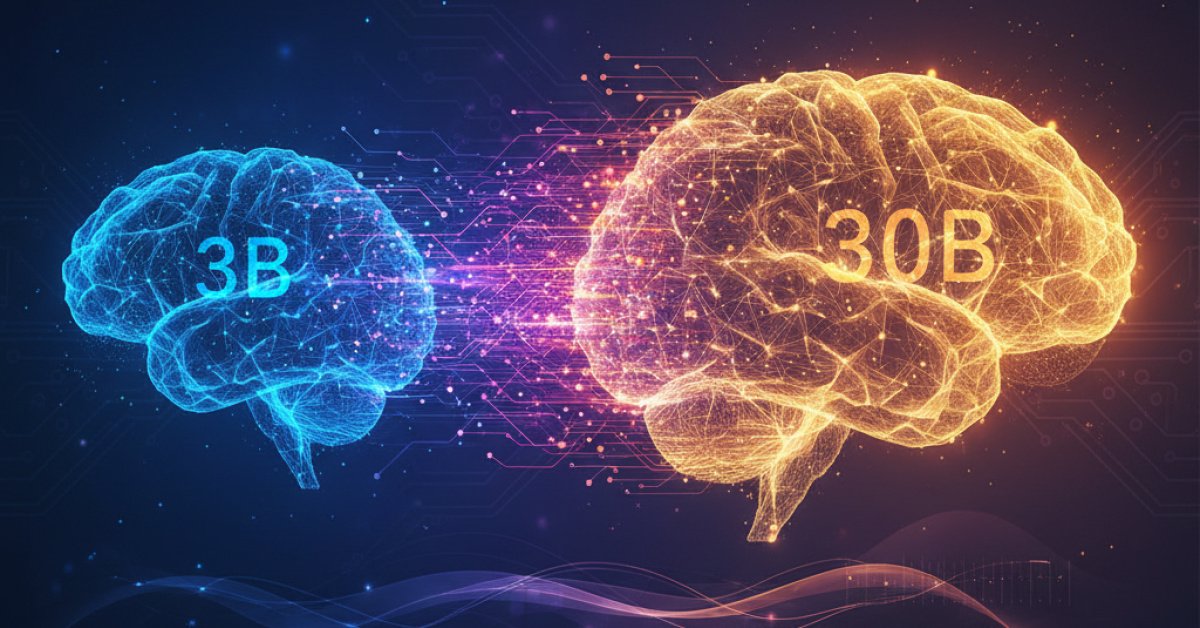
- Sizes: They come in 3B, 8B, and 14B parameter versions.
- Variants: Each size has three flavors: a base model, an "Instruct" model for following commands, and a "Reasoning" model.
- Context Window: They all share the same massive 256K context window as their bigger sibling.
These little powerhouses are incredibly capable, even outperforming other models on certain benchmarks while using far fewer resources.
The Secret Sauce: How Did They Get It So Fast?
Okay, a 10x speed-up doesn't just happen by accident. It’s the result of some seriously deep engineering collaboration between Mistral and NVIDIA. They didn't just run the software on the hardware; they co-designed them to work in perfect harmony.
Here are the three key technical tricks they used:
1. Wide Expert Parallelism (Wide-EP)
Remember how Mistral Large 3 is a Mixture-of-Experts (MoE) model? Running these efficiently on a massive system with 72 GPUs is a huge challenge. NVIDIA’s TensorRT-LLM software uses a clever technique called Wide-EP to manage this.
Imagine it like a super-efficient communication system for all the "experts" in the model. It uses the super-fast NVLink connections inside the GB200 system to make sure there are no traffic jams, allowing all parts of the model to talk to each other with almost zero delay. This ensures the model's massive size doesn't slow it down.
2. Native NVFP4 Quantization
This one is really cool. Quantization is basically a way of shrinking a model down so it uses less memory and computes faster. The trick is to do it without losing accuracy.
NVIDIA's Blackwell architecture has a new, native data format called NVFP4. Think of it like a super-smart compression algorithm built right into the chip. Using an open-source tool, developers can convert Mistral Large 3 to this format. It dramatically reduces the model's footprint while keeping its performance and accuracy intact. It’s like making a file smaller without making it blurry.
3. Disaggregated Serving with NVIDIA Dynamo
When you send a prompt to an AI, there are two phases: "prefill" (the AI reads and understands your prompt) and "decode" (the AI generates the answer one word at a time). Traditionally, these two phases compete for the same resources.
NVIDIA Dynamo is a framework that cleverly separates them. It’s like having two separate assembly lines, one for understanding the request and one for building the response. This is especially useful for long prompts, ensuring the system stays fast and responsive even when you’re feeding it a ton of information.
Not Just for Supercomputers: AI on Your Desk and in Your Robot
This collaboration isn’t just about giant data centers. The optimizations for the smaller Ministral 3 models mean you can get incredible performance on hardware you might actually own.
- On Your PC: Running on an NVIDIA GeForce RTX 5090, the small Ministral-3B model can hit a blazing 385 tokens per second. That's fast enough for real-time, local AI applications right on your workstation, which is great for privacy and quick development.
- On the Edge: For robotics and other embedded systems, the models are optimized for platforms like the NVIDIA Jetson Thor. A 3B model can achieve over 50 tokens per second, making it powerful enough for real-time interaction on a robot.
Making It Easy for Everyone to Use
All this power is useless if it’s too hard for developers to access. NVIDIA and Mistral have gone to great lengths to make sure these models are easy to use.
They’ve worked with the teams behind popular open-source tools like Llama.cpp, Ollama, SGLang, and vLLM to ensure everything works smoothly out of the box.
And for businesses, the models will be available as NVIDIA NIM microservices. This is basically a "model-in-a-box" solution. It's a pre-packaged, production-ready container that enterprises can deploy on their own infrastructure with minimal fuss. It’s all about taking this groundbreaking performance and making it practical for the real world.
So, what's the big takeaway here? This partnership is setting a new standard for what's possible with open-source AI. By combining a frontier-level open model with deeply optimized hardware, Mistral and NVIDIA are giving developers the tools to build the next generation of AI applications—apps that are not only smarter but also faster and more efficient than ever before.
And they’re not done yet. They’re already working on more optimizations that promise to push performance even further. If you’re a developer, you can start playing with these models right now on Hugging Face or test them out on NVIDIA's own platform. It's an exciting time to be building with AI.