You ask ChatGPT to find the best noise-canceling headphones for under $300 with at least a 20-hour battery life. In seconds, it serves up a perfect recommendation, complete with a glowing review summary and a link to buy. But that’s where the magic stops. You still have to click the link, go to the merchant’s site, pull out your credit card, and manually complete the purchase. It feels like a clunky handoff in an otherwise futuristic process.
This is the biggest bottleneck holding back the true potential of AI-powered commerce. We have brilliant AI agents that can research, compare, and recommend, but they can't take that final, crucial step: actually buying things for us. Why? It all boils down to trust. Right now, neither you nor your bank feels comfortable letting a chatbot go on a shopping spree with your money. There’s no secure, universally accepted way for an AI to prove it’s acting on your behalf.
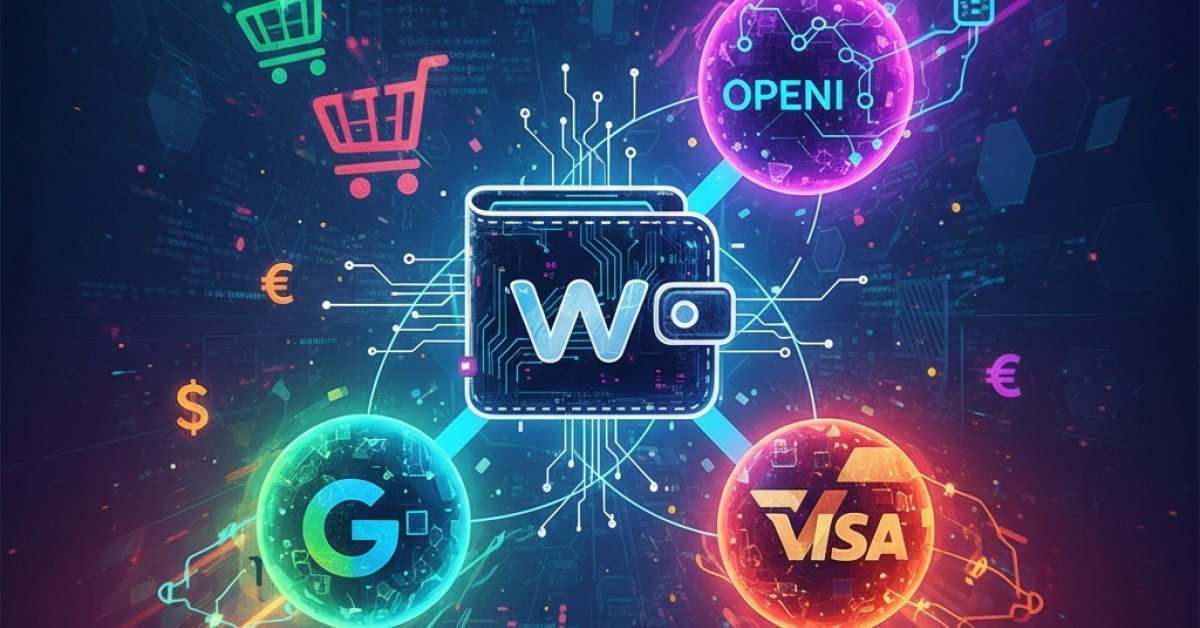
But that’s all about to change. In the last few weeks, the titans of tech and finance have thrown down the gauntlet, each launching their own solution to this problem. We're witnessing the start of the AI Wallet Wars, a high-stakes battle between Google, OpenAI, and Visa to build the very foundation of how AI agents will spend money. The outcome will shape the future of how we shop, and it’s a race that’s just getting started.
Why Your AI Assistant Can't Go Shopping (Yet)
The dream is simple: you tell your AI, "Order my usual groceries for the week," or "Book me a flight to Miami for next Tuesday," and it just… happens. But the reality is a tangled web of security, authorization, and verification.
For an AI agent to make a purchase, a lot of players need to be on the same page. The AI model (like ChatGPT), the agent provider, your bank, and the merchant all need to speak a common, secure language. This language has to prove, without a shadow of a doubt, that the agent has your explicit permission to complete a transaction.
Without a standard for this, the whole system is a non-starter. Merchants won't accept payments from an unverified bot, and banks will slam the brakes on any transaction that looks like it was initiated by anyone other than you. This is the trust gap that everyone is scrambling to fill.
The Protocol Wars: Meet the Titans Vying for Control
To solve this trust gap, three major contenders have emerged, each with a different vision for how to securely connect AI agents to the world of commerce. Think of these as competing operating systems for AI payments.
Google's Agent Pay Protocol (AP2): The Digital Handshake
Google, in partnership with heavyweights like PayPal, American Express, and Mastercard, has proposed the Agent Pay Protocol (AP2). The core idea behind AP2 is a "digital contract."
Imagine you’re giving your AI a temporary, single-use power of attorney. This digital contract serves as a cryptographic proof that you've authorized a specific action. It's a formal, secure handshake between you, your agent, and the merchant, ensuring everyone knows the transaction is legitimate. By roping in major payment networks from the get-go, Google is aiming for broad, immediate credibility.
OpenAI & Stripe's ACP: The Trusty Courier
OpenAI, the minds behind ChatGPT, have teamed up with payment giant Stripe to create the Agentic Commerce Protocol (ACP). Their approach is a bit different and, in some ways, less disruptive to the current system.
The ACP essentially turns the AI agent into a secure courier. The agent doesn't hold your payment details directly. Instead, it securely relays your intent to purchase to the merchant, which then uses Stripe’s existing, trusted payment infrastructure to process the transaction. This method avoids a massive overhaul of backend systems, making it an attractive, lower-friction option for businesses already using Stripe.
Visa's Trusted Agent Protocol (TAP): The VIP Pass
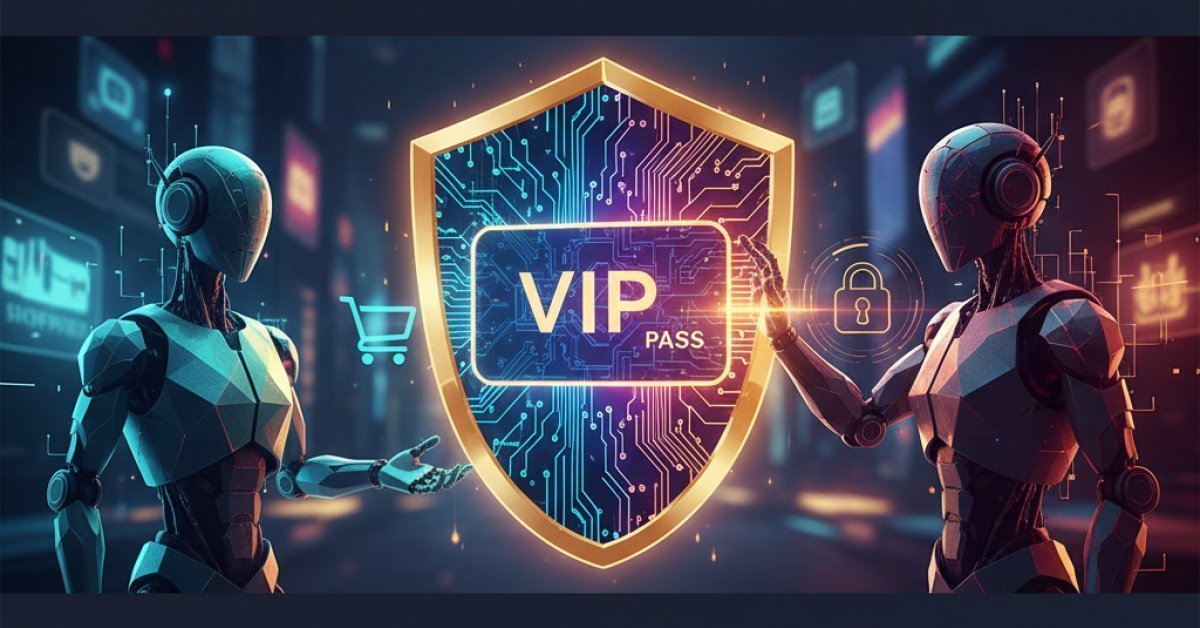
It's no surprise that Visa, a company built on payment security, has its own take. Their Trusted Agent Protocol (TAP) operates like a high-tech VIP pass for your AI.
With TAP, your AI agent is added to an "approved list" and given a unique digital key. This key acts as its identification, which it presents when making a purchase. Using powerful cryptographic proofs, the merchant and bank can instantly verify that this specific, trusted agent has your permission to act. It’s a system built on Visa’s decades of experience in securing transactions, focusing on identity and verification from the ground up.
The Big Risk: Are We Building Walled Gardens for AI Shopping?
Having choices is great, but having three competing, fundamental standards could create a massive headache. The biggest danger is that we end up with "walled gardens"—closed ecosystems where everything only works if you stay within one company's world.
Think about the internet today. You can use any browser (Chrome, Safari, Firefox) to visit any website because they all rely on a common standard, TCP/IP. It just works. Now, contrast that with the AI chatbot world. If you want to use ChatGPT, you open ChatGPT. If you want to use Gemini, you have to open a separate Gemini tab. They don't talk to each other.
Now, apply that fragmentation to commerce. What happens if you’re a loyal ChatGPT user, but your favorite online store only accepts payments via Google's AP2? Or what if your bank decides it will only trust Visa's TAP for AI-initiated transactions? You could get locked out of services or be forced to juggle multiple AI platforms just to shop online.
For businesses, this is a potential nightmare. Which protocol do you bet on? Supporting all three could be complex and expensive. Betting on the wrong one could mean losing customers who are locked into a competing ecosystem. As Louis Amira, CEO of agent commerce startup Circuit and Chisel, pointed out, the more sophisticated and secure these protocols become, the harder it might be for them to work with each other.
Navigating the Maze: What's Next for AI-Powered Commerce?
So, where do we go from here? For now, we're in a period of experimentation and uncertainty. The industry needs time to kick the tires on these proposals and see which one—or which combination of features—works best in the real world.
This confusion creates an opportunity for a new layer of technology to emerge: interoperability platforms. Companies are already working on "universal translators" that could sit between these protocols, allowing them to communicate with each other. This would be a huge win for both consumers and businesses, creating a more open and competitive market.
There's also a strong argument for the power of open source. As Wayne Liu of Perfect Corp. suggests, the developer community could be the driving force that pulls the best ideas from each protocol into a single, unified standard. It’s a slow process, but it’s often how the most robust and widely adopted technologies are born.
One thing is for sure: the race is far from over. We've heard from Google, OpenAI, and Visa, but what about other giants like Apple, Amazon, or even major retailers like Walmart? Any one of them could still enter the fray with their own protocol, shaking things up even more. This isn't just a technical squabble over standards; it's the laying of the foundational bricks for the next era of e-commerce. The real winner won't be the company with the cleverest cryptography, but the one that finally convinces all of us to trust a bot with our money.