When you think of AI in filmmaking, your mind probably jumps to seamless special effects, de-aged actors, or maybe even AI-generated scripts. We often talk about it as a tool for perfection—a way to smooth out the rough edges and create flawless digital worlds. So, what do you do when a filmmaker looks at that same technology and calls it "gross and slimy"? If you're Romanian director Radu Jude, you don't just criticize it. You lean in and make it the star of your movie.
Jude is making waves with his wildly unconventional, three-hour adaptation of Dracula. But this isn't the caped, gothic vampire you know. This Dracula is a modern monster who produces porn and ruthlessly exploits tech workers. And to bring this bizarre vision to life, Jude turned to the very AI tools he finds so repulsive.
This isn't a story about a director begrudgingly using new tech. It's the story of an artist finding the perfect, grimy tool for a grimy job. He saw the unsettling, often-janky output of AI not as a flaw, but as a feature—a visual language that perfectly captures the soulless exploitation at the heart of his film. It’s a fascinating, and frankly, brilliant, middle finger to the utopian hype surrounding AI in the creative arts.
A Vampire for the Digital Gig Economy
Before we get into the "how," let's talk about the "what." Radu Jude’s film isn't a straightforward horror story. It's a biting satire, a sprawling commentary on modern capitalism, labor, and the decay of culture in the internet age. Forget castles and bats; this Dracula is a creature of the gig economy.
In Jude's telling, Dracula is a tech-bro vampire who has traded his aristocratic titles for a portfolio of shady online ventures. He's an exploiter, a content mogul of the darkest kind, profiting from the very systems that define our modern anxieties. He's not just sucking blood; he's sucking the life out of his workers in a far more familiar, 21st-century way.
The film reportedly features Dracula navigating the world of online pornography and leveraging technology to control his workforce. It's a deliberately provocative premise designed to make us uncomfortable. And that's exactly where the AI comes in. How do you visually represent a world that feels both hyper-modern and deeply rotten? You use a tool that embodies that exact contradiction.
The Medium Is the Messy, Slimy Message
Most filmmakers using AI are trying to hide it. They want the effect to be so good you don't even notice it's there. Radu Jude did the exact opposite. He wanted you to see the seams. He wanted you to feel the artificiality.
An Artistic Choice, Not a Technical Shortcut
Jude's use of AI wasn't about saving money on a CGI budget or speeding up post-production. It was a conscious artistic decision. He described the aesthetic of AI-generated imagery as inherently "gross and slimy," and he saw that as the perfect reflection of the film's themes.
Think about it. The story is about exploitation, soulless commerce, and the uncanny valley of modern life. What better way to show that on screen than with visuals that are, themselves, a little bit soulless and uncanny?
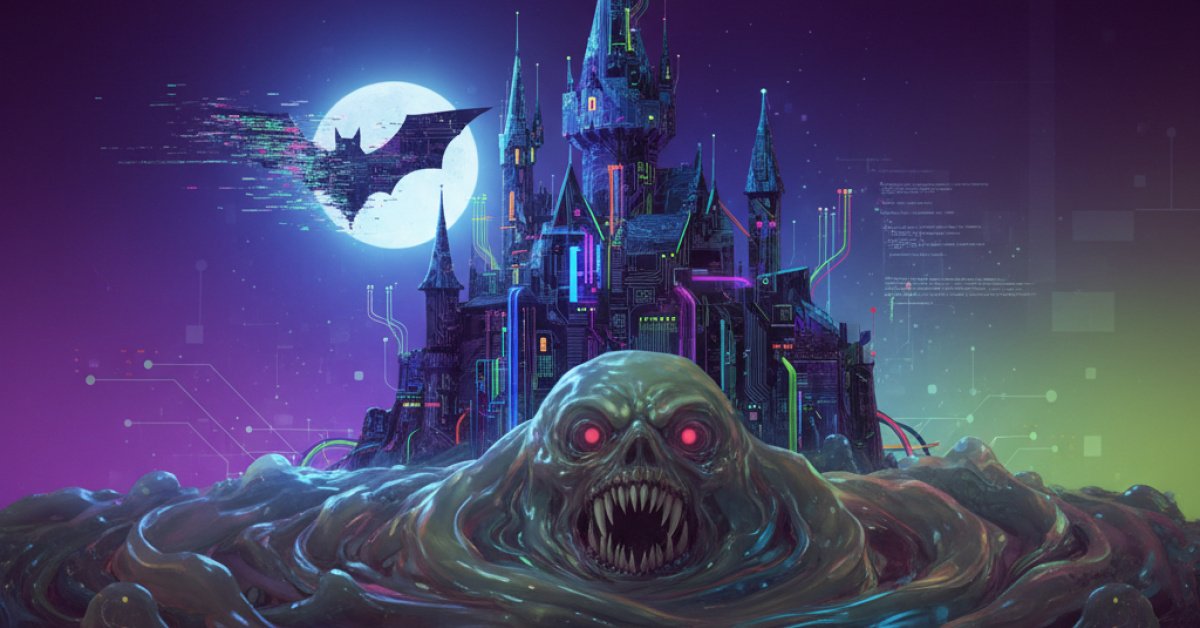
The slightly "off" look of AI art—the weird hands, the plastic-y textures, the unsettlingly smooth blends—stops being a technical limitation and becomes a narrative device. It's the visual equivalent of the film’s central idea: that something is fundamentally wrong and unnatural about this world Dracula has built.
A Mirror to Modern Ugliness
By embracing the "grossness" of AI, Jude is holding up a mirror to the ugliness he sees in society. He’s not just making a movie about tech exploitation; he’s using the very tools of that world to create his art. The film's aesthetic becomes an extension of its critique.
This approach forces us, the audience, to confront our own relationship with technology. We're so used to clean, polished digital interfaces that we forget the often messy, exploitative systems running underneath. Jude’s slimy AI visuals rip that polished veneer away, leaving us with the raw, unsettling truth. It's a bold move that connects the form and the content in a way that few artists have dared to try.
Is AI the New Punk Rock for Filmmakers?
What Radu Jude is doing feels less like traditional filmmaking and more like a form of digital punk rock. Punk musicians in the 70s rejected the slick, overproduced sound of mainstream rock. They embraced distortion, feedback, and raw, aggressive energy. Their "bad" sound was a statement. It was a rejection of the status quo.
In a way, Jude is doing the same with AI. While Hollywood chases photorealism, he's grabbing the most distorted, unsettling AI tools he can find and cranking the amplifier to eleven. He’s using the technology's imperfections to protest the very culture that created it.
This opens up a whole new conversation about how artists can interact with AI. It suggests a future where creators don't just use AI as a passive tool but actively wrestle with it, subvert it, and even mock it within their work.
Here’s what that could look like for other creators:
- Musicians using AI voice synthesizers that intentionally sound robotic and inhuman to comment on digital alienation.
- Writers using AI text generators to create chaotic, nonsensical prose for stories about misinformation and post-truth.
- Visual artists training models on "bad" data to produce glitchy, distorted portraits that critique beauty standards.
Jude’s Dracula movie might be one of the first high-profile examples of this, but it certainly won't be the last. He’s shown that an artist’s critique of technology doesn’t have to come from a distance. Sometimes, the most powerful statement comes from getting your hands dirty with the very thing you’re questioning.
Beyond the Hype: A New Role for AI in Art
For years, the conversation around AI in creative fields has been stuck in a binary: either it’s a magical tool that will unlock human potential, or it’s an existential threat that will make artists obsolete. Radu Jude’s work offers a much-needed third path. He shows us that AI can also be a tool for critique.
His approach reminds us that technology is never neutral. The tools we build and use are reflections of our values, our biases, and our societal flaws. By embracing the "slimy" side of AI, he’s not just making a stylistic choice; he’s making a profound comment on the digital world we're all building, one algorithm at a time.
This film challenges creators to think more critically about their tools. It's a call to move beyond simply asking, "What can this technology do for me?" and to start asking, "What does this technology say about us?" The answers might not always be pretty, but as this raunchy, three-hour vampire epic proves, they can make for some truly unforgettable art.