Have you ever scrolled through your social media feed and seen a story that just felt… a little off? Maybe the headline was a bit too wild, or the comments seemed strangely uniform. You probably paused for a second, shrugged, and kept scrolling.
We’ve all been there. For years, we’ve been told to watch out for "fake news," and most of us have gotten pretty good at spotting the clumsy, typo-ridden articles from shady websites.
But I need to tell you, what’s coming next is on a whole different level. The game has completely changed, and we’re not ready for it. The simple, one-off fake articles we’re used to are about to be replaced by something far more powerful: AI-powered disinformation swarms.
And honestly, it’s a little scary.
So, What Exactly Is a Disinformation Swarm?
Let’s get on the same page here. When I say "swarm," I don't just mean a bunch of bots spamming the same link. That's old news.
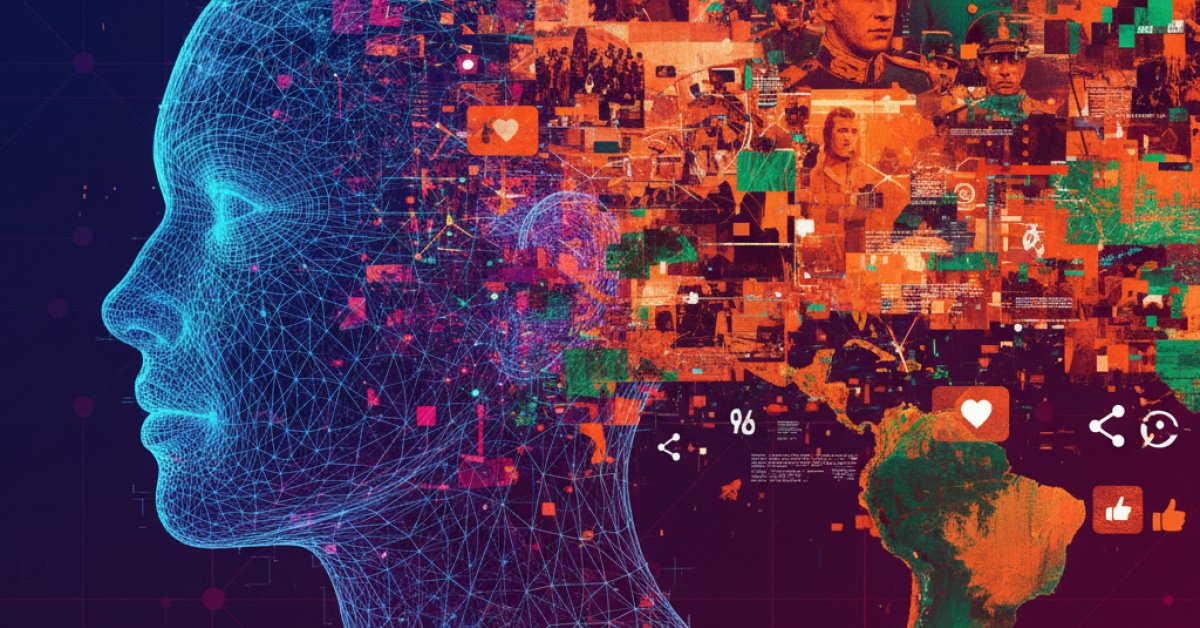
Think of it more like a swarm of digital locusts. It’s not just one fake article. It’s thousands of unique, AI-generated pieces of content—articles, social media posts, comments, forum discussions—all created in an instant and unleashed at the same time. They all push the same false narrative but from slightly different angles, using different words, and targeting different audiences.
Imagine you’re trying to learn about a political candidate. Suddenly, you’re seeing:
- A dozen different "news" articles from professional-looking (but fake) websites, all highlighting a made-up scandal.
- Hundreds of Twitter threads from seemingly ordinary people, all discussing this "scandal" with outrage.
- A flood of comments on Facebook and YouTube videos, all referencing the same false information.
- Even a few deepfake audio clips of the candidate supposedly "admitting" to it.
Every piece of content is unique. Every comment sounds like it was written by a real person. It’s an all-out assault on reality, designed to create the illusion of a massive, organic consensus. It makes you feel like you’re the crazy one for not believing it.
That’s the swarm. And it’s made possible by the incredible advances in artificial intelligence we’ve seen lately.
The AI 'Perfect Storm': Speed, Scale, and Sneakiness
What we're witnessing is a perfect storm for anyone who wants to manipulate public opinion. AI has handed them a set of superpowers, and it boils down to three key things.
1. Unbelievable Speed
In the old days (like, two years ago), creating a convincing disinformation campaign took time and a team of people. You had to have writers, social media managers, and strategists working for weeks to build a believable narrative.
Now? An AI model can spit out thousands of unique, grammatically correct, and persuasive articles and posts in a matter of minutes. The entire process, from idea to execution, can be compressed from weeks into a single afternoon. This speed means they can react to real-world events almost instantly, injecting their narratives into breaking news before the truth even has a chance to catch up.
2. Mind-Boggling Scale
This is where it gets really unsettling. Before, a bad actor could maybe manage a few hundred fake social media accounts. It was a lot of work.
With AI, a single person can now act like a thousand. They can command an army of AI agents to create and distribute content across every platform imaginable. They can generate a volume of information so massive that it simply drowns out all the real journalism and genuine conversation. It's like trying to have a quiet chat while a thousand AI-powered robots are screaming in your ear.
3. It's Frighteningly Human
This, for me, is the real kicker. The stuff these AIs produce is good. It doesn't have the weird phrasing or grammatical errors that used to be a dead giveaway. It can mimic different writing styles—angry, academic, funny, concerned. It can write a comment that sounds just like your uncle on Facebook or a news report that sounds just like the BBC.
Because these models are trained on basically the entire internet, they’ve learned how we talk, how we argue, and how we persuade. The result is content that feels authentic. It bypasses our built-in BS detectors because it looks and sounds just like the real thing.
"Can't We Just Build a Better Filter?" The Detection Dilemma
This is the question I get all the time. If AI can create this stuff, can't we just use another AI to detect it? It seems logical, right?
Unfortunately, it’s not that simple. It’s a classic cat-and-mouse game, but the cat is always a step behind.
Here’s the thing: The very goal of a generative AI model is to produce text that is indistinguishable from what a human would write. That's its entire purpose. So, an AI designed to detect AI-generated text is fighting an uphill battle against a system that is explicitly designed to beat it.
Every time a detection tool gets better, the generation models get even better at evading it. They learn from their mistakes and produce even more human-like text. It’s an arms race where the offense has a permanent, built-in advantage. We’re at a point where even the experts and the companies that build these AIs admit they can't reliably detect the content created by their own systems.
So, no, there isn't a magic tech solution on the horizon that's going to fix this for us.
Okay, But What Does This Actually Mean for Us?
This isn't some abstract, futuristic problem. This is about the here and now. It’s about our ability to make informed decisions as a society.
When you can no longer trust the information you see online—when you can’t tell the difference between a real grassroots movement and an AI-generated swarm—how can you make a meaningful choice in an election?
Democracy depends on a shared set of facts. We can disagree on how to solve problems, but we have to at least agree on what the problems are. These AI swarms are designed to shatter that shared reality. They create echo chambers so powerful and immersive that they convince people to live in completely different worlds, fed by different "facts."
It erodes trust. Trust in the media, trust in our institutions, trust in our leaders, and ultimately, trust in each other. And a society without trust is a society that can't function.
So, what can we even do? It’s easy to feel a bit hopeless, but we're not powerless. The solution probably isn't going to be a technical one. It’s going to be a human one.
We have to adapt. We have to become more critical, more patient, and more thoughtful consumers of information. It means taking a breath before we share that outrageous headline. It means asking ourselves, "Who benefits from me believing this?" It means valuing slow, careful journalism over fast, emotional reactions.
This is the new digital literacy. It's not just about knowing how to use a computer anymore. It's about knowing how to navigate a world where reality itself is under attack. It’s a huge challenge, but it’s one we have to face, because the alternative is a future none of us want.