You probably saw the headlines. It felt like the world stopped for a minute when the news broke about the US invasion of Venezuela and the capture of Nicolás Maduro. Your phone probably buzzed with notifications, and when you opened up TikTok, Instagram, or X, it was all anyone was talking about.
It was chaotic. It was confusing. And honestly, it was a terrifying glimpse into the future of information warfare.
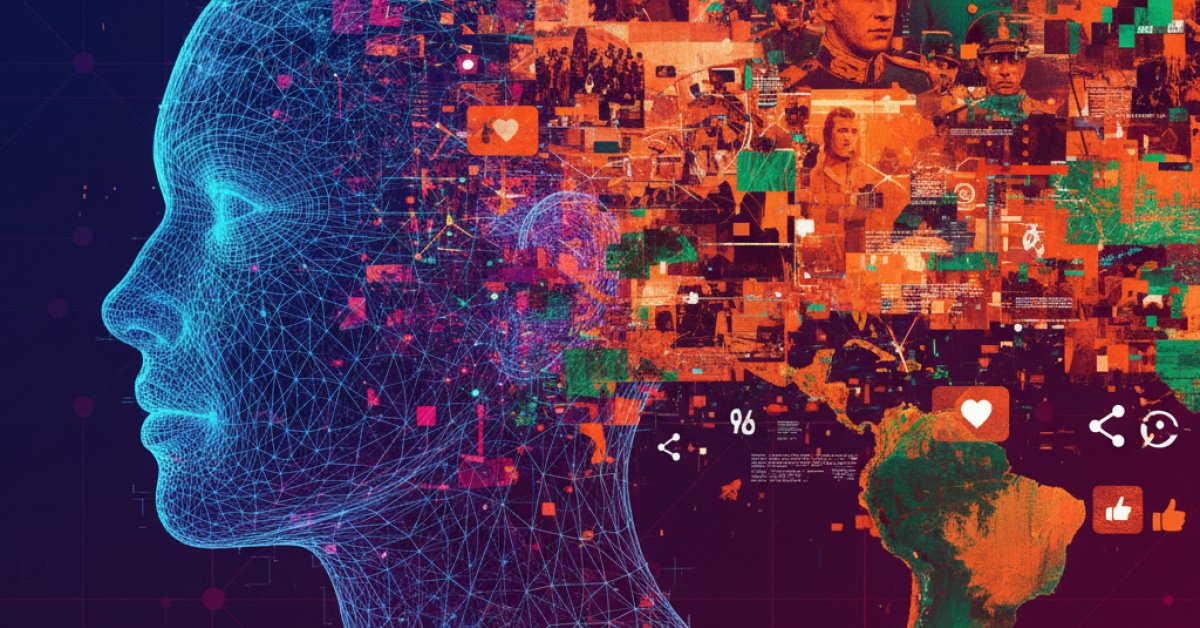
Because as the dust started to settle, we realized something deeply unsettling. A huge portion of what we were seeing wasn't real. We were all caught in the middle of a digital firestorm, a perfect storm of AI-generated fakes, old videos passed off as new, and outright lies. And the social media platforms we rely on? They were completely overwhelmed. It felt like they barely even tried to stop it.
Let's break down what actually happened, because this isn't just a story about one political event. It’s a case study for how easily our reality can be manipulated.
What a Digital Fog of War Looks Like
Imagine trying to get a straight answer in a room where a thousand people are shouting at once. That’s what scrolling social media felt like in the hours after Maduro’s capture was announced. It was a total mess.
On one hand, you had legitimate news outlets trying to confirm details. On the other, you had a flood of content designed to confuse, scare, and mislead everyone. It was a digital fog of war, and we were all stumbling through it blind.
The sheer volume was one thing, but the type of disinformation was something else entirely. This wasn't just your uncle sharing a questionable meme. This was a sophisticated, multi-pronged attack on the truth, using both new-school tech and old-school tricks.
The High-Tech Lies: AI-Generated Mayhem
This is the part that really gets me. We’ve been talking about the threat of AI deepfakes for years, but seeing it play out in a real-time crisis is different. It’s visceral.
We saw videos that appeared to show Venezuelan officials giving surrender speeches that never happened. There were clips of Maduro, seemingly in custody, speaking to the camera—except his mouth moved just a little unnaturally, and his voice had that slightly robotic, AI-generated cadence.
To the casual scroller, just flicking through their feed, these videos looked real enough. They were short, shocking, and designed to be shared instantly. The goal isn't to create a perfect, feature-film-quality fake. The goal is to create something that's believable for 15 seconds. Just long enough to get a reaction, a share, and to plant a seed of doubt or false certainty.
And it worked. These fakes spread like wildfire because they gave people what they were desperate for: a clear picture in a confusing situation. The problem was, the picture was a complete fabrication.
The Old Tricks Are Still the Most Effective
As scary as the AI stuff is, you know what was even more common? The simple, low-tech stuff. It’s a classic move in the disinformation playbook for a reason: it’s easy and incredibly effective.
Here’s the formula:
- Find an old, dramatic video of something completely unrelated. Think protests from five years ago, military exercises from another country, or even scenes from a movie.
- Write a new, explosive caption. Something like, "BREAKING: US TROOPS CLASH WITH VENEZUELAN FORCES IN CARACAS!"
- Post it.
We saw this again and again. Footage of explosions from conflicts in the Middle East was relabeled as happening in Venezuela. Videos of crowds celebrating a soccer victory years ago were passed off as citizens cheering the invasion in the streets.
This works so well because the video itself is real—the pixels are authentic. It’s the context that's the lie. Our brains are wired to believe what we see, and in the heat of the moment, very few people stop to ask, "Wait, is this footage actually from today?"
So, Where Were the Social Media Giants?
This is the question that keeps me up at night. With all this chaos unfolding, where were the platforms that are supposed to be the gatekeepers? Where were TikTok, Instagram, and X (the platform formerly known as Twitter)?
From what I saw, they were practically asleep at the wheel.
The deluge of misleading posts went largely unchecked for hours, even days. These platforms have content moderation policies, sure. They have AI tools designed to spot this stuff. But in the face of a massive, breaking news event, the systems buckled.
It seems their moderation efforts are designed for the slow trickle of everyday misinformation, not the firehose of a global crisis. The fakes were coming too fast, and the bad actors were smart. They’d slightly alter the videos to evade automated detection systems. They’d use new accounts to blast out the content before they could be shut down.
It felt like watching a handful of firefighters with garden hoses trying to put out a forest fire. The scale of the problem completely dwarfed the solution. And the result was a polluted information space where nobody knew what, or who, to believe.
This Is More Than Just "Fake News"
It's easy to dismiss this as just another example of "fake news" online, but I think that misses the point. This event provided a blueprint for how to use social media to destabilize a situation in real-time.
Think about the consequences. Misleading videos of violence can cause real-world panic. Fake reports of surrender can influence the actions of actual soldiers on the ground. When people in power, journalists, and the public can't tell what’s real, it creates a vacuum of trust that can be exploited by anyone with an agenda.
We’re not just passive consumers of information anymore. In a crisis, we become part of the information chain. Every share, every like, every comment either adds to the clarity or contributes to the chaos. And when the information we’re getting is fundamentally broken, it’s almost impossible to make good decisions.
What we saw with the Venezuela situation is a warning. This is the new reality. The next time a major event happens—an election, a natural disaster, another conflict—you can bet this exact same playbook will be used. The question is, will we, and the platforms we use, be any more prepared? Right now, I’m not so sure.