You know, every once in a while, a story comes along in the tech world that’s so perfectly ironic, you couldn't have scripted it better. This is one of those stories.
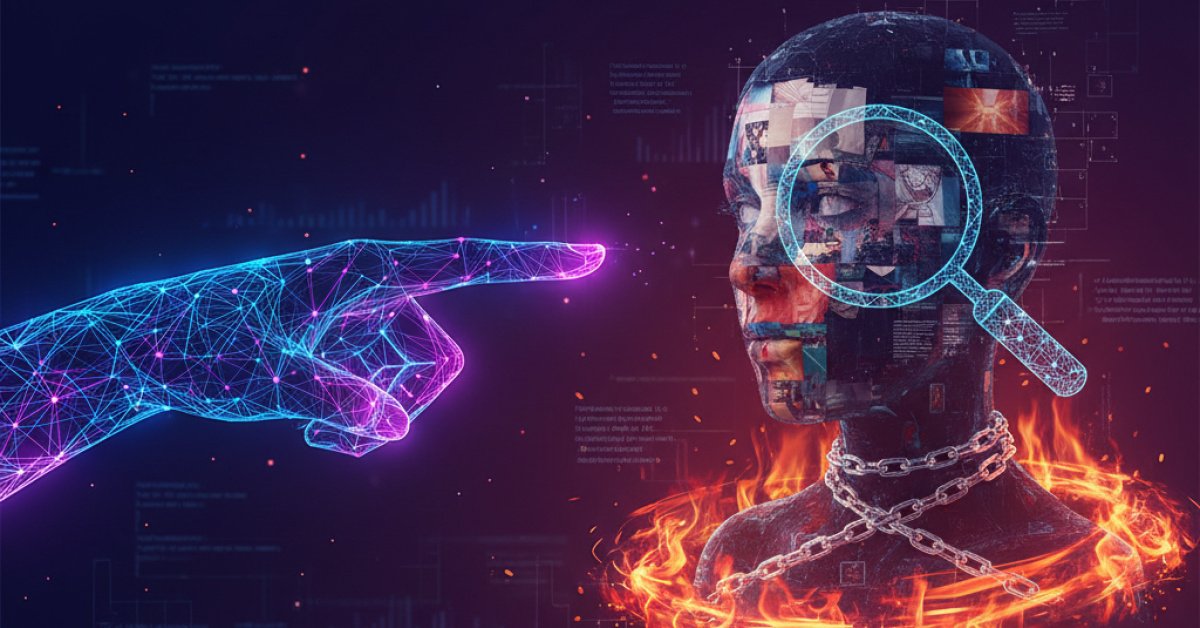
Imagine you sit down to write a book—a serious book—about how artificial intelligence is blurring the lines between what’s real and what’s not. You’re exploring the "Future of Truth" itself. It's a big, important topic, right? So you do your research, you write your chapters, and you publish it.
Then, the internet discovers you used AI to just... make up quotes and attribute them to real people.
Yeah. That happened. A book meant to be a guide through the murky waters of AI-driven reality became a perfect example of the very problem it was trying to warn us about. It’s like a firefighter getting caught for arson, and honestly, we need to talk about it.
So, What Exactly Went Down?
Let's get into the details, because they matter. The book in question, focusing on how AI shapes our perceptions, was supposed to be a timely piece of work. In a world of deepfakes and chatbots that sound eerily human, we’re all trying to figure out who and what to trust. This book positioned itself as part of the solution.
But then, eagle-eyed readers and researchers started noticing something was... off. Some of the quotes didn't sound quite right. When people who were supposedly quoted in the book were asked about it, they had no memory of ever saying those things.
It turns out, the author had used an AI to generate quotes. Let that sink in. Instead of, you know, actually interviewing people or citing their public statements, he allegedly prompted an AI to create text and then slapped a real person's name next to it.
This isn’t just a minor slip-up. It's a fundamental breach of trust, especially for a book on this specific topic. It’s one thing to use AI to help you brainstorm or check your grammar; it's another thing entirely to use it to fabricate your primary sources.
The Author's Explanation Made Things Worse
When the story blew up, everyone was waiting for the author's response. Maybe there was a good explanation? A misunderstanding?
Nope. From what I've seen, the explanation was a masterclass in missing the point.
The defense seemed to be a mix of "it was an experiment" and downplaying the severity of it all. But here's the thing: you don't get to "experiment" with other people's reputations. Attributing fabricated words to a real person isn't some quirky use of new tech; it's putting words in their mouth, and it can have real consequences.
Think of it like this: if a journalist wrote a story about the importance of organic farming but used photos of plastic fruit and just labeled them "fresh from the farm," would you trust anything else they had to say? Of course not. The medium completely undermined the message.
His justification just didn't hold water because it failed to acknowledge the core ethical failure. The problem wasn't the AI; the problem was the deception. The AI was just the tool he used to do it.
It Seems the Problems Didn't Stop There
As often happens in these situations, once you start pulling on a thread, the whole sweater starts to unravel. The original report suggested that the AI-generated quotes were just the tip of the iceberg.
This scandal threw the credibility of the entire book into question. If the author was willing to cut this corner, where else did he cut corners? Was the research sloppy? Were other sections of the book quietly written by ChatGPT without any disclosure or fact-checking?
It raises a much bigger, more uncomfortable question for all of us in the writing and content world. How do we use these incredibly powerful AI tools responsibly?
This incident isn't just about one author making a bad call. It's a cautionary tale. It highlights a growing temptation to let AI do the hard work—the interviewing, the research, the thinking—instead of just the tedious work. And when that happens, quality and ethics are the first things to go out the window.
What This Whole Mess Teaches Us
Alright, so let's step back from the train wreck for a second. What can we actually learn from this? Because there are some huge takeaways here for anyone creating content today.
-
There's a Bright Red Line Between Assistance and Fabrication. Using AI to summarize your research notes? Fine. Using it to fix your spelling? Great. But the moment you ask it to create information and pass it off as fact—like a quote from a real person—you've crossed a line. It's the difference between using a calculator and having the calculator invent numbers for your tax return.
-
Disclosure is Everything. If you do use AI in a significant way, you need to be transparent about it. Let your readers know how and why you used it. Had the author framed the book as an experimental project with AI-generated content clearly labeled as such, the conversation would be entirely different. But he didn't. He tried to pass it off as real.
-
You Can't Blame the Tool. At the end of the day, the author is responsible, not the algorithm. AI doesn't have ethics or intentions. It just predicts the next word in a sequence. The human holding the keyboard is the one making the choices, and they're the one who has to answer for them.
This whole situation is a little bit funny, a little bit sad, and a whole lot of a warning sign. We're standing at a crossroads with AI, and we get to decide what our standards are going to be. Are we going to use it to enhance human creativity and knowledge, or are we going to let it help us produce a more convincing, polished version of garbage?
I think the answer is obvious, but stories like this prove we have to keep saying it out loud. The future of truth really is at stake, and ironically, this author, in his massive failure, gave us one of the clearest lessons on how to protect it.