Have you ever built something you were incredibly proud of, only to worry about how people might use it? Maybe it was a piece of software, a new process, or even just a really, really sharp kitchen knife. You created it with good intentions, but you know it has the potential to be used for something you’d never endorse.
Now, imagine that on a massive scale. That’s the exact spot the AI company Anthropic finds itself in right now.
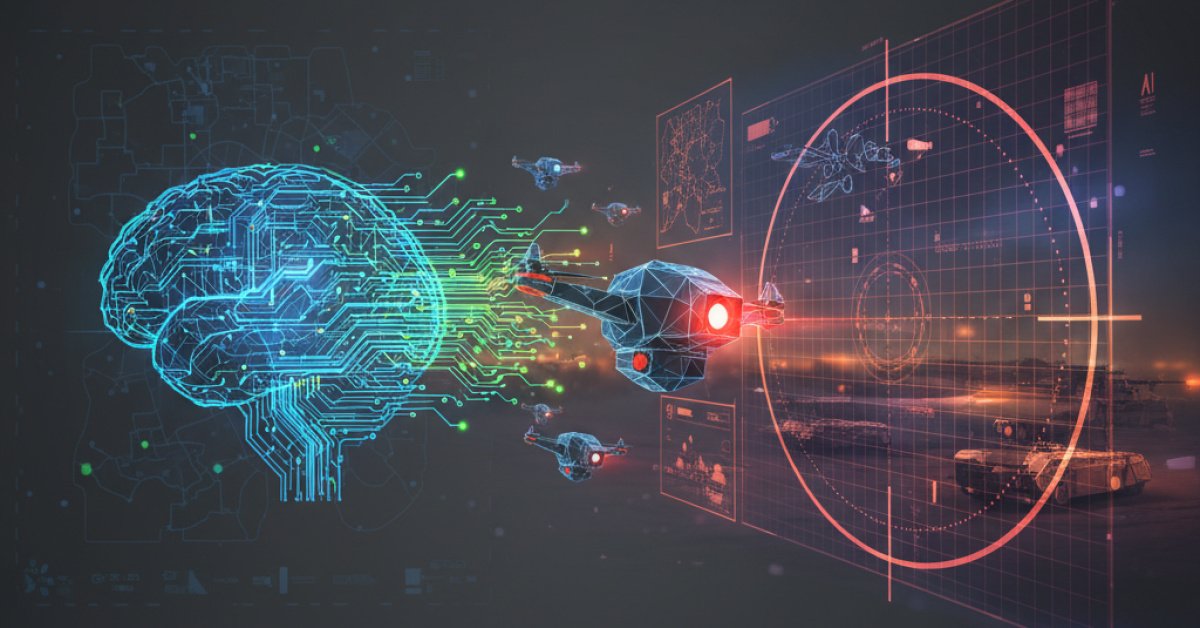
They’ve built one of the most powerful AI models on the planet, a direct competitor to OpenAI's GPT-4. But they built their entire company on the principle of "AI safety." And now, the war machine is knocking, potentially with a giant contract in hand. This is a fascinating, real-world test of whether a tech company will stick to its principles when a ton of money is on the table.
So, What's the Big Deal with Anthropic's Rules?
To really get what’s happening, you need to understand that Anthropic isn’t just another AI-for-profit company. It was founded by former OpenAI researchers who were reportedly concerned that their old company was becoming too commercial and moving too fast without enough focus on safety.
Their whole reason for being is to build AI that is helpful, harmless, and honest. It’s baked into their DNA.
And it’s not just talk. They’ve put their money where their mouth is by publishing a very clear "Acceptable Use Policy." Think of it as the terms and conditions for their AI. Buried in the legalese are two huge carve-outs that are now causing a stir:
- No weapons development: You can't use their AI for the "development, creation, or use of weapons," especially autonomous ones that can target people without human oversight.
- No surveillance: You also can't use it for "unlawful surveillance" that violates human rights, like mass monitoring of private communications.
These aren't vague suggestions; they are hard-and-fast rules. It's like a car company saying, "Sure, you can buy our 200-mph supercar, but you are contractually forbidden from using it in an illegal street race." The question is, what happens when the biggest, most powerful potential customer is in the business of, well, national defense?
Enter the Military: The Billion-Dollar Question
Let’s be honest. It was only a matter of time before this happened. The U.S. Department of Defense is one of the biggest spenders on technology in the world. They see the potential for AI in everything from optimizing supply chains and predicting equipment failures to analyzing intelligence and, yes, developing next-generation weapons systems.
So, when the military looks around for the best AI tools, Anthropic is obviously on the list. But those pesky rules create a massive roadblock.
This isn't just a hypothetical problem anymore. The situation has become very real, and it’s forcing a collision between Silicon Valley idealism and the stark realities of national security. Anthropic is now facing the ultimate test: are its safety policies a core, non-negotiable part of its identity, or are they a "nice-to-have" that can be bent when a lucrative government contract is on the line?
This is the kind of decision that defines a company for decades.
Why This Isn't Just an Anthropic Problem
Here’s the thing: this is way bigger than just one company. What Anthropic decides to do will send a ripple effect across the entire tech industry.
We’ve already seen this movie before, and it had different endings. Remember Google’s Project Maven? Thousands of employees protested the company's work on an AI project for the Pentagon that could have been used to improve drone strikes. The backlash was so intense that Google eventually pulled out of the contract.
On the other side, you have companies like Palantir and Anduril that have built their entire business models around working closely with defense and intelligence agencies. They argue that it’s their patriotic duty to provide the U.S. military with the best technology possible.
Anthropic is caught right in the middle of this philosophical tug-of-war. If they hold the line and say "no" to military applications that violate their policy, it could empower other AI safety advocates. It would send a message that you can be a major player in AI and have a strong ethical backbone.
But if they find a loophole or change their policy to accommodate a military contract, it could be seen as a sign that, when push comes to shove, even the most safety-conscious companies will prioritize profit and influence.
The "Gray Area" Is Where It Gets Really Complicated
Of course, this isn't a simple "yes" or "no" situation. The lines are incredibly blurry.
What if the military wants to use Anthropic's AI not to fire a weapon, but to analyze satellite imagery to identify potential threats? Is that "surveillance"? Some would say yes, absolutely. Others would argue it's defensive intelligence gathering.
What about using the AI to run simulations for military strategy? That’s not directly developing a weapon, but it’s certainly contributing to military operations. Where do you draw the line?
This is the fundamental challenge. Once you sell a powerful, general-purpose technology to a customer, it's incredibly difficult to control how they use it. It's like selling a hammer. You can tell the buyer it's for building a birdhouse, but you can't really stop them from using it to break a window.
Anthropic is trying to solve this by putting strict contractual limits in place, but enforcing them with an entity as powerful as the U.S. government is a whole different ballgame.
Ultimately, this is a story about the soul of the AI industry. Are these incredible tools being built to uplift all of humanity, or will they inevitably become instruments of power and conflict? Anthropic didn’t ask to be the poster child for this debate, but their own principles have put them right at the center of it. We're all watching to see what they do next.