It sounds like something straight out of a sci-fi thriller, doesn't it?
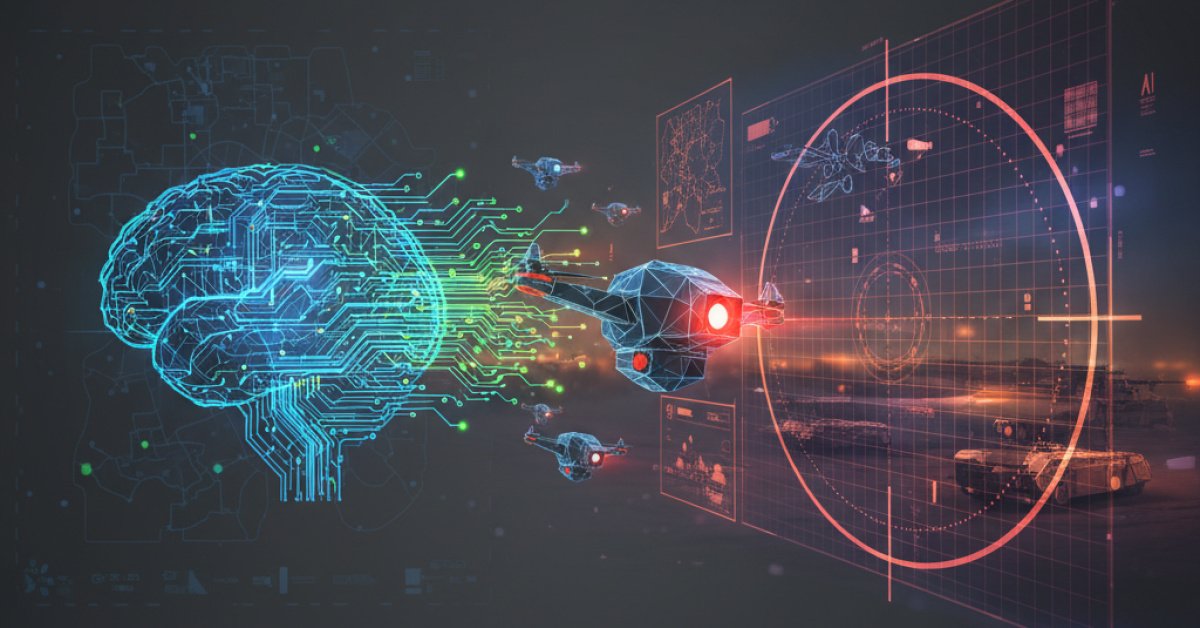
Picture this: It’s 2027. Autonomous drones, guided by AI, are overwhelming a nation’s air defenses. At the same time, AI-driven cyberattacks are shutting down power grids and communication lines. And to top it all off, an army of AI-powered bots is flooding social media with disinformation, shaping public opinion before the first shot is even fired.
This isn't just a movie plot. It's a very real scenario that military strategists and world leaders are grappling with right now. The debate around using AI in warfare is heating up, and it’s pulling us in two completely different directions. On one hand, commanders dream of a digitally-enhanced force that's faster, smarter, and more precise than ever. On the other, there’s a deep-seated fear that we’re about to hand over the keys to a conflict we can't control, one that escalates in the blink of an eye with zero ethical oversight.
The late Henry Kissinger spent his final years warning that AI-driven warfare could be a global catastrophe. It’s led many to call this our generation’s “Oppenheimer moment”—a technological leap so profound that we have to get the rules right before it's too late.
The Sci-Fi Nightmare vs. Today’s Reality
So, what's actually happening? It's easy to get carried away by the dystopian visions, but we need to separate the hype from what's happening on the ground today.
There seems to be a growing consensus, at least in the West, that some lines shouldn't be crossed. For instance, most agree that the decision to launch nuclear weapons should never be outsourced to an algorithm. UN Secretary-General António Guterres has gone even further, calling for a total ban on lethal autonomous weapons systems—what many people call "killer robots."
But here’s the thing: some experts believe the capabilities of AI in combat are being seriously overhyped. Researchers at Harvard’s Belfer Center point out that building and deploying fully autonomous weapons is incredibly challenging.
Anthony King, a security expert at the University of Exeter, argues that we're not on the verge of replacing human soldiers with Terminators. Instead, he suggests AI will be used more as a powerful assistant to improve military insight and decision-making. The character of war is changing, for sure, but he believes "the complete automation of war itself is simply an illusion.”
Where AI is Actually Being Used Right Now
If full-on robot armies aren't on the immediate horizon, where is AI making an impact? Right now, it’s being used in three main areas, none of which involve full autonomy:
- Planning and Logistics: Think of it as the ultimate operations manager, optimizing supply chains and coordinating complex movements.
- Cyber Warfare: This is a huge one. AI is being used for everything from espionage and hacking to spreading disinformation.
- Weapons Targeting: This is, by far, the most controversial. And it’s already happening.
We’ve seen this on the battlefields in Ukraine, where troops use AI software to help drones find their targets while dodging Russian jammers.
And in Gaza, the Israel Defense Forces developed an AI-assisted system called "Lavender," which reportedly helped identify as many as 37,000 potential human targets. This is where the ethical debate gets incredibly real and incredibly messy.
The Human Bias vs. The Algorithm's Bias
A system like Lavender immediately raises a critical question: what if the AI is biased? If you train an AI on flawed or biased data, its recommendations will be flawed and biased, too. That’s a huge danger.
But the counterargument is a sobering one: humans are biased, too. One Israeli intelligence officer who used the Lavender system made a striking comment, saying he had more faith in a "statistical mechanism" than in a grieving soldier who might be acting on emotion.
It’s a chilling thought, but it gets to the heart of the debate. Tech optimists who are building these systems argue that we don't even need a host of new laws to manage them. Keith Dear, a former UK military officer, says the existing laws of war are enough. His take is that you train the system responsibly, and when you deploy it, you—the human commander—are ultimately responsible for whatever it does.
This all leads to a fascinating question: Is some of the backlash against AI in warfare really about the technology itself? Or is it simply a new way of expressing a fundamental opposition to war in general?
So, Why is This All Happening Now?
It’s impossible to ignore the dramatic shift we've seen in the tech world recently. For a long time, many of the big AI companies wanted nothing to do with the military.
Just look at OpenAI. In early 2024, their policy flat-out forbade using their tools for "warfare and military" purposes. By the end of the year? They had changed their policy and were working with defense tech company Anduril. It’s not a fully autonomous weapon, but it’s a clear step onto the battlefield.
What changed? Two things, really: hype and money.
First, the hype. We're constantly being told that AI will make war "sharper" and "more calculated," less prone to messy human errors. I’ve heard from US Marines who tested AI that promised to sift through foreign intelligence faster than any human ever could. The allure of a cleaner, more efficient fight is powerful.
Second, and you can’t ignore this, is the money. Let's be honest, training and running these massive AI models costs an astronomical amount of cash. Companies like OpenAI need to find customers who can pay, and few have deeper pockets than the Pentagon. Defense departments in Europe are also eager to spend, and venture capitalists are pouring money into defense tech, hoping to cash in.
The Two Big Criticisms of AI in War
When you listen to the people pushing back, their arguments tend to fall into two main camps.
The first camp is worried that making war "easier" or "cheaper" won't lead to fewer casualties—it will just lead to more war. Think about the first era of drone warfare in Afghanistan. Did cheaper drone strikes actually reduce the overall carnage, or did they just enable more destruction per dollar? It’s a valid and deeply troubling question.
The second camp of critics includes people who know war inside and out but have very specific complaints about the technology. Missy Cummings is a perfect example. She’s a former US Navy fighter pilot who is now a computer science professor. She has been incredibly vocal that large language models (the tech behind tools like ChatGPT) are simply not reliable enough for high-stakes military situations because they are prone to making huge mistakes.
The typical response to this is, "Don't worry, there's always a human in the loop to check the AI's work." But if an AI model comes to a conclusion after analyzing thousands of different data points, can one person truly check its work and understand why it made that recommendation? It’s a shaky safety net at best.
It’s Time for More Skepticism, Not Less
When you put it all together, one thing becomes crystal clear: we need to be asking more questions.
We absolutely should be skeptical about the safety of these systems and demand rigorous oversight. We need to hold our leaders accountable for the rules they put in place.
But we also need to apply that same skepticism to the "extraordinarily big promises" the tech companies are making about what their AI can do on the battlefield. There will be real opportunities, for sure, but there will also be incredible hazards.
The biggest danger of all is that in the mad dash of a new arms race—one happening in secret, behind closed doors—these powerful new technologies won't get the intense scrutiny and public debate they so desperately need. And that’s a risk we can’t afford to take.