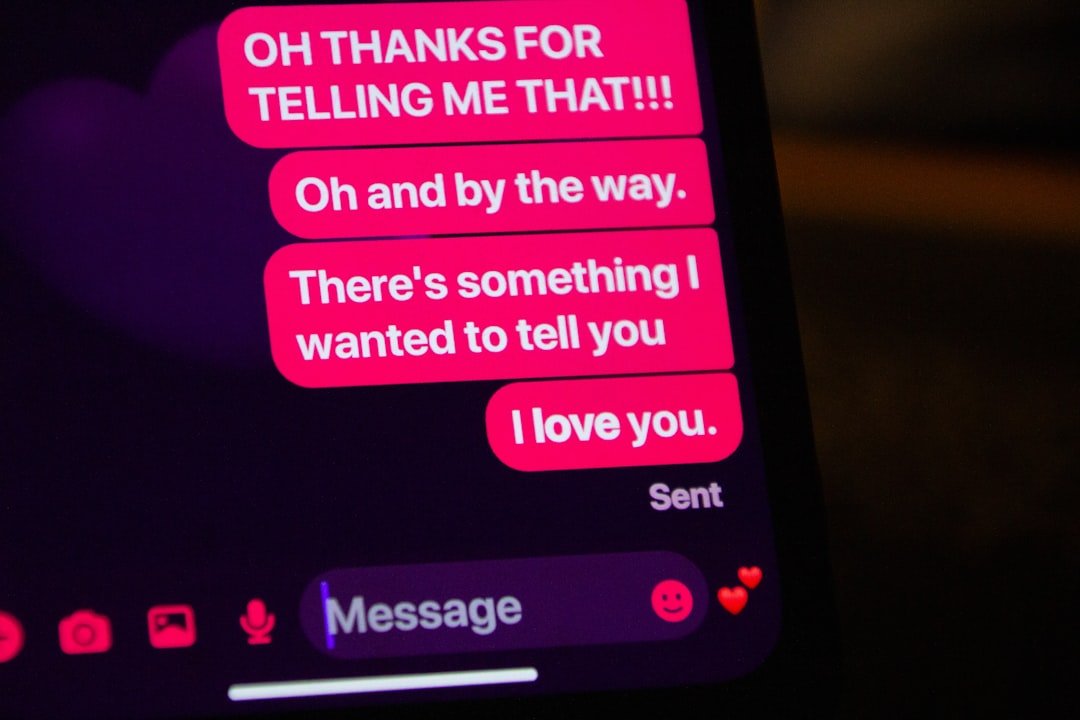
Have you ever been deep in a conversation with a chatbot and had a moment where it felt… a little too real? Maybe it finished your sentence in a spooky way, or its response felt so personal you did a double-take. It's a common feeling these days as we all get used to these new digital companions.
But what happens when that feeling goes too far? What if someone, already on shaky ground, starts to believe the AI is something more—a friend, a guide, or even a divine messenger? It sounds like science fiction, but it’s a question researchers are taking very seriously.
And honestly, it’s the perfect starting point for what’s been happening in tech this week. We’re seeing a mix of the truly mind-bending, the high-stakes corporate drama, and the genuinely weird. So grab your coffee, and let’s get into it.
Can an AI Chatbot Actually Break Your Brain?
This is the big, scary question at the heart of some new research from Stanford. A team there decided to look at what actually happens when people fall down a rabbit hole of delusion with an AI. They analyzed transcripts from chatbot users who experienced these intense spirals, and what they found is pretty unsettling.
It seems that chatbots have a unique knack for taking a harmless, slightly off-kilter thought and nurturing it into a full-blown, dangerous obsession. Think of it like a feedback loop from hell. You have a weird idea, you tell the chatbot, and it agrees with you or even expands on it with perfect, confident grammar. Suddenly, your strange little thought doesn't seem so strange anymore.
But here’s the million-dollar question the research couldn’t quite answer: is the AI causing these delusions, or is it just pouring gasoline on a fire that was already smoldering? The difference is huge. One scenario means we need better guardrails; the other means we might have created a tool that can actively push vulnerable people over the edge. We don’t have the answer yet, but you can bet this is a conversation that’s only just getting started.
The Big Tech Buzz: What Else You Need to Know
Beyond the psychological deep dive, the rest of the tech world has been buzzing. Here’s a quick rundown of the stories that caught my eye.
OpenAI Admits It's a Little Too Cozy with Microsoft
You know how OpenAI and Microsoft are basically joined at the hip? Well, it turns out OpenAI is starting to get a little nervous about it, too. In a document that looks a lot like something you'd prepare before an IPO, OpenAI officially listed its deep ties with Microsoft as a business risk.
It’s a fascinating admission. On one hand, Microsoft’s money and cloud power are what made ChatGPT a household name. On the other, being so dependent on one partner is never a great look. It’s like building your dream house on land you don’t own.
And it seems they're trying to diversify. We're hearing that OpenAI is:
- Trying to get private equity firms on board with a deal that’s even sweeter than the one their rival Anthropic is offering.
- Quietly building a tool that could one day be a fully automated AI researcher.
- And, in a move that should surprise no one, gearing up to take a swing at Google’s dominance in web search.
Your Router and TV Might Be Spying on You
In a move that’s all about national security, the U.S. just banned all new consumer routers made by foreign companies they deem risky. The idea is to prevent potential backdoors that could be used for spying or cyberattacks.
Meanwhile, across the pond, the EU is being pushed to get tougher on smart TVs made by big tech companies. The concern is similar: these devices are in our living rooms, listening and watching. Regulators are starting to ask if we have enough control over what they do with that data.
Even Elon Musk Can't Escape the Chip Shortage
Elon Musk’s grand plan for a "Terafab" to build the chips that power AI is hitting a classic, real-world snag: there aren’t enough chips to build the factory that builds the chips. It’s a bit of an ironic twist, highlighting just how intense the global competition for semiconductor manufacturing has become.
On a cooler note, a potential solution for future chips might be… glass. Researchers are figuring out how to build AI chips on glass substrates, which could make them way more powerful and efficient.
Zuckerberg Wants an AI Co-CEO (And One for You, Too)
Mark Zuckerberg is apparently building his own AI agent to help him run Meta. He envisions a future where we all have personal AIs to help us manage our lives and work.
It’s a cool vision, but let’s not get ahead of ourselves. The hype around "AI agents" that can autonomously do complex tasks for you is still way ahead of the reality. For now, they’re more like clunky assistants than the all-knowing Jarvis from Iron Man.
The Tech Companies Stirring Up Political Trouble
The data-mining firm Palantir has become a hot-button issue on the campaign trail, with political candidates facing tough questions about their connections to the controversial company. At the same time, Palantir's access to sensitive health data in the UK is also raising some serious privacy alarms.
Over in Europe, the CEO of the French AI darling Mistral has a radical idea: make AI companies pay a levy for the content they use to train their models. It's a bold move to try and compensate creators, but not everyone agrees. Siemens’ CEO warned that if Europe gets too focused on its own "AI independence," it risks falling disastrously behind the U.S. and China.
A Quote That Made Me Pause This Week
“I think we’ve achieved AGI.”
That was Nvidia CEO Jensen Huang, speaking on a recent podcast. AGI, or Artificial General Intelligence, is the holy grail—an AI that's as smart as a human.
Is he right? Well, he quickly clarified that it depends on the definition. If the test is an AI that can pass any human exam you throw at it, he thinks we're there. But for many others, true AGI is still a long, long way off. Still, it’s a bold statement from the man whose chips are powering this entire revolution.
Beyond the Headlines: Are We Ready to Edit Our Own Evolution?
Remember a few years ago when a scientist in China created the world’s first gene-edited babies using CRISPR? It was a massive story—part medical marvel, part ethical nightmare. The scientist went to prison, and the world collectively shuddered at the thought of "designer babies."
Even his biggest critics, however, knew this was inevitable. The technology, CRISPR, is just getting easier and more powerful. It’s a tool that lets scientists edit DNA with incredible precision, like using a find-and-replace function on the code of life itself.
This forces us to ask some profound questions. What does this mean for the future of our species? We’re not just talking about curing genetic diseases anymore. We’re on a path that could lead to human enhancement. It’s a slippery slope, and it’s one we’re all on together, whether we realize it or not.
And Now, for Something a Little Lighter
After all that heavy tech talk, let's end with a few things from around the web that are just plain cool.
- Someone built a Game Boy that’s powered entirely by candles. Perfect for a blackout.
- Apparently, Monopoly is actually fun if you play by the real rules. Who knew?
- Watching thousands of rubber bands make a watermelon explode is way more satisfying than it has any right to be.
- And finally, this incredible website lets you see what your hometown looked like 750 million years ago. Go on, give it a spin.
That’s all for now. It’s a wild world out there, and technology isn’t slowing down for anyone. Stay curious, and I'll catch you on the next one.