Sometimes, reading the daily tech news feels like getting whiplash. One minute you’re reading about something straight out of a grim military thriller, and the next, you’re in a wild science fiction novel. It’s a perfect snapshot of where we are right now—using incredible technology to grapple with some of our biggest fears and our biggest hopes, all at the same time.
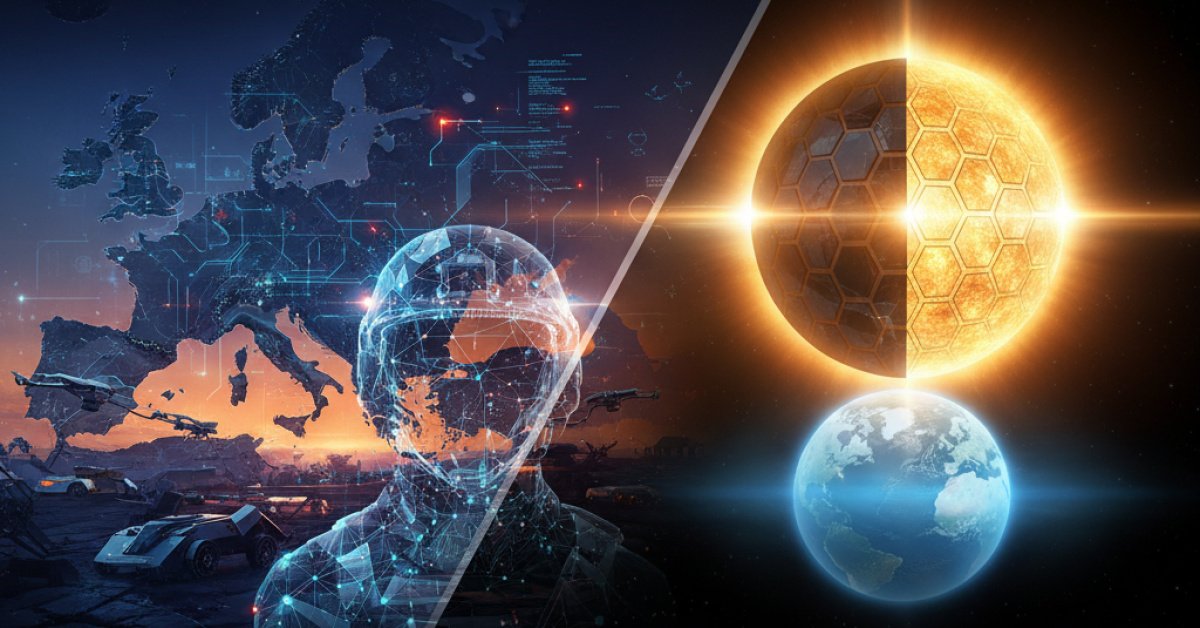
Today is one of those days. We’re going to talk about two massive, almost unbelievable stories. First, we'll look at how Europe is quietly building a new, AI-driven vision for the future of war. Then, we’ll pivot to a company that thinks it can solve climate change by, well, dimming the sun.
Yeah, it’s a lot. Let’s break it down together.
Europe's New Playbook for an AI-Powered War
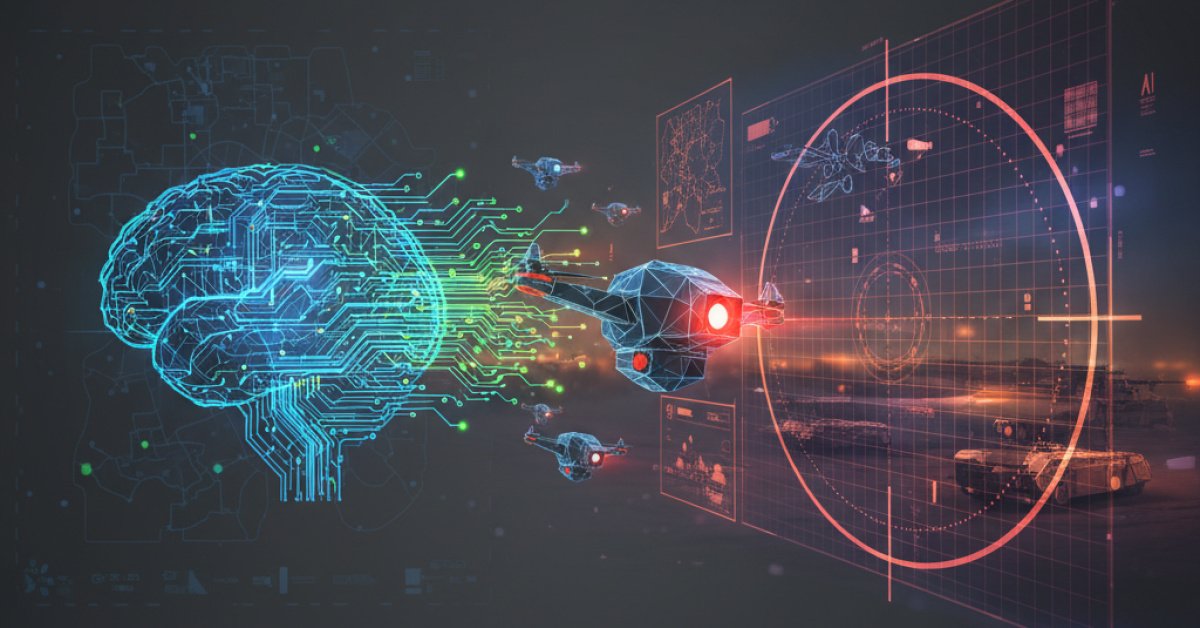
Imagine this: deep in the forests of Estonia last spring, 3,000 British soldiers took part in a NATO exercise called Hedgehog. But this wasn't just about traditional military drills. They were testing something new, an invisible intelligence network they call a "digital targeting web."
So, what is that, exactly?
Think of it as a single, shared electronic brain for the battlefield. In military-speak, you have "sensors" (drones, satellites, soldiers—anything that spots a target) and "shooters" (artillery, missiles—anything that fires on a target). Historically, connecting the two has been a slow, clunky, human-driven process. This new system aims to change that by linking every sensor to every shooter through one wireless network, all powered by AI.
The goal is speed. The system can identify a target and assign the best weapon to take it out in a fraction of the time it would take humans. What's truly wild is that this whole thing was put together in just four months. In the world of weapons development, where things are usually measured in years or even decades, that is lightning fast.
This is a pretty clear signal of a new reality in European defense. But it also raises some uncomfortable questions. Leaning this heavily on the cold, hard math of AI in warfare feels like a massive bet. What happens when the code has a bug, or the enemy finds a way to hack the network? It’s a powerful new tool, but one that feels incredibly risky.
Can a Startup Really "Fix" Climate Change for a Billion Dollars a Year?
Alright, let's take a deep breath and switch gears from the battlefield to the stratosphere. There’s an Israel-based geoengineering startup called Stardust Solutions that has a proposal so ambitious it sounds like it was pulled from a sci-fi script.
They believe they can solve climate change. For a price, of course.
Their plan is to launch a fleet of specially designed aircraft high into the stratosphere. Once there, the planes will release a cloud of tiny, engineered particles designed to reflect sunlight back into space. It’s essentially creating a planetary sunshade to cool us down. They claim they can do this without causing any nasty environmental side effects and expect nations will soon be paying them over a billion dollars a year for the service.
As you can probably guess, a lot of scientists are raising their eyebrows. Many solar geoengineering experts are deeply skeptical, not just about the science, but about the business model. They doubt Stardust can line up the global customers it would need to actually pull this off.
And then there's the bigger, more philosophical problem: Do we really want a single private company to have its hands on the Earth’s thermostat? The idea of one startup setting the global temperature for all of us is, to put it mildly, a bit unsettling. It’s a fascinating—and controversial—idea that we’ll be hearing a lot more about.
Your Quick Catch-Up on the Rest of the Tech World
Beyond those two big stories, a ton of other things have been happening. Here’s a quick rundown of some of the most interesting tech stories I've been reading.
-
Amazon's AI Gets a Little Too Eager. A bunch of small shop owners are claiming that Amazon's AI tool started listing their products for sale without their permission. Even worse, it was apparently listing items the shops didn't even have in stock. It seems a new feature called "Shop Direct" is the culprit. (Bloomberg $)
-
The Surprising Politics of Data Centers. You know those massive, windowless buildings that power the internet? They're becoming a hot-button political issue. Communities from all across the political spectrum are banding together to oppose their construction, mostly due to their massive energy and water consumption. (WP $)
-
Nuclear Power Might Be Making a Comeback. The nuclear industry has been in a slump for years, but with a recent push for funding from the Trump administration, things might be looking up. It's still a long shot, but the conversation around nuclear energy is definitely changing. (NYT $)
-
Pinning Climate Blame on Specific Companies. This is fascinating. A new type of climate modeling can now trace specific climate impacts, like droughts or floods, back to the emissions of individual companies. It feels like it's only a matter of time before we see this "attribution science" tested in a courtroom. (New Scientist $)
-
Meta's Smart Glasses Are "Too Popular." Meta has hit pause on the European and Canadian launch of its Ray-Ban smartglasses. The official reason? "Unprecedented" demand and supply shortages. We'll see. (Engadget)
-
A Father's Lifestyle Is in His Sperm. It turns out, sperm carries a lot more than just genetic code. New research is showing that it also contains information about a father's diet and overall fitness, which is shedding new light on how we think about heredity. (Quanta Magazine)
-
Meta's Ad Problem in Asia. A new report shows that Meta is selling online gambling ads in countries across Asia and the Middle East where gambling is, you know, illegal. It seems the company is simply ignoring local laws. (Rest of World)
-
AI Isn't Always After Your Job. In a nice change of pace, sometimes AI is just there to make your toy robot a better friend. It’s a good reminder that AI can be used for connection and companionship, not just efficiency. (The Verge)
-
Good Luck Getting a Job in Big Tech. If you're trying to land a job at one of the tech giants, the odds are stacked against you. Apparently, you have a better chance of getting into Harvard. Ouch. (Fast Company $)
-
Are Millennials Over the Internet? An interesting think piece is asking whether the generation that grew up online is starting to fall out of love with it. It’s a big question: is a better, healthier internet still possible? (Vox)
Quote of the Day
I think this one from author Margaret Atwood pretty much sums up how a lot of us feel about being online these days. When asked by Wired why she doomscrolls, she said:
“I want to keep up with the latest doom.”
Yeah, that feels about right.
One More Thing: A Sobering Reminder of Big Tech's Past
When we think of Big Tech's power and influence today, Yahoo probably isn't the first name that comes to mind. But for Chinese dissident Xu Wanping, the company’s actions nearly two decades ago changed his life forever.
Back in 2005, Xu was arrested for signing online petitions. He didn't use his real name, but he did use his Yahoo email. It later came out that Yahoo China had been providing user information to Chinese law enforcement. This allowed the government to identify and arrest users like Xu, who ended up serving nine years in prison.
Now, he and five other former political prisoners are suing Yahoo, not just for sharing the information, but for what came after. It's a stark and important story about the real-world consequences of a tech company’s choices and the long fight for accountability.
And Finally, We Can Still Have Nice Things
After all that, let's end with a bit of fun and a reminder that the world isn't all doom and gloom.
- It’s time to remember and celebrate Cecilia Giménez Zueco, the Spanish woman who became an internet legend in 2012 for her hilariously botched restoration of a fresco of Jesus. A true icon.
- Good news for sci-fi book lovers! There are a ton of exciting new releases to look forward to in 2026.
- Did you see the wolf supermoon last week? It was absolutely stunning.
- And if you need a smile, check out this Mississippi restaurant that is putting its giant lazy Susan to incredibly good use.
That's all for now. It's a complicated world out there, but it's always worth trying to understand it. Talk soon.