Hey there, let's talk tech.
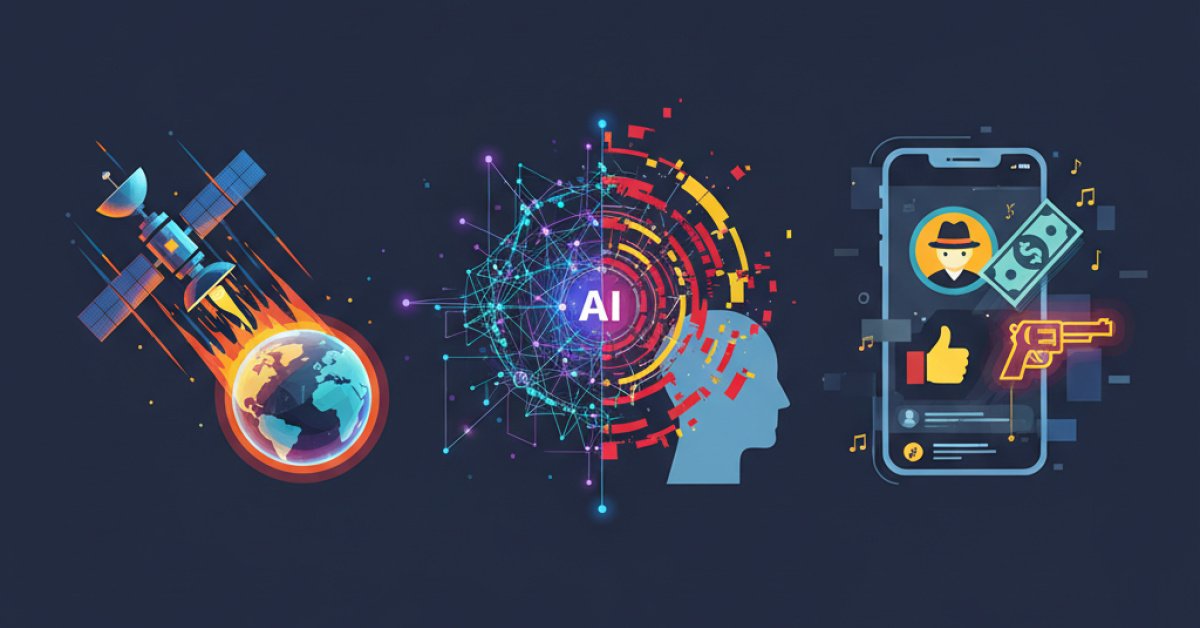
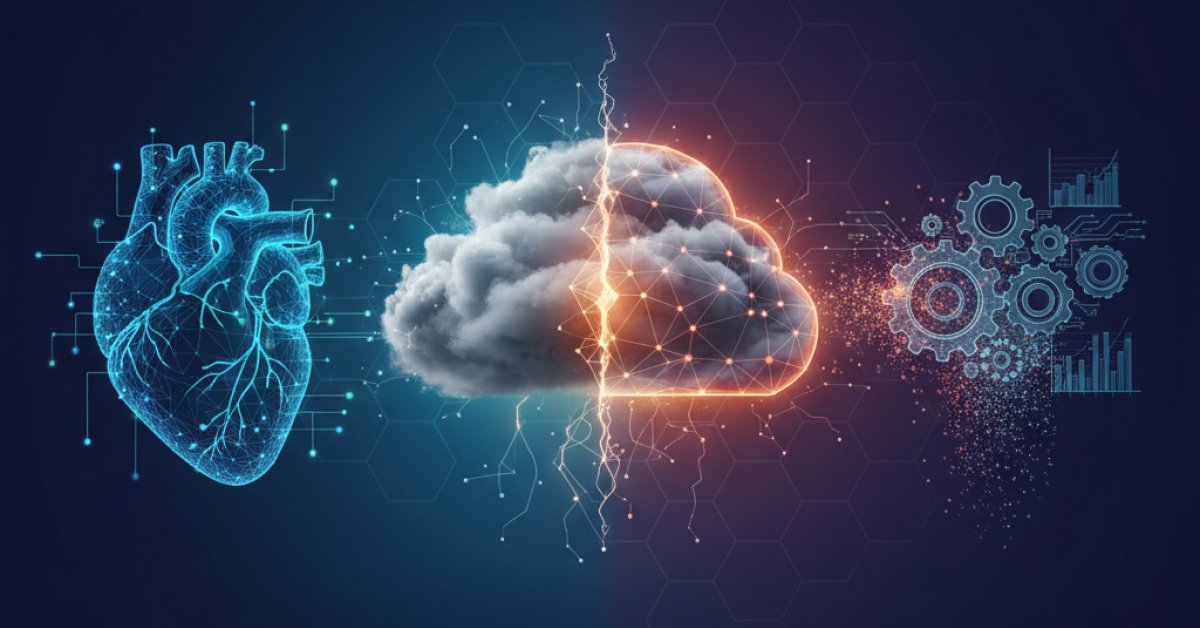
Some weeks, it feels like the future is arriving all at once, in a jumbled, confusing, and sometimes downright weird package. You scroll through your feed and see a headline about AI predicting heart attacks right next to a wild conspiracy theory about weather control. It’s a lot to take in.
So, let's unpack a few of the biggest things buzzing around right now. Think of this as a friendly chat to make sense of the noise, from the truly groundbreaking to the truly bizarre.
Can We Really Control the Weather?
You’ve probably seen it pop up after a big storm. Someone, somewhere, claims it wasn’t a natural disaster but a manufactured one. After Hurricane Helene hit the US Southeast back in October 2024, Representative Marjorie Taylor Greene posted on X, "Yes they can control the weather... It’s ridiculous for anyone to lie and say it can’t be done."
It's a powerful, scary thought, isn't it? That some shadowy group is out there playing God with hurricanes and droughts. This conspiracy theory has been gaining a lot of steam lately, and it's easy to see why it hooks people.
But here’s the thing: it’s just not true. We simply don't have the technology to steer a hurricane or create a blizzard on demand. Not even close.
So why does this idea stick around? Like a lot of compelling myths, there's a tiny, microscopic grain of truth buried inside. We do have some very minor ways to influence weather, like "cloud seeding," where we spray particles into clouds to try and encourage rain. It has mixed results at best and is a world away from creating or directing a massive storm system. But that little nugget is all a good conspiracy theory needs to grow. It takes a sliver of reality and wraps it in a whole lot of fiction.
An AI That Can See a Heart Attack Coming
Now, let's pivot from science fiction to something that feels like it’s straight out of it, but in a good way. For all our medical advances, predicting who will have a heart attack is surprisingly difficult. It’s a huge, scary blind spot in modern medicine.
A few startups are trying to change that with AI. The idea is brilliant in its simplicity. They’re developing algorithms that can analyze the millions of CT scans that are already being done for other reasons (like checking for lung cancer). The AI is trained to spot the very early, subtle signs of heart disease in these scans—signs that a human radiologist, focused on something else, might easily miss.
Think about that for a second. This could be a massive public health breakthrough. We could potentially identify thousands of people at high risk for a heart attack who are currently flying completely under the radar. It's like having a super-powered detective looking at old evidence and finding a clue everyone else missed.
Of course, it's not that simple. The technology is still new and hasn't been proven on a massive scale. And it brings up some thorny questions. Who is responsible for acting on this information? How do we avoid scaring people unnecessarily? It’s a perfect example of how even the most promising tech creates a ripple of new challenges we have to solve.
Your Weekly Tech Roundup: What Else is Happening?
Beyond those big stories, a lot of other fascinating, and sometimes worrying, things are going on. Here’s a quick rundown of what’s on my radar:
- AI and Tech Layoffs: You hear a lot about AI taking jobs, but what if that's not the whole story? It seems a big reason for all the recent tech layoffs is that companies are pouring so much money into AI—buying chips, building models—that they're cutting staff to free up the budget. The AI isn't replacing the jobs directly; the cost of the AI is.
- The Anti-Vax Movement's New Goals: Activists gathered in Austin recently, celebrating Robert F. Kennedy Jr.'s political rise and laying out their next big push: getting rid of vaccine mandates in schools. It’s a reminder that the intersection of health, tech, and misinformation is as complicated as ever.
- People with "AI-Induced Delusions": This is a wild one. A small but growing group of people who believe they've been harmed by chatbots are coming together to push for legal action against the companies that make them. It opens up a whole new conversation about mental health in the age of AI.
- Disturbing AI-Generated Content: On a darker note, researchers found social media is being flooded with AI-generated clips of women being strangled. Many appear to be from OpenAI's Sora 2 model, highlighting the urgent need for better safeguards.
- The Tech Billionaire Baby Obsession: It turns out some tech leaders are fascinated with the idea of bioengineering "better" babies. It’s obviously not allowed, but the ethical lines are getting blurrier as the technology gets more powerful.
- Apple in China: The company was ordered by the Chinese government to remove two popular gay dating apps, Blued and Finka, from its app store in the country. A tough spot for a company that champions privacy and expression.
- Could China Turn Off UK Buses? The UK government is genuinely worried that hundreds of Chinese-made electric buses on its roads could be remotely disabled, posing a national security risk.
- AI in the Newsroom: As a writer, this one hits close to home. The consensus seems to be that AI is fantastic for analyzing huge datasets to find stories, but it's not (and shouldn't be) ready to actually write them.
- The World's Largest Electric Ship: On a cooler note, the world’s biggest electric ship is getting ready to set sail. It’s a ferry that will run in 90-minute bursts on pure battery power. Pretty neat.
A Dose of Ambition
In the middle of all this, it's good to remember the sheer scale of human ambition. Dave Limp, the CEO of Jeff Bezos's space company Blue Origin, was talking about their desire to work with NASA. He said, "We would move heaven and Earth, pun intended, to try to get to the Moon sooner." You have to love that kind of energy.
Remember 'Design Thinking' and All Those Post-it Notes?
Let's end with a look back. Do you remember the 1990s and 2000s, when "design thinking" was the biggest buzzword in business? Every office suddenly had walls covered in multi-colored Post-it notes. It was sold as a six-step formula for innovation that anyone could use.
The Post-it note was the perfect symbol: a simple, flexible tool for brainstorming big ideas. For a while, it felt like the secret sauce to solving any problem.
But lately, the shine has worn off. Critics argue that design thinking often leads to shallow, unrealistic ideas because it encourages people to brainstorm without getting bogged down by real-world constraints. It was great for generating a ton of "what if" ideas but often failed when it came time to actually build something that worked.
Now, people are trying to build something better—a new set of tools for problem-solving that are more grounded, equitable, and capable of tackling the messy, complex challenges we face today. It’s a great reminder that even the best ideas in tech have a shelf life. We’re always learning, always adapting, and hopefully, always moving toward something that works a little bit better than what we had before.