Let’s be honest, we’ve all done it. You get a weird ache, a strange rash, or a cough that won’t quit, and the first thing you do is pull out your phone. For the last twenty years, that meant a trip to “Dr. Google,” where you’d inevitably convince yourself you had a rare, incurable disease.
It was a running joke, but it was also just… what we did.
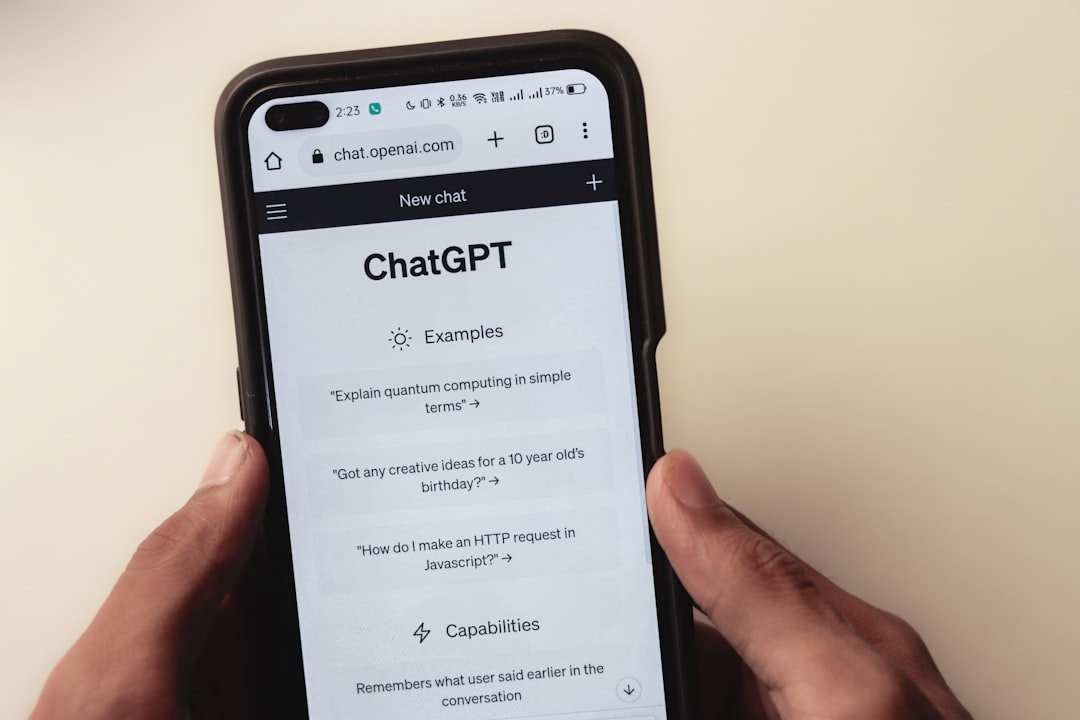
Well, times are changing. The new "doctor" in town is an AI, and millions of us are already booking appointments. OpenAI recently shared a staggering number: 230 million people ask ChatGPT health-related questions every single week. That’s a massive number of people turning to a large language model for advice about their bodies and minds.
So, it wasn't a huge surprise when OpenAI officially launched ChatGPT Health this month. But it does raise a huge, flashing-red-light of a question: Is this a good idea? Can we really mitigate the very obvious risks of getting medical advice from an AI, or are we just creating a more sophisticated version of Dr. Google?
Can an AI Really Be Your Health Advisor?
Think about it. On one hand, the potential here is incredible. Imagine having instant, 24/7 access to a tool that can explain complex medical terms in simple language, help you formulate questions for your actual doctor, or offer general wellness tips. For people in remote areas or those who just need a starting point, it could be a powerful resource.
But the flip side is genuinely scary. We know these models can "hallucinate"—a polite way of saying they make things up with complete confidence. What happens when it confidently makes up a symptom, a dosage, or a diagnosis? The stakes aren't just a bad essay or a weird recipe; it's people's health.
The big challenge for OpenAI, and for all of us, is figuring out where the line is. Can this tool be a helpful assistant without becoming a dangerous replacement for real medical professionals? The jury is still very much out, and I for one am watching with a mix of fascination and serious concern.
Speaking of Rules: The War Over AI Regulation is Here
This conversation about risk and safety doesn't just stop with healthcare. It's the central question in a massive battle that’s brewing over who gets to write the rules for AI in the United States.
It’s getting messy.
Imagine this scenario: It’s late 2025, and Congress has tried—and failed—twice to pass a national law for AI. Frustrated, the White House (in this hypothetical, a Trump administration) signs a sweeping executive order. The goal? To stop individual states from creating their own AI laws.
Instead, the order promises a single, "minimally burdensome" national policy. For the big tech companies, this is a huge win. They’ve been spending millions arguing that a patchwork of 50 different state laws would be a nightmare that stifles innovation. They want one set of rules for the whole country.
But states aren't backing down. They argue they need to protect their citizens from AI-driven harms, like biased hiring algorithms or flawed facial recognition. So, in 2026, the fight is set to move from the legislature to the courtroom. It’s a classic states' rights vs. federal power showdown, but this time the future of artificial intelligence is at stake.
What Else Is Happening? A Few Things on My Radar
While those two big stories are unfolding, the world of tech keeps spinning. Here are a few other things that caught my eye and feel important to what's going on.
The AI Money Machine Keeps Brrrrr-ing
It seems like every big tech company is taking on more and more debt to fund their AI dreams. The numbers are astronomical. It’s leading a lot of us in the industry to whisper the B-word: bubble. Everyone seems to agree we're in one, but nobody can agree on what happens when it pops. This kind of hype is probably why you hear people like Elon Musk making wild predictions at Davos, saying things like, "I think we have AI that is smarter than any human this year, and no later than next year." It’s a wild time.
The Darker Side: Disinformation and Data
Of course, this tech isn't just about building cool products. There's a growing fear around AI-powered disinformation and its potential to threaten democracy. Imagine swarms of AI bots designed to persuade people to accept a canceled election or to overturn a result. It’s a chilling thought, and it’s something we need to be taking very seriously.
And it all comes back to data. We learned that the Trump administration’s DOGE program accessed way more personal data than anyone thought, and they still can't say how much is at risk. It’s a stark reminder of how vulnerable our information is. On a smaller, but still painful scale, I saw a story about an academic who lost two years of work with a single click because he was relying on ChatGPT to store his data. It's a tough lesson: don't trust these systems as a primary backup.
Robots, TikTok, and Global Tech Tensions
Look around, because you’re about to start seeing a lot more robots everywhere. What they’ll look like is still up for debate, but one thing is becoming clear: Chinese companies are starting to dominate entire sectors of AI and robotics.
This brings up all sorts of geopolitical questions, which we saw play out with TikTok. After years of uncertainty, TikTok has finally finalized a deal to create a new US entity, hopefully putting the security fears to rest. But it’s a complex situation, and some argue that China is the real winner in the whole ordeal. It just goes to show how intertwined technology, business, and global politics have become.
It’s a strange, chaotic moment in tech. We’re wrestling with these incredibly powerful new tools while, at the same time, the US is officially pulling out of the World Health Organization, a move that will undoubtedly hurt global collaboration on health and technology for years to come.
It’s a lot to take in, isn't it? We’re building these amazing, world-changing technologies while the very foundations of our political and social systems feel like they’re shaking. It feels like we’re trying to build a spaceship while the ground is crumbling beneath us. But that’s where we are. All we can do is keep paying attention, keep asking the hard questions, and try to steer this thing in the right direction.