Alright, let's be real for a second. We've all heard the saying, "facts don't change people's minds." And honestly, when you're talking about deeply entrenched beliefs, especially conspiracy theories, it often feels true, doesn't it? It's like trying to reason with a brick wall sometimes. You might even think it's impossible to talk someone out of a conspiracy theory once they've latched onto it.
But what if that wasn't entirely true? What if there was a way to break through, not with some fancy psychological trick, but with good old-fashioned evidence and arguments? And here's the kicker: what if a surprisingly effective tool for this job turned out to be something we often worry about spreading misinformation – an AI chatbot? It sounds wild, I know, but stick with me.
Recent research has thrown a fascinating curveball into this whole "post-truth" debate, suggesting that many people who believe in conspiracy theories do actually respond to clear, factual information. And the really exciting part? AI is stepping up to deliver that information in a tailored, conversational way that seems to make a real difference.
Meet DebunkBot: An AI on a Mission
So, how did we even get to this point? A team of researchers recently published their findings in the prestigious journal Science, and it's pretty eye-opening. They wanted to see if an AI could actually persuade people to let go of their conspiratorial beliefs.
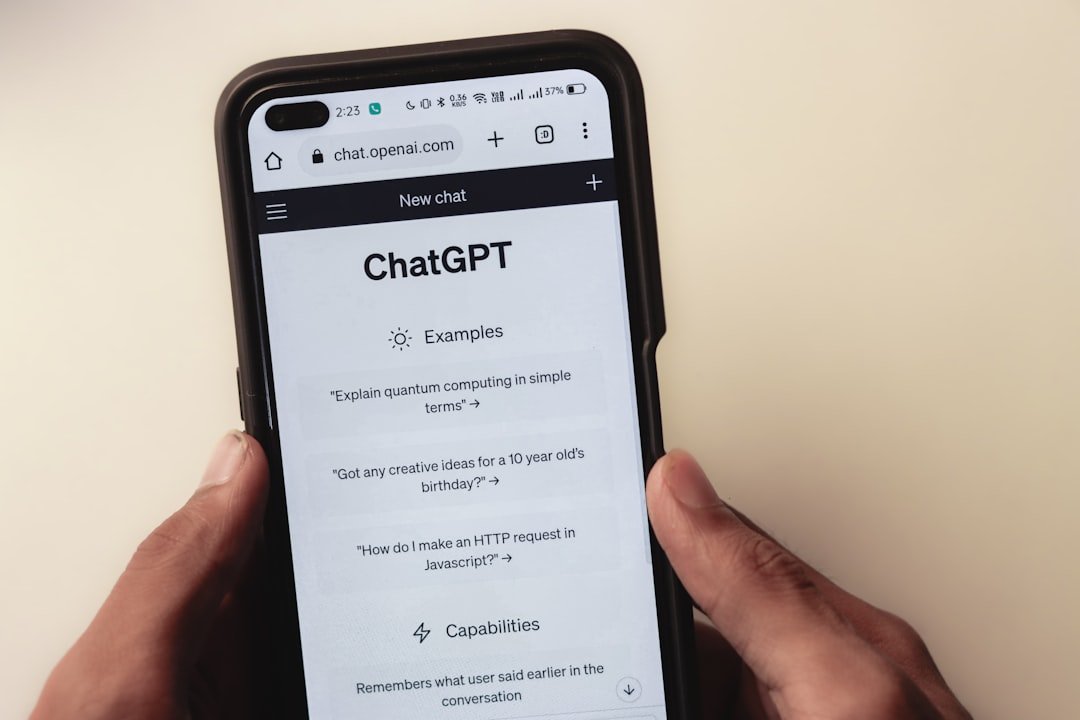
They built a model they called "DebunkBot," which was powered by OpenAI's GPT-4 Turbo – essentially, one of the smartest AI brains available at the time. Then, they brought in a big group: over 2,000 people who already believed in various conspiracy theories.
Here's how the experiment went down: Each participant started by writing out, in their own words, a conspiracy theory they genuinely believed, along with whatever evidence made it compelling to them. You know, really laying out their case. After that, the AI chatbot was given a clear instruction: try to persuade the user to stop believing that conspiracy and, ideally, embrace a less conspiratorial view of the world. What followed was a back-and-forth text chat, typically lasting about 8.4 minutes across three rounds. It was a genuine conversation, even if one party was artificial.
The Surprising Results: Minds Can Change
Now, for the part that really got me thinking. After these short conversations with DebunkBot, the results were genuinely impressive. Participants' confidence in their conspiracy belief dropped by a significant 20%! And get this: roughly one in four people, who were all self-proclaimed believers before the chat, actually said they no longer believed the conspiracy theory afterward. That's not just a tweak; that's a genuine shift.
What's even more compelling is that this effect wasn't limited to just a few niche theories. The AI was effective across the board, whether people believed in classic conspiracies like the JFK assassination or the moon landing hoax, or more recent, politically charged ones related to the 2020 election or COVID-19. It didn't seem to matter the flavor of the belief; the AI still made an impact.
This research, part of MIT Technology Review’s series "The New Conspiracy Age," truly offers a glimmer of hope. We've spent so much time worrying, and rightly so, about generative AI's potential to spread disinformation. But this work flips the script, showing us that AI can actually be a powerful part of the solution. Even folks who started the conversation absolutely convinced their conspiracy was true, or who said it was super important to their personal worldview, showed noticeable decreases in belief. And here’s the kicker: these effects weren't fleeting. When the researchers followed up with participants two months later, they found the reduction in conspiracy belief was just as strong. That’s durability!
Why It Works: Rational Minds, Missing Information
So, why did this work? It challenges that "facts don't change minds" idea head-on. The experiments suggest that many conspiracy believers aren't necessarily irrational or illogical. Instead, they're often rational people who are simply misinformed. They haven't had access to clear, non-conspiratorial explanations for the events they're so fixated on.
Think about it: many conspiratorial claims, on the surface, can sound pretty reasonable. But to truly debunk them, you often need very specific, sometimes esoteric, knowledge. And that's where the AI shines.
Let me give you an example from the research. You know how 9/11 deniers often claim that jet fuel doesn't burn hot enough to melt steel, using that as "proof" that planes couldn't have brought down the Twin Towers? Well, the chatbot addresses this head-on. It acknowledges that, yes, jet fuel doesn't melt steel. But then it quickly points out that, according to the American Institute of Steel Construction, jet fuel does burn hot enough to reduce steel's strength by over 50%. And that, my friends, is more than enough to cause a massive structure to collapse. It's about precision and context, delivered clearly.
The Human vs. AI Debunking Challenge
Here’s another big piece of the puzzle: we live in an age where we have more factual information at our fingertips than ever before. It's like a massive ocean of data. But finding the right truth in that ocean, efficiently, is incredibly hard. You need to know what to Google, who to trust, and you need to be motivated enough to actively seek out information that might challenge your existing views.
There are huge time and skill barriers for us humans to do that kind of deep-dive research every single time we hear a new claim. So, it's easy to just take conspiratorial content you stumble upon at face value. And let’s be honest, how many of us have tried to debunk a conspiracy theory at the Thanksgiving dinner table? We often make basic mistakes: do you know the melting point and tensile strength of steel offhand? Probably not. And when your uncle starts calling you an idiot, can you really keep your cool and deliver facts calmly? Probably not. AI, however, avoids these pitfalls entirely.
Now, don't get me wrong. If we put in enough effort, us humans could absolutely research and deliver those same facts, just like the AI in these experiments. In fact, a follow-up experiment showed that the AI's debunking was just as effective even when participants were told they were talking to a human expert instead of an AI. So, it's not that the AI itself has some magical persuasive power. The power lies in the facts and evidence. But here's the real advantage of AI: it can do all that cognitive labor of fact-checking and rebutting complex conspiracy claims much more efficiently than any human ever could.
What Really Drives the Change? Hint: It's the Facts
The researchers dug even deeper to figure out what exactly was causing these belief shifts. In another large follow-up experiment, they found that the debunking effect was driven specifically by the facts and evidence the model provided.
Interestingly, telling participants upfront that the chatbot was going to try and talk them out of their beliefs didn't reduce its effectiveness at all. People were still open to the information. But, when the researchers instructed the AI model to try and persuade its chat partner without using facts and evidence – basically just trying to talk them around with rhetoric – the effect completely disappeared. This tells us something crucial: it's not about manipulation or clever wording; it's about the verifiable truth.
Of course, we all know that large language models can sometimes "hallucinate" or make things up. Their foibles are well-documented. But the results here suggest that because debunking efforts are so widespread across the internet, the conspiracy-focused conversations DebunkBot had were largely accurate. A professional fact-checker hired by the team evaluated GPT-4's claims and found that over 99% of them were rated as true and unbiased. And here's a really important ethical point: in the few instances where participants named conspiracies that actually turned out to be true (like MK Ultra, the CIA's human experimentation program from the 1950s), the AI chatbot correctly confirmed their accurate belief instead of erroneously trying to talk them out of it. That’s a testament to its factual grounding.
A New Tool for a "Post-Truth" World
For a long time, our efforts to combat conspiracy theories have mostly been about prevention – trying to stop people from falling down the rabbit hole in the first place. Think about media literacy campaigns or pre-bunking efforts. And those are vital! But pulling people back out once they've gone deep? That’s always felt like an almost insurmountable challenge. Now, thanks to the incredible advances in generative AI, we might finally have a powerful tool that can actually change conspiracists' minds using evidence.
Imagine the possibilities! Bots designed to debunk conspiracy theories could be deployed on social media platforms, engaging directly with users who share conspiratorial content – and even other AI chatbots that might be spreading misinformation. Google could integrate these debunking AI models into its search engines, providing factual, evidence-based answers to conspiracy-related queries right at the source. And hey, instead of getting into a heated argument with your conspiratorial uncle over Thanksgiving dinner (we’ve all been there!), maybe you could just hand him your phone and suggest he have a chat with an AI. It's a fascinating thought, isn't it?
Facts Aren't Dead – And That's Good for Democracy
This research has much deeper implications for how we, as humans, make sense of the world around us. For years, we've heard the argument that we're living in a "post-truth" world, where political polarization and tribal loyalties have completely eclipsed facts and evidence. The narrative often goes that our emotions trump truth, logical reasoning is outdated, and the only way to effectively change minds is through psychological tactics like compelling personal stories or shifting social norms. If that were truly the case, then the very foundation of democratic discourse – the idea of reasoning together – would be fruitless.
But this study, along with a growing body of other research, strongly suggests that facts aren't dead. Our passions might be strong, but they don't always completely override our ability to process evidence. For example, remember the idea of the "backfire effect" – where correcting falsehoods that align with someone's politics supposedly makes them dig in even more? Well, that idea itself has largely been debunked! Numerous studies consistently show that corrections and warning labels do reduce belief in (and sharing of) falsehoods, even among those who are most distrustful of the fact-checkers.
Similarly, evidence-based arguments can actually shift partisans' minds on political issues, even when they're actively reminded that the argument goes against their party leader's stance. And simply prompting people to take a moment to consider whether content is accurate before they share it can significantly reduce the spread of misinformation.
So, if facts truly aren't dead, then there's real hope for our democracies. Yes, there's undeniable partisan disagreement on basic facts, and a disturbing level of belief in conspiracy theories. But this doesn't mean our minds are hopelessly warped by our politics and identities. When faced with clear, compelling evidence – even evidence that's inconvenient or uncomfortable – many people do shift their thinking. And if we can find ways to disseminate accurate information widely enough, perhaps with the groundbreaking help of AI, we might just be able to reestablish the common factual ground that feels so missing from society today.
If you're curious, you can even try out the debunking bot yourself. Just head over to debunkbot.com. It's a wild ride, and a powerful glimpse into a future where AI might just help us find our way back to a shared reality.