Let's be honest, we've all felt it. You ask a powerful AI like ChatGPT or Gemini about a recent event, and it gives you that polite, "I'm sorry, my knowledge cutoff is..." answer. It’s like talking to a brilliant friend who’s been in a coma for a year—they’re incredibly smart, but completely out of the loop.
This is one of the biggest headaches in the AI world. Once these massive models are trained, their knowledge is essentially frozen in time. The world moves on, but they don't.
So, how do we keep them up to date? The options so far haven't been great. You could retrain the entire model from scratch, but that costs an astronomical amount of time and money. You could try fine-tuning it on new data, but that often leads to "catastrophic forgetting," where the model forgets old information as it learns new things. It’s like trying to cram a new textbook into a packed bookshelf and knocking a dozen others onto the floor.
There's also Retrieval-Augmented Generation (RAG), which has become super popular. RAG gives the LLM a search engine to look things up in real-time. It's a great approach, but it struggles when the answer isn't in one neat document and requires connecting dots across many different sources. It’s like a librarian who just hands you a giant stack of books instead of the specific answer you need.
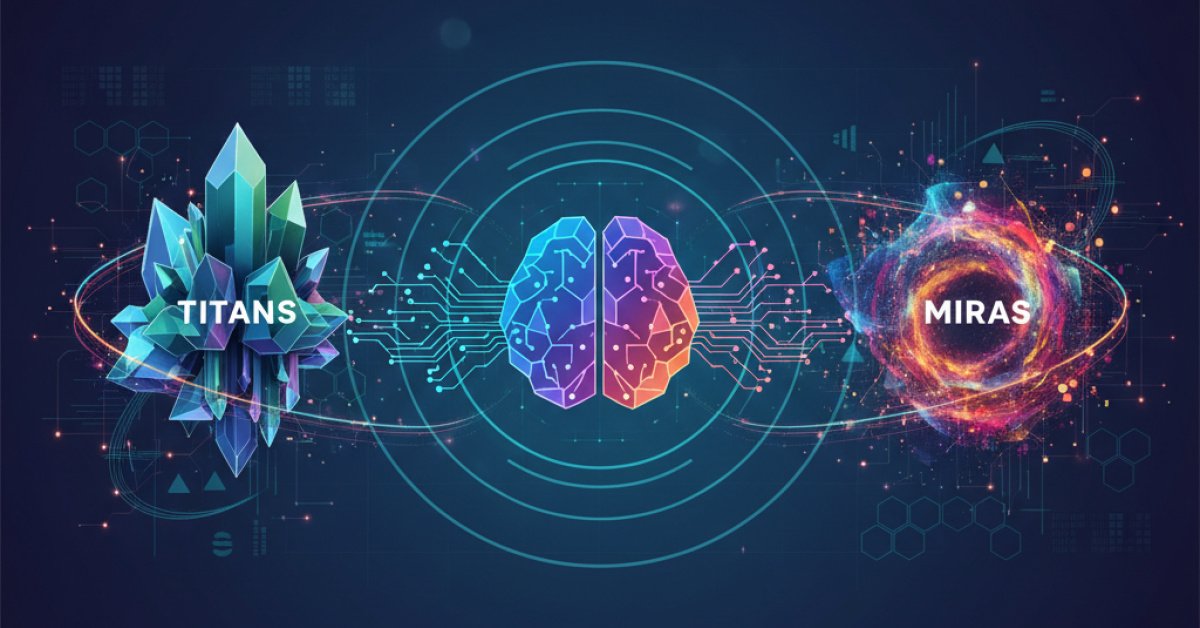
A team of researchers from some heavy-hitting institutions (NUS, MIT CSAIL, and A*STAR) just proposed a new way forward, and I think it's one of the most elegant solutions I've seen. It’s called MEMO, which stands for Memory as a Model.
So, What's This MEMO Thing All About?
At its core, MEMO is based on a beautifully simple idea: what if we separate the part of the AI that thinks from the part that remembers?
Think of it like this. You have a brilliant, world-class detective—let's call her the EXECUTIVE model. This is your main LLM, like Gemini or Qwen. She's amazing at reasoning, planning, and synthesizing information. But instead of trying to make her memorize every single case file, you give her a dedicated, hyper-organized research assistant—the MEMORY model.
Here’s the key:
- The EXECUTIVE model (the big LLM) is left completely alone. Its parameters are frozen. No retraining, no fine-tuning, no risk of messing up its incredible reasoning abilities.
- The MEMORY model is a smaller, separate AI that is specifically trained to become an expert on a new set of knowledge—a company's internal documents, a new scientific field, a series of novels, you name it.
When you ask a question, the detective doesn't try to recall the answer from her own head. Instead, she intelligently queries her research assistant, who provides just the facts she needs. Then, the detective uses her powerful brain to piece those facts together into a perfect answer.
This setup is genius because it means you can use any EXECUTIVE model you want, even closed-source ones you only have API access to. MEMO treats the main LLM as a black box, which is a huge deal.
How Do You Build This Super-Assistant?
You can't just throw a bunch of documents at a small model and hope for the best. The real magic of MEMO is in how it trains the MEMORY model. The researchers designed a clever five-step pipeline to turn a raw pile of documents into a rich, interconnected knowledge base.
It’s a bit like preparing a student for a final exam:
- Fact Extraction: First, they go through the documents and pull out all the key facts, both the ones stated outright and the ones that are implied.
- Consolidation: Then, they group related facts together. If three different documents mention the same person, those facts are consolidated to build a more complete picture.
- Verification & Rewriting: They clean everything up, making sure each piece of information makes sense on its own without needing extra context. Think of it as making perfect, self-contained flashcards.
- Entity Surfacing: This one is cool. They specifically create questions to combat the "reversal curse" in AI. For example, if a model learns "Paris is the capital of France," it might not know what to say if you ask, "What is the capital of France?" This step trains the model to understand relationships from both directions.
- Cross-Document Synthesis: This is the secret sauce. The system actively looks for connections between different documents and creates questions that can only be answered by pulling clues from multiple places. This is what gives MEMO its edge over simple RAG systems.
After this whole process, the MEMORY model is trained on this rich dataset of questions and answers. At inference time, it never sees the original documents again. It has to answer purely from what it has "memorized" in its own parameters.
The Three-Step Conversation at Inference Time
When it's time to answer a user's query, the EXECUTIVE model doesn't just pass the whole question to the MEMORY model. Instead, it engages in a structured, three-stage conversation to break the problem down.
Stage 1: Grounding. The EXECUTIVE model first breaks your complex question into tiny, atomic sub-questions. If you ask, "Which sci-fi author who won a Hugo Award in the 1980s wrote a book about sentient ships?" it might first ask the MEMORY model, "List sci-fi authors who won a Hugo in the 1980s."
Stage 2: Entity Identification. Using the answers from the first stage, it starts a process of elimination. It asks targeted follow-up questions like, "Did [Author A] write about sentient ships?" or "Did [Author B]?" until it pinpoints the correct entity.
Stage 3: Answer Seeking & Synthesis. Once it's confident it has the right person, it asks for all the supporting facts it needs. "Tell me about the book by [Author A] featuring sentient ships." Finally, the EXECUTIVE model takes all these little fact-nuggets and uses its powerful reasoning to assemble them into a comprehensive, well-written final answer for you.
What’s really neat is that the MEMORY model just returns small snippets of text. This means the cost of getting an answer is fixed and doesn't balloon as your knowledge base grows—a major advantage over RAG, where retrieving from more documents costs more time and money.
Okay, But Does It Actually Work?
The short answer is: yes, and impressively so.
The researchers tested MEMO on some seriously tough benchmarks designed to require deep reasoning across multiple documents.
- On NarrativeQA, which involves understanding entire books and movie scripts, MEMO scored 53.58%. A top RAG method, HippoRAG2, only managed 23.21%. That’s not just a win; it’s a blowout.
- On MuSiQue, a multi-hop reasoning task, MEMO hit 60.20% compared to HippoRAG2’s 57.00%.
- On BrowseComp-Plus, another complex research task, it narrowly beat the baseline with 66.67%.
And get this: they showed that you can swap the EXECUTIVE model for a better one and see immediate gains, without ever retraining the MEMORY model. When they switched from Qwen2.5-32B to the more powerful Gemini-3-Flash, performance on NarrativeQA jumped by over 26%! This proves the knowledge in the MEMORY model is truly portable.
It's also incredibly robust. When the researchers tried to trick the system by adding irrelevant "distractor" documents, the RAG models' accuracy plummeted. MEMO’s performance barely budged.
Keeping the Memory Fresh with Model Merging
Maybe the most practical feature of MEMO is how it handles new new knowledge. What happens when another batch of documents comes in next month? Do you have to retrain everything?
Nope.
You can simply train a new, separate MEMORY model on just the new documents. Then, you use a technique called model merging to essentially fuse the knowledge of the new model into the old one. It’s a bit like merging two sets of study notes into a single master guide.
This is massively more efficient. For updating a knowledge base ten times, this merging approach was 5.5 times cheaper in terms of GPU hours than retraining from scratch each time. While there's a slight accuracy trade-off compared to a full retrain, the merged model still comfortably outperformed all the RAG baselines.
For any organization that needs to keep its AI's knowledge current, this is a game-changer. It makes the dream of a constantly evolving, domain-expert AI feel much more achievable. It's a smart, practical, and powerful way to finally teach our old AIs some new tricks.