It feels like if you blink, you miss about a dozen major shifts in the tech world. One minute, we're talking about a new app, and the next, we're debating whether AI needs its own nuclear power plants. It’s a lot to keep up with, I get it.
So, let's just take a breath and talk through what’s actually going on. Think of this as our weekly catch-up, where we sort through the noise to figure out what really matters—from the genuinely world-changing to the just plain weird.
We’ve got a lot to cover, including a little spat between AI’s top minds that says everything about the hype machine right now. But first, let's talk about that whole "nuclear power for AI" thing. Because it’s not science fiction anymore.
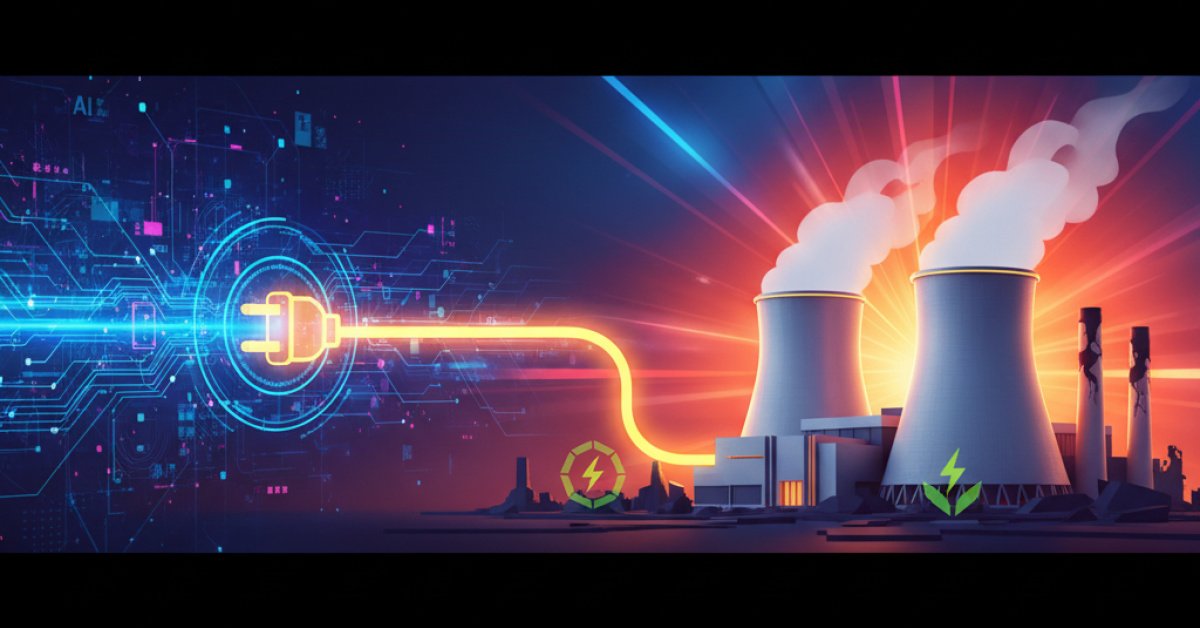
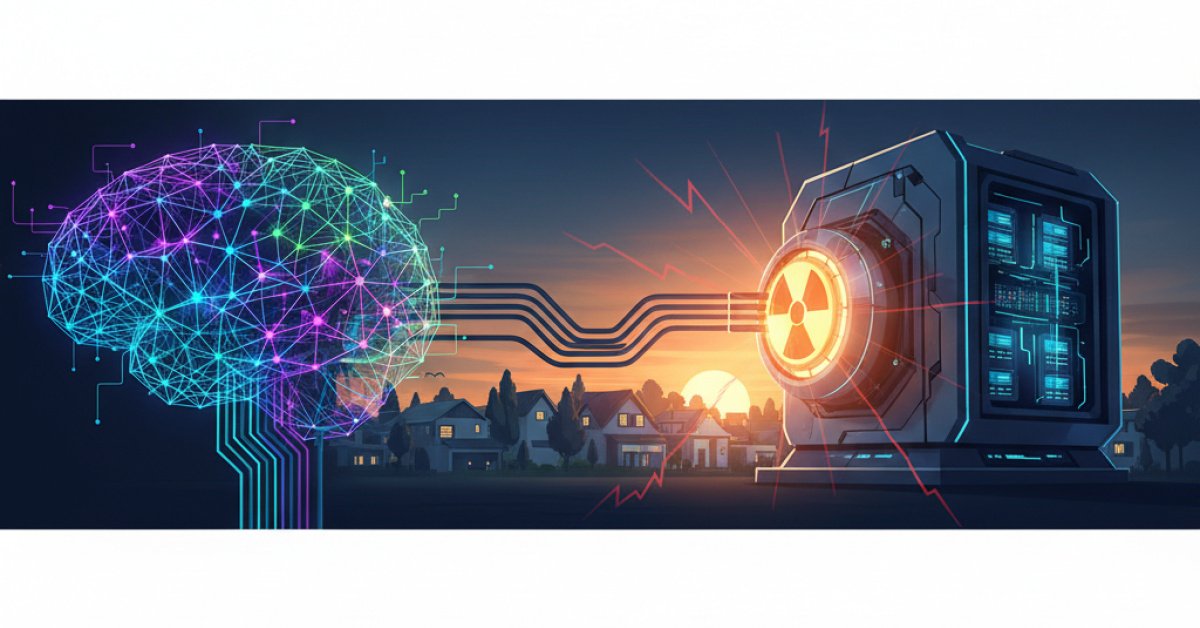
The Insane Energy Bill for AI is Here. Is Nuclear the Answer?
You know how your laptop gets hot and the fan starts whirring when you have too many tabs open? Now, imagine that on a scale that could power a small city. That’s basically what’s happening with AI.
These massive AI models, like the ones that power ChatGPT or create stunning images, are incredibly thirsty for electricity. To run them, companies are building gigantic data centers—we're talking buildings the size of multiple football fields, packed with computer chips. The amount of power these facilities consume is just staggering, and it's creating a huge problem: where do we get all that energy?
One of the most surprising answers floating around Silicon Valley is next-generation nuclear power.
I know what you're thinking. Nuclear? Isn't that complicated and kind of scary? Well, the tech being discussed now is different from the massive, sprawling plants of the past. These are often smaller, potentially cheaper to build, and designed with advanced safety features. The bet is that they could provide a constant, carbon-free stream of power to keep the AI engines running 24/7. It's a wild idea, but it shows you just how massive the energy appetite of AI has become.
Let's Talk About the AI Hype Machine on Social Media
While some people are planning AI's energy future, others are getting a little carried away with its present. And honestly, a little bit of drama on X (you know, Twitter) gave us a perfect window into the problem.
It all started when a research scientist from OpenAI, Sébastien Bubeck, posted something incredibly exciting: he claimed that two mathematicians had used GPT-5 (the next big thing from OpenAI) to solve 10 unsolved problems in mathematics. That’s a huge deal, right?
Well, not so fast.
Demis Hassabis, the CEO of the rival lab Google DeepMind, replied with just three words: “This is embarrassing.”
Ouch. So, what was the beef about? It turns out the claim was a massive overstatement. The AI hadn't "solved" these problems in the way a human mathematician would. The whole thing was a classic example of what’s called "AI boosterism"—getting so caught up in the excitement and potential that you stretch the truth until it snaps.
It’s a perfect reminder that we need to take a lot of the breathless AI announcements we see on social media with a huge grain of salt. The technology is amazing, but it’s not magic.
Beyond the AI Buzz: Tech That's Quietly Changing Our World
AI seems to suck all the oxygen out of the room, but there's some other incredible (and important) stuff happening in the background.
Cooling the Planet, One Paint Can at a Time
With heat waves becoming the new normal, we're all cranking up the air conditioning. That, in turn, puts a massive strain on our power grids—the very same grids that AI data centers are already pushing to the limit.
But what if we could cool our buildings without using any energy at all?
There’s a fascinating technology called "radiative cooling" that’s getting a 21st-century upgrade. Think of it as a super-powered version of wearing a white shirt on a sunny day. New paints, coatings, and even textiles are being designed to scatter sunlight and radiate heat away from a surface. No electricity required. It’s an ancient idea, but with modern materials science, it could be a game-changer for keeping our cities cool.
China's Electric Car Boom Has a Dirty Little Secret
We all love the idea of electric vehicles (EVs). They’re a huge step forward for the environment. But what happens when those cars get old?
China was one of the first countries to go all-in on EVs, and now they're facing the consequences. Hundreds of thousands of used batteries from the first wave of electric cars are piling up. This has created a "gray market" for recycling, with people trying to salvage what they can without a proper system in place. It's a messy, complicated problem that the government and big car companies are scrambling to solve.
It's a classic story of innovation moving faster than our ability to deal with its long-term impact.
The Quick-Hit News Reel: What Else Is Happening?
Okay, let's do a quick-fire round of some of the other stories bouncing around the internet. It's a mix of the important, the bizarre, and the slightly scary.
-
The Social Media Squeeze: Europe is getting serious about restricting social media for kids. Spain is the latest to consider a ban for minors, following similar talks in Greece, France, and the UK. Naturally, Elon Musk jumped in to call the Spanish prime minister a "tyrant." Meanwhile, French authorities actually raided X's Paris office as part of an investigation. The pressure is definitely on.
-
Crypto and AI Get Weirder: In one of the stranger corners of the internet, humans have started infiltrating a social network designed for AI agents and are having a blast role-playing as bots. On a much darker note, it was revealed that Jeffrey Epstein invested millions in the crypto exchange Coinbase years after his guilty plea. And to top it off, a group of crypto enthusiasts paid $300,000 for a golden statue of Donald Trump. You can't make this stuff up.
-
Spy Games and Future Batteries: Security officials believe Russian spy spacecraft have been tapping into unencrypted European satellite communications. Back on Earth, scientists are making progress on 3D-printing batteries, which could help us break away from the bulky, blocky batteries we use today.
A Story That Stopped Me in My Tracks
Every now and then, you read a story that cuts through all the noise about corporate strategy and new product launches. It reminds you of the deeply human stakes of all this technology.
Her name is Rita Leggett, an Australian woman who suffered from severe epilepsy. She received an experimental brain implant that changed everything. The device helped her control the violent seizures that had dominated her life. She told researchers she "became one" with the implant; it gave her back her life and her sense of self.
Then, the company that made the device went bankrupt.
And she was told the implant had to be removed. Against her will, this piece of technology that had become a part of her was taken away. Ethicists are now arguing that this could be a breach of human rights. As we move into an era of more advanced brain-computer interfaces, Rita's story is a powerful, heartbreaking warning. What happens when the technology that sustains us is owned by a company that can simply take it back?
It’s a heavy question, but it’s one we absolutely have to start asking. From the energy we consume to the hype we believe and the very tech we implant in our bodies, it's clear we're navigating a brand new world. And talking about it, honestly and openly, is the only way we'll get it right.