You know that old saying, "the eyes are the window to the soul"? It’s a bit poetic, but what if they were also a window to the brain? A literal, biological window that could show us the earliest signs of devastating diseases like Alzheimer's, long before a person ever forgets a name.
It sounds like something straight out of science fiction, I know. But this isn't a movie plot. It’s a very real possibility that some of the brightest minds in medicine and technology are working on right now. And one of its biggest champions is Dr. Eric Topol, a cardiologist, geneticist, and author who has spent his career at the forefront of medical innovation.
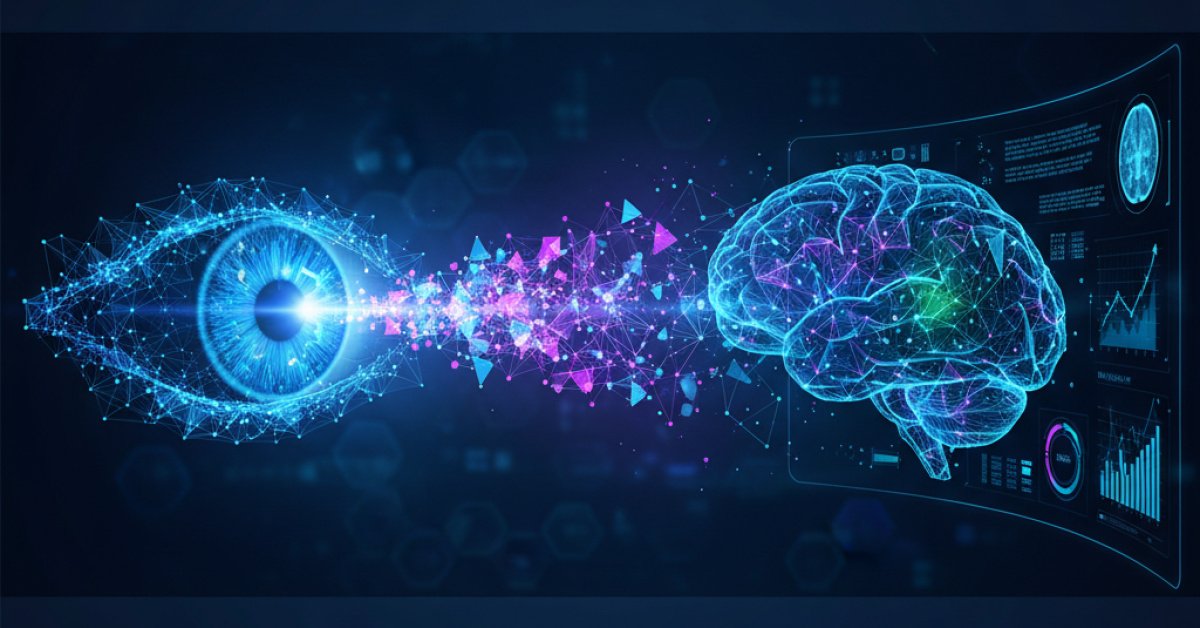
He believes that a combination of a simple retinal scan—the kind you might get at the eye doctor—and powerful AI could fundamentally change how we detect, and maybe one day treat, Alzheimer's disease. And honestly, when you hear him explain it, it starts to sound less like science fiction and more like the future of medicine.
So, What’s the Big Idea Here?
Let’s break this down. The core idea is surprisingly simple, even if the science behind it is incredibly complex.
Your retina, the thin layer of tissue at the very back of your eye, is actually an extension of your central nervous system. Think of it as the only part of your brain we can see from the outside without any invasive procedures. It's packed with neurons and blood vessels that are directly connected to what's happening deeper inside your skull.
For a long time, doctors have known that changes in the retina can signal problems elsewhere in the body, like diabetes or high blood pressure. But spotting the subtle, almost invisible signs of a neurodegenerative disease like Alzheimer's? That’s been a whole different ballgame. The changes are just too tiny and complex for the human eye to reliably catch.
And that’s where AI comes in.
AI: The Super-Powered Detective for Your Eyes
Imagine trying to find a single specific grain of sand on an entire beach. That’s kind of what doctors are up against. But an AI, specifically a type called a "deep learning" model, can be trained on tens of thousands of retinal images.
It learns to see what we can’t.
The AI isn't just looking at the picture; it's analyzing patterns. It can measure the thickness of nerve layers down to the micron, detect minuscule changes in the web of blood vessels, and spot tiny deposits called drusen, which are sometimes linked to Alzheimer's. It can see the "fingerprint" of the disease starting to form years—maybe even a decade or more—before the first cognitive symptoms appear.
It’s like having a detective with a super-powered magnifying glass who never gets tired and has a perfect memory of every clue they've ever seen.
Why This Could Be a Massive Leap Forward
Right now, diagnosing Alzheimer's is a messy, difficult process. It often involves expensive brain scans like PET or MRI, painful spinal taps, and a series of cognitive tests. And here’s the really frustrating part: by the time a diagnosis is confirmed, the disease has already been damaging the brain for years.
It’s like finding out your house has termites only after the walls have started to crumble. You can manage the damage, but you can't undo it.
An AI-powered retinal scan could change all of that. Think about the potential here:
- It's Non-Invasive: No needles, no radiation. Just a quick, painless picture of the back of your eye.
- It's Accessible: Retinal cameras are already in most optometrist offices. You wouldn't need to go to a specialized neurology center. This could become a routine part of a yearly check-up.
- It's Fast and Cheap: An AI can analyze an image in seconds, and the cost would be a tiny fraction of a traditional brain scan.
- It's All About Early Detection: This is the most important piece of the puzzle. If we can identify people at high risk for Alzheimer's 10 or 15 years before symptoms start, it opens up a huge window for intervention.
For Dr. Topol, this isn't just about finding a better diagnostic tool. It’s about shifting our entire approach from reactive to proactive medicine. Instead of waiting for the disease to take hold, we could get ahead of it.
This Isn't Just a Theory Anymore
This concept is moving from the lab into the real world. Researchers have already published studies showing that AI models can distinguish between the retinal scans of healthy individuals and those with Alzheimer's with a surprisingly high degree of accuracy.
Of course, we're not quite there yet. This technology is still in development and needs more validation with larger, more diverse groups of people. We need to be sure it's reliable and doesn't create a bunch of false positives, which could cause unnecessary anxiety. There are regulatory hurdles to clear and a lot more work to be done.
But the momentum is undeniable. Dr. Topol, in his book Super Agers, talks about this as part of a larger wave of medical AI that's coming. He envisions a future where AI helps doctors sift through mountains of data—from our genes to our smartwatches—to create a truly personalized picture of our health.
It’s a future where we don’t just treat sickness, but actively predict and prevent it. And it seems one of the most powerful tools to get us there might be hiding in plain sight, right at the back of our eyes. It’s a pretty incredible thought, isn't it?