You know that number on your driver's license? The one you celebrate (or maybe dread) once a year? That’s your chronological age. It’s a simple count of how many times the Earth has gone around the sun since you were born.
But let’s be honest, we all know people who seem way younger or older than their years. There’s the 60-year-old who’s still running marathons and the 30-year-old who seems to have the aches and pains of someone twice their age.
This difference is what scientists call "biological age," and it’s a much better measure of your body's true health and wear-and-tear. For decades, it was a fuzzy concept. But now, thanks to some incredible advances in AI and genetics, we can actually measure it.
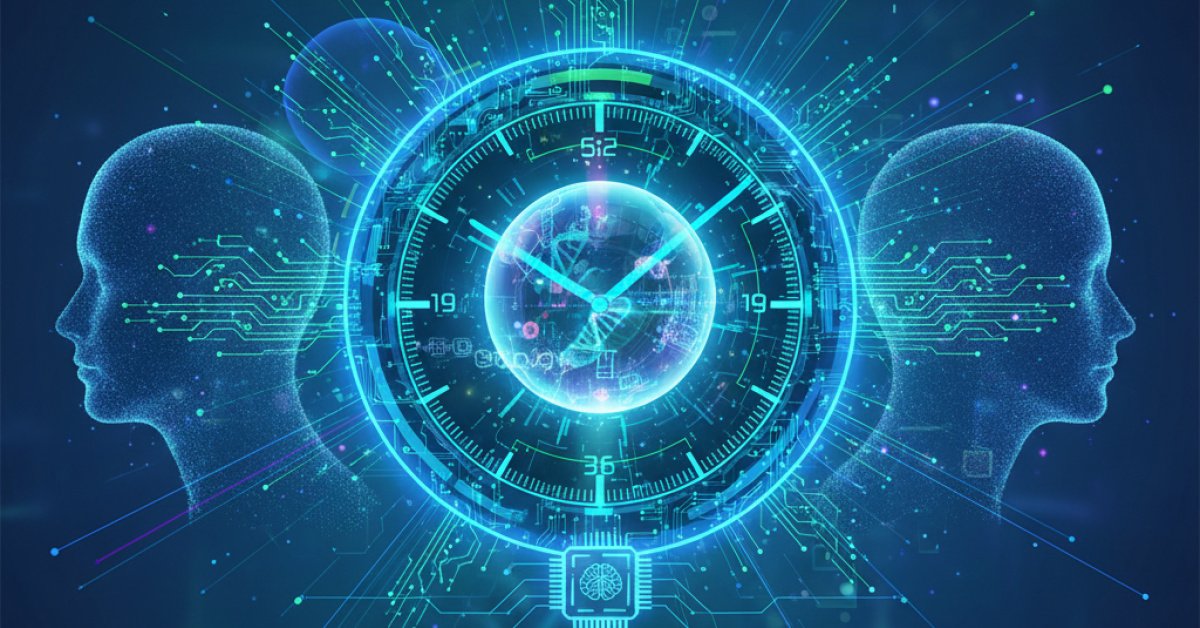
Enter the "aging clock." And no, it’s not a device you hang on the wall. It’s a groundbreaking scientific tool that can look at your biology and give you a number that might be far more important than your birthday.
So, What Exactly Are These 'Aging Clocks'?
Think of it like this. Your chronological age is like the model year of your car. It tells you when it was made, but not much else. Your biological age, on the other hand, is like a full diagnostic report from a master mechanic—it checks the mileage, the engine wear, the rust, everything.
These aging clocks are the diagnostic tools.
The most popular ones are called epigenetic clocks. To understand that, you need a quick, painless biology lesson. You have your DNA, right? The blueprint for your body. Well, sitting on top of that DNA are tiny chemical tags, like little sticky notes. These tags don't change your DNA, but they tell your genes when to turn on or off. This whole system of sticky notes is called the epigenome.
As we get older, the pattern of these sticky notes changes in predictable ways. It gets a little messy, a little less organized.
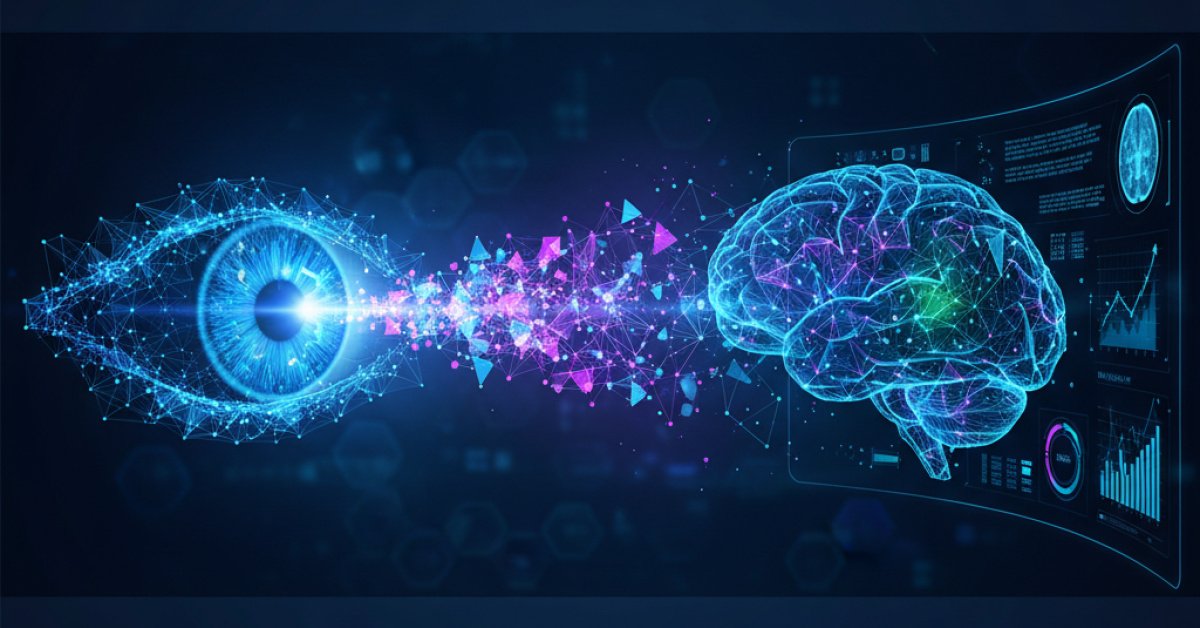
Scientists realized they could use machine learning to analyze these patterns across thousands of people. They fed AI algorithms a ton of data: the epigenetic patterns from blood samples and the chronological ages of the people they came from. The AI chewed on all that data and learned to spot the subtle signatures of aging.
The result? An algorithm that can look at your epigenetic patterns and predict your biological age with startling accuracy.
The ‘Black Box’ Problem: When AI Knows More Than We Do
Here’s where it gets really interesting, especially for those of us in the tech world. Some of the most accurate aging clocks are what we call "black boxes."
This is a classic AI scenario. The machine learning model is so complex that even the scientists who built it don't know exactly how it's coming to its conclusions. The AI has found thousands of tiny patterns in our epigenome that correlate with aging, but it can’t always raise its hand and say, "Hey, it’s this specific sticky note on this specific gene that’s causing the problem!"
It just works. It gives an incredibly accurate output—your biological age—but the inner workings are a bit of a mystery. This is a huge topic of debate in the field. Do we need to understand every single step, or is it enough that we have a tool that can accurately predict health outcomes and measure the effectiveness of new therapies?
For now, it seems the utility is winning out. These clocks are just too powerful to ignore.
The Big Question: Can We Actually Turn Back the Clock?
This is what everyone wants to know, right? It’s not just about getting a new number to worry about. The whole point of measuring something is to see if you can change it.
And the answer, amazingly, seems to be yes.
Researchers are now using these aging clocks as the gold standard in clinical trials for longevity. Instead of waiting decades to see if a new drug or lifestyle change helps people live longer, they can test it for a few months and see if it lowers their biological age.
Did that new diet plan work? Check the clock. Did that exercise routine make a difference? Check the clock. Did that new supplement do anything? You get the idea.
This is shifting the goal of medicine from just treating diseases of old age (like heart disease or dementia) to treating aging itself. The idea is to increase our "healthspan"—the number of years we live in good health—not just our lifespan. We're still in the very early days, but it's a monumental shift in thinking.
It's Not Just About Us: Checking the Age of Dogs and Dolphins
And this isn’t just a human story. Scientists are hard at work developing aging clocks for all sorts of animals. They've already built them for our best friends, dogs, and even for dolphins.
Why? Well, for one, it helps us understand our pets' health better. But on a grander scale, it helps us understand the fundamental principles of aging across the entire animal kingdom.
Do animals that live a long time, like certain whales or tortoises, have epigenetic patterns that age much more slowly? What can we learn from them? By comparing the aging process in different species, we might uncover universal secrets to a longer, healthier life.
Weird Science: What Happens When Old Blood Meets Young Blood?
For years, there have been strange and slightly creepy experiments in a field called parabiosis. It’s where scientists surgically join the circulatory systems of two animals, typically an old mouse and a young mouse.
The results have been wild. The old mouse often shows signs of rejuvenation—their organs look healthier, their minds get sharper. It suggested there was something in the blood of the young mouse that had anti-aging properties.
But what was it? And how could you measure the effect precisely?
You guessed it: aging clocks. Now, scientists can perform these experiments and use an aging clock to get a clear, quantitative answer on just how much "younger" the old mouse became. It's taking this research out of the realm of weird science and into the world of hard data.
So, where does this all leave us?
These aging clocks are more than just a scientific curiosity. They represent a new way of looking at our own health. Imagine going for your annual physical and getting your blood pressure, your cholesterol, and... your biological age.
It could become the single most important health metric you track. It’s a powerful motivator. Knowing your body is aging faster than it should be could be the push you need to finally change your diet or start exercising.
What would you do if you found out your biological age was five years older than your driver's license says? It’s a question we might all be asking ourselves sooner than we think.