Hey there,
It feels like every conversation about AI these days circles back to ChatGPT and large language models (LLMs). And for good reason—they’ve completely changed what we thought was possible with text and language. But what happens when AI needs to step away from the keyboard and actually do something in the real world?
That’s a whole different ball game. Helping a machine understand physical space, predict how a ball will bounce, or figure out how to open a door is a massive challenge that language alone can't solve.
This is where a new, fascinating corner of AI research comes in: world models. It’s a term you’re going to be hearing a lot more, and it might just be the key to unlocking the future of robotics. Let's dive into what that means, and then we'll get you caught up on some of the other absolutely wild things happening in tech right now.
So, How Will AI Actually Understand Our World?
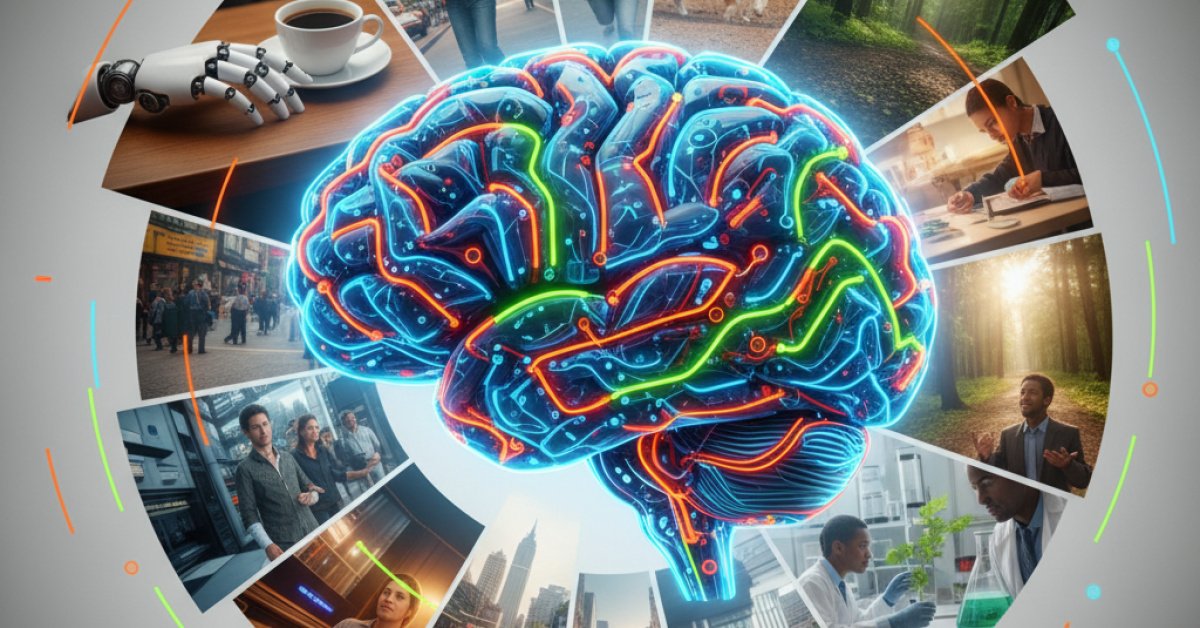
Think of it this way: LLMs learned to predict the next word in a sentence by reading a huge chunk of the internet. A world model, on the other hand, tries to learn the "rules" of the physical world so it can predict the next event. It's like giving an AI its own internal physics engine or a simulation of reality it can play with.
By creating these virtual sandboxes, AI can learn cause and effect without having to break a million real-world robots in the process. This is the kind of technology that could finally give us robots that can navigate our messy, unpredictable homes and workplaces.
It’s one of AI’s next major frontiers, and if you’re curious to learn more, you’re in luck. MIT Technology Review is hosting a LinkedIn Live event to explore exactly this. Will Douglas Heaven, our senior editor for AI, will be chatting with Sam Sinha, who heads up world models at 1X Technologies. It’s happening on Tuesday, July 14, and you can register here to join the conversation for free.
Meanwhile, the Gloves Are Off in Silicon Valley
While some folks are building the future, others are busy fighting over the present. And the biggest fight this week? It’s Apple vs. OpenAI.
Apple has filed a lawsuit accusing OpenAI of stealing trade secrets to build its own consumer hardware. This isn't just some vague accusation; Apple is claiming that OpenAI actively poached its employees to get their hands on confidential information.
Get this: the lawsuit even includes text messages. One former Apple engineer, Chang Liu, allegedly texted a colleague, “LOL, I found out I can access the [network storage], so funny.” I’m no lawyer, but that doesn’t exactly sound great. Apple is also suing Liu and another former employee, Tang Tan, directly. This feels like the opening shot in a long war for talent and secrets in the AI space.
And speaking of tech giants in hot water, Meta had to quickly scrap a new AI feature on Instagram after a major backlash. The idea was to let you generate images based on public accounts, but here's the kicker: they automatically opted in any Instagram user with a public account. People were, understandably, not thrilled about their photos being used to train an AI without their explicit permission. It’s another reminder that for a lot of these companies, it’s still easier to ask for forgiveness than permission.
AI's Ripple Effect is Changing… Everything
The impact of AI is spreading far beyond Silicon Valley, and it’s creating some fascinating, and slightly strange, ripple effects across the globe.
-
A Brain Drain… or a Brain Gain? Omar Yaghi, a Nobel-winning chemist, is leaving the U.S. to lead a new AI-powered lab in China focused on discovering new materials. It’s a huge move that comes as China is actively trying to attract top U.S. scientists, and it raises big questions about the global race for AI talent.
-
Who Should Own AI? A recent poll found that over two-thirds of Americans are actually on board with a plan for public ownership of AI stock, an idea championed by politicians like Bernie Sanders. It’s a radical thought, but it shows people are starting to think seriously about who really benefits from this technology.
-
Your Phone is About to Get More Annoying. Just when you thought political campaigns couldn’t get more invasive, AI is here to help. New platforms are training bots to sound just like political candidates, meaning those campaign texts are about to get a lot more potent—and probably a lot more frequent.
-
Is That Song Real or AI? Australia’s biggest radio hit is currently under a cloud of suspicion, with musicians questioning whether it was created with generative AI. The line between human and machine-made art is getting blurrier by the day.
Tech That Feels Straight Out of a Movie
Sometimes you read a headline and have to double-check that you’re not reading the plot of a new sci-fi thriller. This week had a couple of those.
First, Colombian military officials intercepted a 40-foot-long “narco sub” in the Caribbean. These stealthy vessels are used by cartels to smuggle cocaine, but this one was different: there was no one on board. It was the country’s first confirmed uncrewed narco sub, capable of being operated by remote control or even traveling autonomously. Think about the implications: smugglers can now move more product, over longer distances, without risking a single person. It’s a chilling evolution in the drug trade.
Closer to home, hours of drone footage from the San Francisco Police Department were accidentally leaked online. It’s a stark look at the new reality of surveillance in our cities. As drone use by law enforcement rises, it brings up some really tough questions about privacy and what we’re willing to accept in the name of security.
A Few More Things You Should Know About
It was a busy week, so here are a few other stories that caught my eye:
-
A Limit on Life? A European fertility organization is calling for international limits on how many children a single sperm donor can help conceive. This comes after some donor-conceived people have discovered they have tens or even hundreds of half-siblings. One person who found they had 25 said, “It does make you feel a bit mass-produced.” It’s a deeply human story about the unforeseen consequences of medical technology.
-
The EU vs. Social Media: The EU is moving closer to banning kids under 13 from social media unless they’re supervised by an adult. They’ve also told Meta to get rid of features like autoplay and infinite scroll. It’s a major pushback against the addictive design of these platforms.
-
An Orbiting Disco Ball for Science: In one of the coolest stories of the week, a satellite that looks like a disco ball just gave Einstein’s theory of relativity its most precise test ever by measuring how Earth’s gravity twists space-time. Science is awesome.
Whew. From AI learning about the real world to uncrewed narco subs, it’s a lot to take in. It just goes to show you how technology is weaving its way into every single part of our lives, from the incredibly personal to the massively geopolitical. Keeping up can feel like a full-time job, but it’s never been more important.