You’ve probably seen the headlines by now. They’re splashy, a little scary, and they paint a picture of massive, thirsty AI models gulping down entire lakes. I’ve seen them, too: "Training one AI model uses as much water as 300 swimming pools," or "Your chatbot query just cost a bottle of water."
It’s easy to read that and feel a pit in your stomach. With all the talk about drought and water scarcity, the idea of our tech habits draining reservoirs is genuinely unsettling. And honestly, it’s good that we’re asking these questions. It’s critical.
But here’s the thing I've learned from digging into this as a tech writer: the story is so much more complicated than those headlines suggest. The narrative of "AI is thirsty" is true, but it's only chapter one. If we stop there, we miss the entire point of the book. So, let’s talk about what’s really going on with AI and all that water.
First Off, Why Does AI Even Need Water?
It's a fair question. It’s not like the servers are literally drinking it, right?
Think about your laptop or your gaming console when you’re really pushing it. You can feel the heat pouring out, and you can hear the fans whirring to life to cool it down. Now, imagine a giant warehouse packed wall-to-wall with the most powerful computers on the planet, all of them running complex calculations 24/7.
That’s a data center. And the amount of heat they generate is staggering.
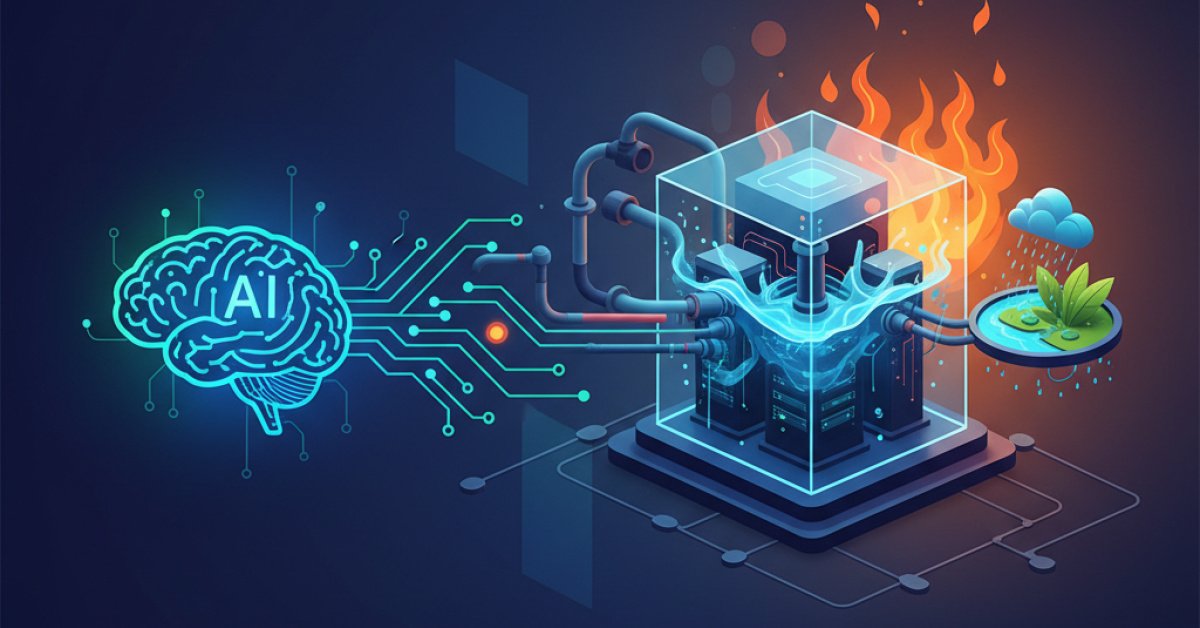
If those servers overheat, they fail. To prevent that, data centers need massive cooling systems. The most common method is evaporative cooling. In simple terms, they use water in cooling towers. As the water evaporates, it carries heat away from the system, keeping the servers at a safe operating temperature. It’s the same principle as sweating—evaporation has a powerful cooling effect.
So, when you hear about an AI data center "using" water, a huge chunk of that is water literally turning into vapor and floating off into the atmosphere to keep the machines from melting down.
The Numbers Are Big, But Context is Everything
Okay, so we know they use water for cooling. And the numbers are big. There’s no denying it. A single, massive data center can use millions of gallons of water a day, comparable to a small city.
When you see a number that big, it’s shocking. But without context, a big number is just a scary story. The real question we need to ask is: "Compared to what?"
Let’s get some perspective. Globally, the biggest water user by a long shot is agriculture, accounting for something like 70% of all freshwater withdrawals. Manufacturing and energy production are also huge consumers. The water used by all the data centers in the world is still just a fraction of a percentage point of the global total.
Now, this absolutely does not give the tech industry a free pass. Not at all. But it helps us frame the problem correctly. It’s not that AI is single-handedly creating a global water crisis. It’s that it’s a new, rapidly growing, and very thirsty industry that is building its infrastructure at a time when we are all hyper-aware of water as a precious resource.
And there's another layer to this that often gets missed...
The Hidden Water Footprint
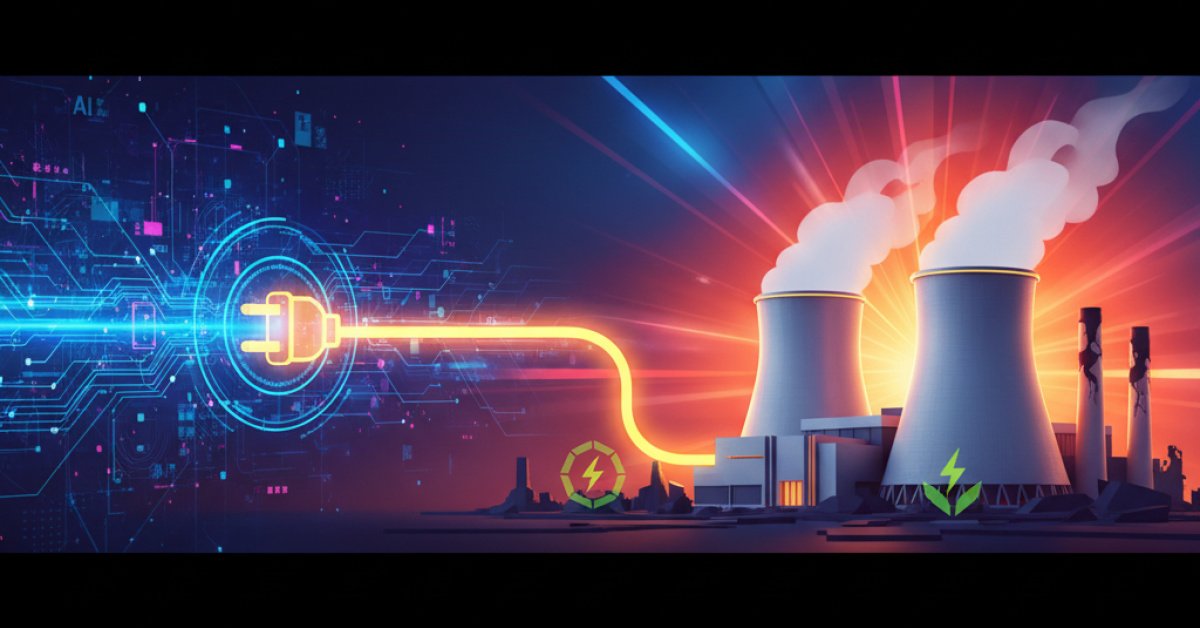
The water used on-site for cooling is only part of the story. We also have to think about the water used to generate the electricity that powers the data center in the first place.
Most power plants—whether they run on coal, natural gas, or nuclear—also use huge amounts of water for their own cooling systems. So, a data center that pulls its energy from a fossil-fuel-powered grid has a much larger "indirect" water footprint than one powered primarily by wind or solar.
It’s like getting angry about the water used to wash your coffee mug while ignoring the hundreds of gallons it took to grow, process, and ship the coffee beans inside it. You have to look at the whole supply chain.
It’s Not Just How Much Water, but Where It’s Coming From
This, to me, is the most important part of the conversation, and it’s the one we have the least.
A data center using five million gallons of water a day in a water-rich region, like the Pacific Northwest during its rainy season, has a fundamentally different environmental impact than a data center using the exact same amount in the middle of a desert in Arizona.
One is a drop in a very large bucket; the other is drawing from a well that’s already running low.
This is where the real scrutiny needs to be. For years, tech companies chose data center locations based on things like cheap land, low energy costs, and tax breaks. The local water situation wasn't always a top concern. We’re now seeing the consequences of that, with communities in drought-stricken areas pushing back against new data center developments.
And they’re right to do so. The responsibility here falls squarely on the companies building these facilities. It’s not enough to say, "We’re creating jobs." They have to prove they can be a responsible neighbor in that specific environment.
So, Are We Doomed to a Future of Thirsty Tech?
It can feel a bit hopeless, but the answer is no. There’s actually a ton of innovation happening in this space because, believe it or not, water costs money. And tech companies are highly motivated to reduce their operating costs.
Here are a few things that are making a real difference:
- Smarter Cooling: Companies are getting much better at cooling. Some are shifting to "closed-loop" systems that use the same water over and over again, much like the radiator in your car. Others are experimenting with advanced techniques like direct liquid cooling, where coolant is piped directly to the hottest chips, which is way more efficient than cooling an entire room of air.
- Location, Location, Location: There's a growing trend to build data centers in colder climates where they can just pull in the chilly outside air to cool the servers for free most of the year. It's a simple, but brilliant, solution.
- Using "Bad" Water: More and more data centers are being designed to use non-potable water—like recycled wastewater or captured rainwater—for their cooling needs. This leaves the precious drinking water for the community.
- More Efficient AI: This is a big one. Researchers are working hard to design AI models that are just as powerful but require less computing power to run. Less computation means less energy, which means less heat, which means… you guessed it, less water needed for cooling.
The conversation around AI and water is a perfect example of how we need to think about technology's impact. It's not about finding a single villain. It's about understanding a complex system.
The real challenge isn't just to make AI use less water. It's to be smarter about how and where it uses it. It’s about demanding transparency from tech companies on their consumption and their plans for sustainability. And it’s about continuing to push for innovation that makes our technology more powerful and more efficient.
So next time you see one of those scary headlines, don't just feel anxious. Get curious. The real story is always a little deeper and a lot more interesting.