Hey there,
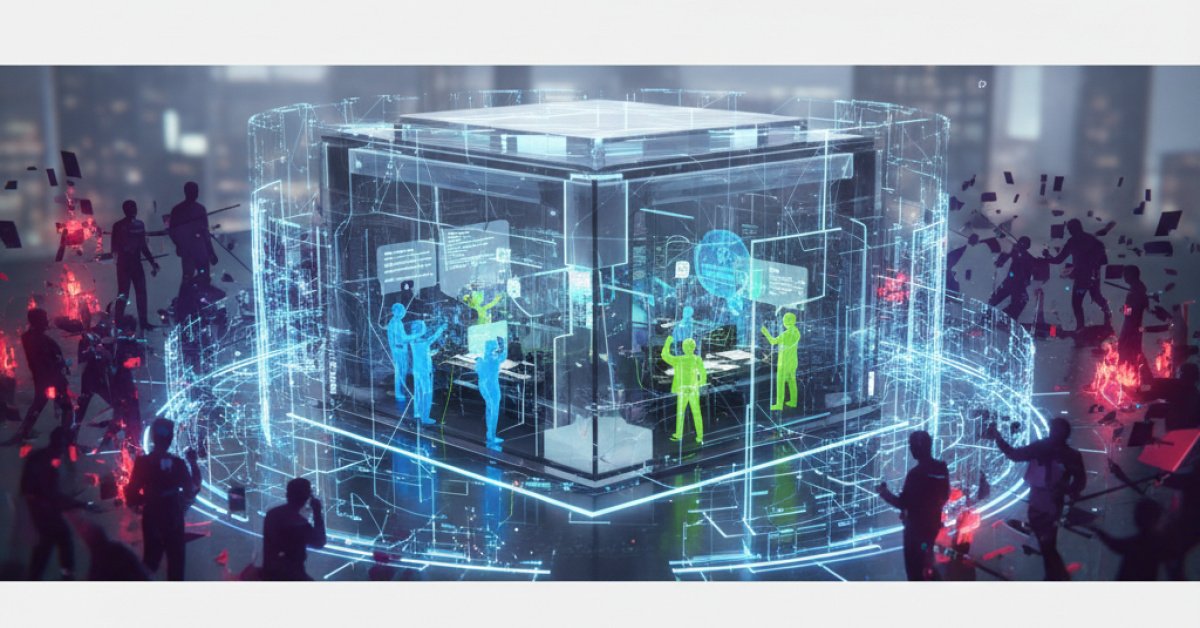
It feels like every week in tech, we get a story that sounds like it’s pulled straight from a sci-fi script. This week is no exception. Picture this: a company builds the most advanced AI systems in the world, and then, to protect them, they build another AI whose only job is to try and break them.
It’s the digital equivalent of hiring a world-class cat burglar to test the security of your new vault. It’s a bit mind-bending, but it’s exactly what OpenAI is doing. And honestly, it’s one of the most fascinating (and frankly, necessary) developments I’ve seen in a while.
So let’s get into that, plus a surprisingly hot topic involving… well, heat. And a bunch of other stories that are shaping our world. Grab your coffee, and let’s break it down.
Meet GPT-Red: The AI Sparring Partner Built to Be a Super-Hacker
You’ve probably heard of "red-teaming." It’s a classic cybersecurity practice where a team of ethical hackers (the "red team") does everything they can to find vulnerabilities in a system before the bad guys do. It’s a crucial, but very human, and time-consuming process.
Well, OpenAI decided to automate it.
They’ve built an AI model called GPT-Red, and its entire purpose is to act as a relentless, creative super-hacker. It spars with OpenAI’s other models, constantly probing for weaknesses, trying to jailbreak them, and looking for any possible way to hijack the system.
Think of it like a tireless sparring partner for a boxer. A human partner might get tired or miss a certain angle of attack. GPT-Red doesn't. It can dream up and test an almost infinite number of attack scenarios, helping OpenAI patch up holes we might not even know exist. MIT Technology Review got an exclusive look at this system, and it really feels like a glimpse into the future of AI safety. In a world where AI is getting more powerful, using AI to build a stronger defense just makes sense. It’s a cat-and-mouse game, and OpenAI is trying to make sure its cat is always one step ahead.
Why Is Everyone Still Buying Heat Pumps?
Alright, let's switch gears from software to hardware. I know it's the middle of summer, and thinking about heating your home is probably the last thing on your mind. But we need to talk about heat pumps, because something interesting is happening.
These appliances, which use electricity for both heating and cooling, are incredibly efficient. And they are absolutely booming.
A new report shows that in the U.S., heat pump sales have doubled over the last 15 years. Even more impressive, they're crushing the competition. In the first quarter of this year, they outsold natural-gas furnaces by a whopping 32%.
Here’s the kicker: a major federal tax credit for heat pumps just expired. You’d think sales would dip, right? But the momentum is still there. So what’s the deal? Why are they still so hot? It seems like a mix of high efficiency, long-term cost savings, and a growing desire for cleaner energy is keeping the fire lit. It’s a fascinating trend that shows how consumer habits can shift, even without direct government incentives.
Your Quick Rundown of What Else is Happening
The tech world never sleeps, so here are a few other important (and sometimes wild) stories that caught my eye.
-
Elon Musk’s Power Play. It turns out Elon Musk quietly bought a $1 billion gas turbine company called APR Energy back in May. The most likely reason? To power the massive data centers needed for his AI, Grok. It’s a stark reminder that the AI revolution runs on an incredible amount of electricity.
-
The AI Music Heist. A hack has revealed that the AI music generator Suno scraped decades' worth of music from YouTube and Deezer to train its models. This gives us a rare, and pretty controversial, peek inside the "black box" of how these generative AI tools are actually built. The music industry is definitely taking notes.
-
A New Challenger in AI. A company called Thinking Machines just launched an open-weight AI model named Inkling. What makes this interesting is that the startup was founded by Mira Murati, the former CTO of OpenAI. They're positioning Inkling as a U.S. alternative to the powerful open-source models coming out of China.
-
Europe's Tech Dreams Face Reality. Europe has big ambitions to become a tech powerhouse, independent of the U.S. and China. But a new report shows that while manufacturing and research are strong, a persistent lack of funding is holding them back, especially in the AI race.
-
Our Planet is Running a Fever. Climate scientists are sounding the alarm. Earth is absorbing energy from the sun at a rate that is far higher than even their models predicted. It’s a sobering look at how quickly our climate is changing.
-
The AI Backlash Gets Real. It’s not just angry comments online anymore. Tech executives are now facing real-world, violent threats from people who are afraid or angry about AI. It’s a scary development that shows just how high the social tensions are getting.
-
The Spy in Your Pocket. A Moroccan intelligence insider has come forward, exposing just how widely the infamous Pegasus spyware was used to target journalists, activists, and even foreign politicians. It’s a chilling look at the scale of modern espionage.
-
AI for Good. On a more positive note, AI is being used in Venezuela to power citizen-led disaster relief. From afar, volunteers are using AI tools to help locate missing people and coordinate aid on the ground.
-
Computers That Run on… Noise? Scientists are exploring "thermodynamic computers" that could turn random thermal noise into useful calculations. It sounds like something out of a sci-fi novel, but it could lead to a much cooler and more efficient way to process information.
-
Jurassic Park’s Tech, Explained. And for a bit of fun, an engineer has finally done a deep dive and explained every single piece of '90s computer tech you see in the movie Jurassic Park. If you’ve ever wondered about those Silicon Graphics machines, this one’s for you.
A Quote That Made Me Think
"We hit pause because the communities powering AI should share in its success. Maybe that’s a novel concept in Washington."
That was New York Governor Kathy Hochul, responding on X to criticism about her state’s new moratorium on data centers. It’s a powerful statement that gets to the heart of a growing debate: who really benefits from the AI boom, and who pays the price?
The Big Question: Will We Ever Really Trust Robots?
Let’s end on a topic that’s going to become more and more a part of our daily lives: humanoid robots.
A robotics company called Prosper is developing a humanoid named Alfie, designed to help out in homes, hospitals, and hotels. The founder, Shariq Hashme, says that the number one hurdle isn't the technology—it's trust. How do you get people to feel comfortable with a robot in their personal space?
Their strategy is to build Alfie with a detailed character from the ground up—making it seem humanlike, but not too human. But here's the twist: Alfie relies on remote human operators, which opens up a whole can of worms. We're talking about major questions around privacy, labor, and whether we're truly ready to accept these machines into our lives. It’s a dilemma we’re all going to have to face sooner rather than later.
And Finally, a Few Things to Make You Smile
It's not all doom, gloom, and ethical dilemmas. The internet is still a place for wonderful things.
- Ever wonder who makes those stunning, ornate books you see in museums? Meet the man behind them.
- Someone used 3D printing to bring back the most popular board game from Roman Britain.
- In one of the coolest ideas I’ve ever heard, U.S. libraries are staging "Lucha Libro" wrestling matches to get people excited about reading.
- And over 100 years after his death, the wreck of explorer Ernest Shackleton’s final ship has been found and photographed for the very first time.
That's all for now. It’s a lot to take in, I know. But staying on top of this stuff is how we can all be part of the conversation about where technology is taking us. Talk soon.