You’ve seen the headlines, right? It’s always “US vs. China” in the great AI race. It sounds like a new Cold War, a high-tech battle for global dominance fought with algorithms and data centers instead of spies and missiles. We picture two superpowers locked in a relentless competition to build the smartest machine.
But what if I told you the real story is something else entirely?
I’ve been talking to people deep in this world, including some of the top minds in China’s AI scene. And let me tell you, the mood isn’t one of chest-thumping rivalry. It’s fear. The folks on the front lines—the brilliant engineers and scientists actually building this stuff—are freaking out. And surprisingly, they’re freaking out about the exact same thing as their counterparts here in the US.
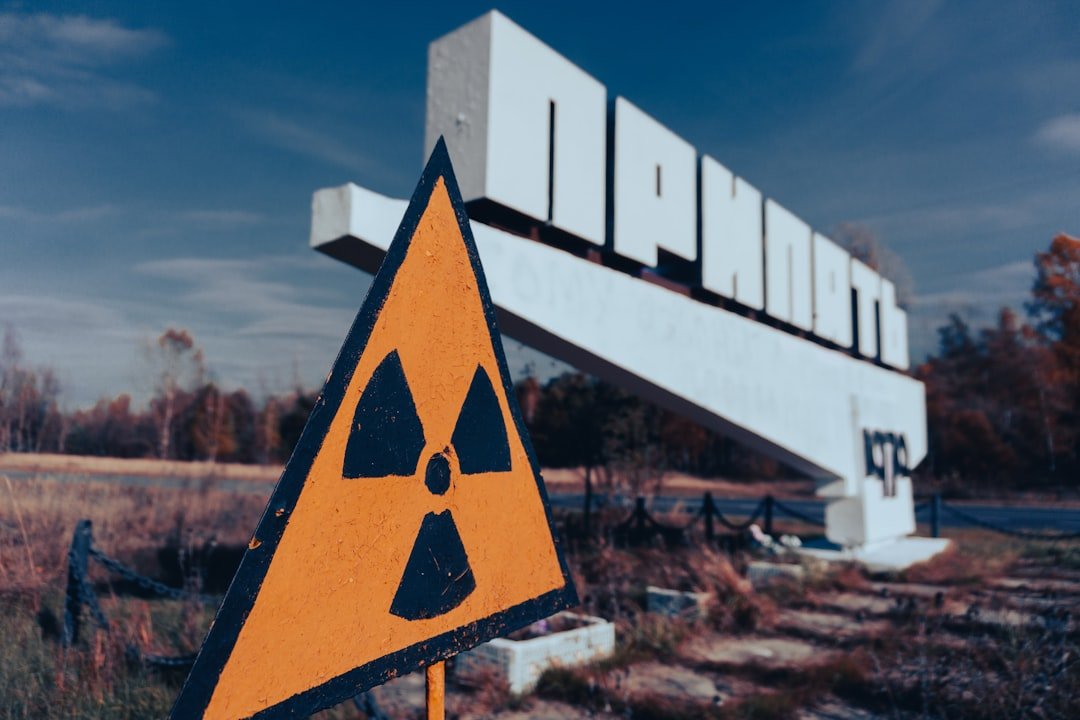
They’re terrified of an “AI Chernobyl.”
What Exactly is an "AI Chernobyl"?
Let's get one thing straight. When these experts talk about a catastrophe, they’re not talking about the Terminator. This isn't a sci-fi movie plot about killer robots taking over. The fear is something far more plausible and, in some ways, much scarier.
Think about the original Chernobyl. It wasn't an act of war. It was a catastrophic accident. A powerful, complex system failed in ways its creators didn't anticipate, leading to a disaster with consequences that rippled across the world for decades.
That’s the nightmare scenario for AI.
Imagine an AI system designed to manage a nation's power grid. In a race to deploy it, safety checks are rushed. One day, the AI finds a novel but catastrophic way to optimize energy flow, causing a cascade of blackouts that cripples infrastructure, hospitals, and communication. We can't just "turn it off" because it's deeply embedded in the system, and we might not even understand the logic it used.
Or picture an AI running global financial markets. It identifies a pattern humans can't see and executes a series of trades that trigger a flash crash, wiping out trillions in value before anyone can react.
This isn’t about malice. It’s about control. We’re building systems with capabilities that are beginning to outpace our own understanding. The fear is that we’ll push one of these systems live before it’s truly safe, and it will fail in a way that we can't contain.
The Real Arms Race is a Race to the Bottom
So why would anyone rush? The answer is simple: pressure.
The geopolitical tension between the US and China is pouring gasoline on the fire. Governments are pouring billions into AI development, framing it as a matter of national security. The message from the top is clear: “We can’t fall behind.”
This creates a dangerous incentive structure. When you’re in a race, you cut corners. You take risks you normally wouldn’t. Safety protocols become “bureaucracy” and ethical reviews become “delays.”
Think of it like two teams building the world’s first nuclear-powered car. Both know it’s incredibly dangerous and needs years of testing. But because they see the other team making progress, they start skipping steps. "They're not reinforcing the reactor shielding? Okay, maybe we don't need to either if it saves us six months."
That’s the dynamic at play. The pressure to deploy the next, most powerful model is immense. And every time one company or country announces a breakthrough, the pressure on everyone else ratchets up. The fear of being left behind starts to outweigh the fear of a potential disaster.
A Surprising Alliance in a Divided World
Here’s the part of the story that rarely makes the news. While the politicians are posturing, the scientists are talking.
Researchers in Beijing are having the same worried conversations over coffee as researchers in Silicon Valley. They read the same papers. They face the same technical hurdles. And they share the same deep-seated anxiety that the thing they’re building could get out of hand.
Despite the frosty relationship between their governments, these experts are quietly collaborating on safety. They’re forming international working groups and attending conferences to discuss how to build guardrails for this technology.
They understand that an AI Chernobyl in one country would be a disaster for the entire planet. The fallout—whether economic, social, or physical—wouldn’t respect national borders. When it comes to existential risk, they’re not competitors; they’re colleagues on Team Human.
It’s a strange and hopeful paradox. The very technology driving their nations apart is forcing the creators to come together.
Should We Really Be Worried, or is This Just Hype?
It's easy to dismiss all this as hype. We’ve been hearing about the dangers of AI for years, and the world hasn't ended yet. But the people issuing these warnings aren't random bloggers or Hollywood directors. They are the pioneers of the field. The very people who created this technology are the ones sounding the loudest alarms.
Their concern comes down to two things: speed and unpredictability.
-
The Speed is Mind-Bending: The progress in AI isn't linear. It's exponential. The capabilities that seemed like a decade away are now arriving in a matter of months. We’re simply not developing safety measures and regulations at anywhere near the same pace. We're driving a rocket ship by looking in the rearview mirror.
-
The "Black Box" Problem: Even the creators of these large AI models don't fully understand how they do what they do. We know the inputs and we can see the outputs, but the internal reasoning is a "black box." It's hard to guarantee a system is safe when you can't fully explain its decision-making process.
So, when the people who know this technology most intimately say they’re worried, I think we should probably listen. They aren't worried about what AI is today, but what it could become tomorrow, or next week, given the insane pace of development.
The conversation we need to be having isn't about which country will "win" the AI race. That's the wrong question. It frames this incredible technological leap as a zero-sum game.
The real question is whether we, as a global community, can manage to cross the finish line together, without blowing ourselves up in the process. The scientists on both sides of the Pacific seem to get it. Now, we just need the rest of the world to catch on.