Have you seen them? I’m talking about those bizarre AI fruit videos that have been popping up all over TikTok, Instagram Reels, and YouTube Shorts. You know the ones—a motley crew of crudely animated fruits with googly eyes and robotic voices, acting out some kind of nonsensical micro-drama.
At first glance, they just seem like weird, low-effort internet noise. The kind of thing you scroll past with a confused chuckle. They’ve even earned the nickname “AI slop” because of how quickly and cheaply they seem to be churned out.
But if you stop and watch a few, you might start to notice something… off. Something deeply unsettling hiding just beneath the surface of the goofy, talking fruit. There's a dark pattern emerging, and it’s one that feels depressingly familiar.
It’s Not Just Weird, It’s Getting Really Ugly
Let me break it down. A lot of these videos feature a cast of fruit characters, and they’re often coded in very simple, gendered ways. The strawberry might have a little bow and a higher-pitched voice, while the banana has a deeper voice. You get the picture.
Here’s where it gets gross. In a shocking number of these videos, the female-coded fruits are the butt of the joke, the victims of bullying, or worse.
I’ve seen clips where a female strawberry is relentlessly shamed for farting, with the male fruits ganging up on her. It sounds juvenile, I know, but it’s the pattern that’s disturbing. The aggression is almost always pointed in one direction.
And it goes way beyond fart jokes. Some of these videos depict scenarios that are straight-up sexual assault. The female fruits are cornered, harassed, or subjected to unwanted advances by the male characters. It's all presented in this cheap, colorful, almost childlike animation, which somehow makes it even more jarring.
This isn’t just one or two rogue videos. It’s a recurring theme, a misogynistic undercurrent running through this entire genre of AI-generated content. The narrative is consistently one where female characters are humiliated and violated for the "entertainment" of the viewer.
So, Why Is This Happening?
This is the million-dollar question, isn't it? Why would anyone create this, and why is it spreading? There isn’t one simple answer, but it’s likely a mix of a few ugly truths about technology and our culture.
It Starts with the Training Data
Think about how these AI models work. They’re trained on a massive diet of text and images from the internet. And what does the internet have in spades? Misogyny.
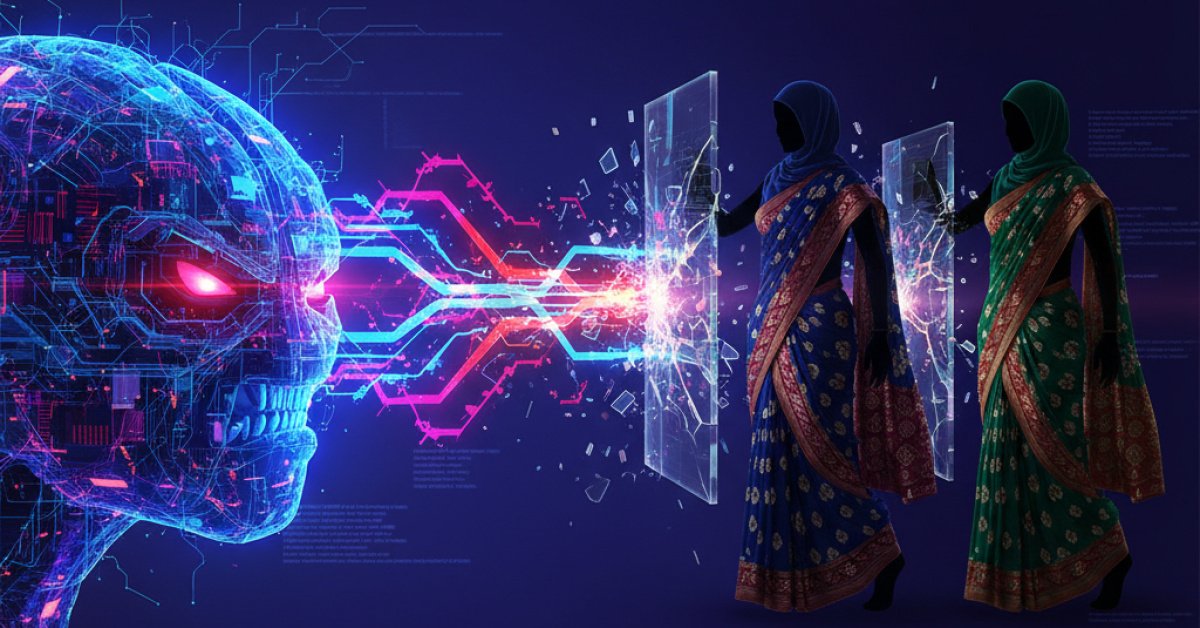
The AI isn’t “thinking” in the way we do. It’s a pattern-recognition machine. If it has been fed countless stories, forum posts, and memes where women are the punchline or the victim, it’s going to learn to replicate those patterns. It’s the ultimate example of "garbage in, garbage out." The AI is simply holding up a mirror to the biases we’ve fed it.
Shock Value Gets Clicks
Let’s be real: the internet runs on engagement. And what’s more engaging than something shocking or controversial?
It’s entirely possible that the creators of these videos—whether they’re individuals or content farms—have figured out that these disturbing themes make people stop scrolling. The algorithm doesn't care if your content is wholesome or toxic; it only cares if people are watching, commenting, and sharing.
By pushing the boundaries with these dark, misogynistic storylines, creators can game the system. Every outraged comment or share just tells the platform, "Hey, people are interested in this! Show it to more of them." And the vicious cycle continues.
The Strangest Part? There’s a Fandom.
Here’s the part that really throws me for a loop. Despite how awful so much of this content is, these fruit videos are actually developing a genuine fanbase.
I’m not kidding. People are creating fan art. They’re writing fanfiction, building out elaborate lore for these simple fruit characters, and even "shipping" them (wanting them to be in a romantic relationship). A whole subculture is bubbling up around what is, essentially, mass-produced, often hateful, AI content.
It’s a fascinating, if not terrifying, look at how we consume media now. Can you separate the "characters" from the toxic context they exist in? For some fans, it seems the answer is yes. They’re cherry-picking the elements they like and building their own world around them, often ignoring or downplaying the deeply problematic source material.
Why We Should Care About Some Dumb Fruit Videos
It’s easy to dismiss all of this as just "weird internet stuff." It's just silly fruit, right? Who cares?
But I think we have to care. This is more than just a bizarre trend. It’s a canary in the coal mine for the future of AI-generated content. It shows us how easily our worst societal biases can be baked into the new tools we create.
These videos are a perfect storm of algorithmic amplification, the internet's pre-existing toxicity, and the low-effort nature of AI creation. It’s a recipe for laundering old, ugly ideas into new, seemingly harmless packages. And when it’s wrapped up in a cartoon strawberry, it becomes that much harder for people to see the poison inside.
What we’re watching is a real-time experiment in how AI can be used to scale up and automate the production of harmful narratives. And if we’re not paying attention, we risk letting these ugly patterns become the background noise of our digital lives, normalized and accepted without a second thought. That, to me, is a future worth worrying about.