Hey there,
You see it everywhere, right? Some new AI model comes out, and the headlines are all about the "billions" or even "trillions" of parameters it has. It’s thrown around like this magic number that’s supposed to impress us. And it is impressive, but it’s also… what does it actually mean?
It feels like one of those tech terms everyone just nods along to, but secretly, we're all a little fuzzy on the details. If you've ever wondered what's really going on behind the curtain, you're not alone. So today, let's pull back that curtain and talk about what these "parameters" really are, in plain English.
And once we’ve wrapped our heads around that, we’ll get into some truly mind-bending science news about mimicking the first moments of pregnancy in a lab. It’s a wild week in tech.
So, What's the Deal with AI Parameters?
Okay, let's break this down. Forget the jargon for a second.
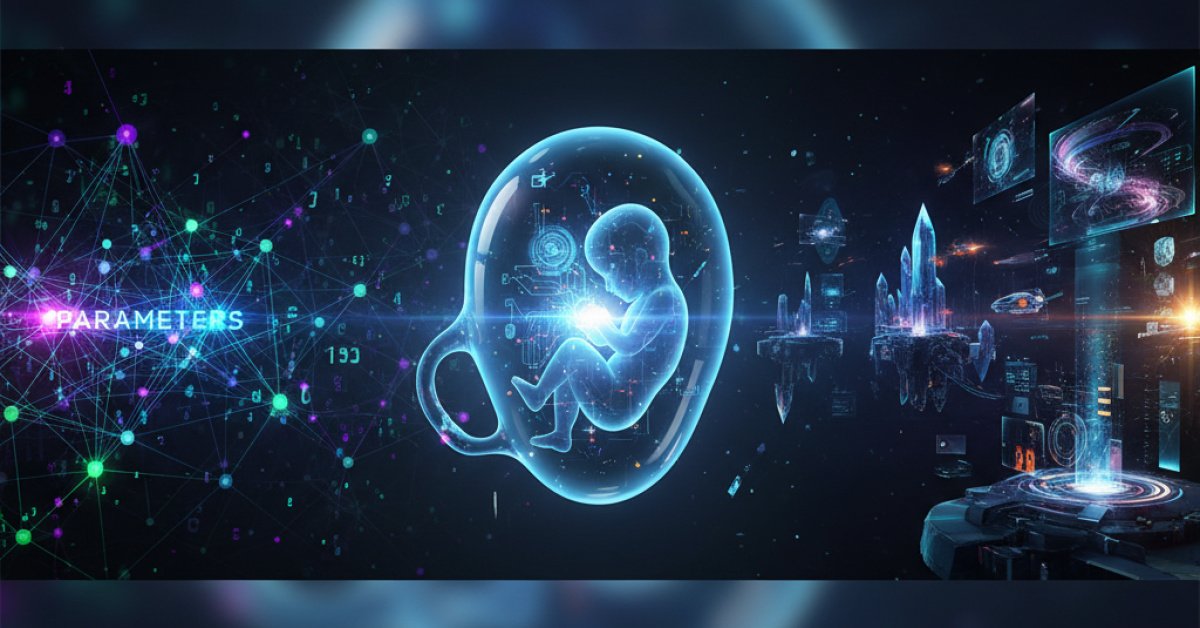
Imagine you're trying to teach a computer to write a story. You don't give it a rulebook for grammar. Instead, you give it a massive library—basically, the entire internet—and a gigantic set of dials and knobs. These are the parameters.
Each parameter is like a tiny decision-making lever. It helps the AI weigh the importance of different connections between words and concepts. When you ask it, "What's the capital of France?", one set of parameters will light up a path that strongly connects "capital," "France," and "Paris."
Now, imagine billions of these dials.
OpenAI’s GPT-3, which really kicked off this whole AI craze back in 2020, had 175 billion of them. The new models, like Google’s Gemini, are rumored to have well over a trillion. (The companies have gotten super secretive about these numbers now that the competition is so fierce.)
Think of it like an enormous sound mixing board for language. Training the AI is the process of "tuning" every single one of those billions of dials, over and over, until the sound—the output—is just right. It’s how the model "learns" the patterns, nuances, and relationships in all the data it was fed.
So when you hear about a model having more parameters, it generally means it has a more complex, intricate network for making connections. It has more dials to tune, allowing for more sophisticated and nuanced responses. It’s the raw horsepower behind the magic.
From AI Brains to Lab-Grown Beginnings
Speaking of mind-bending complexity, let's switch gears to something straight out of a science fiction novel.
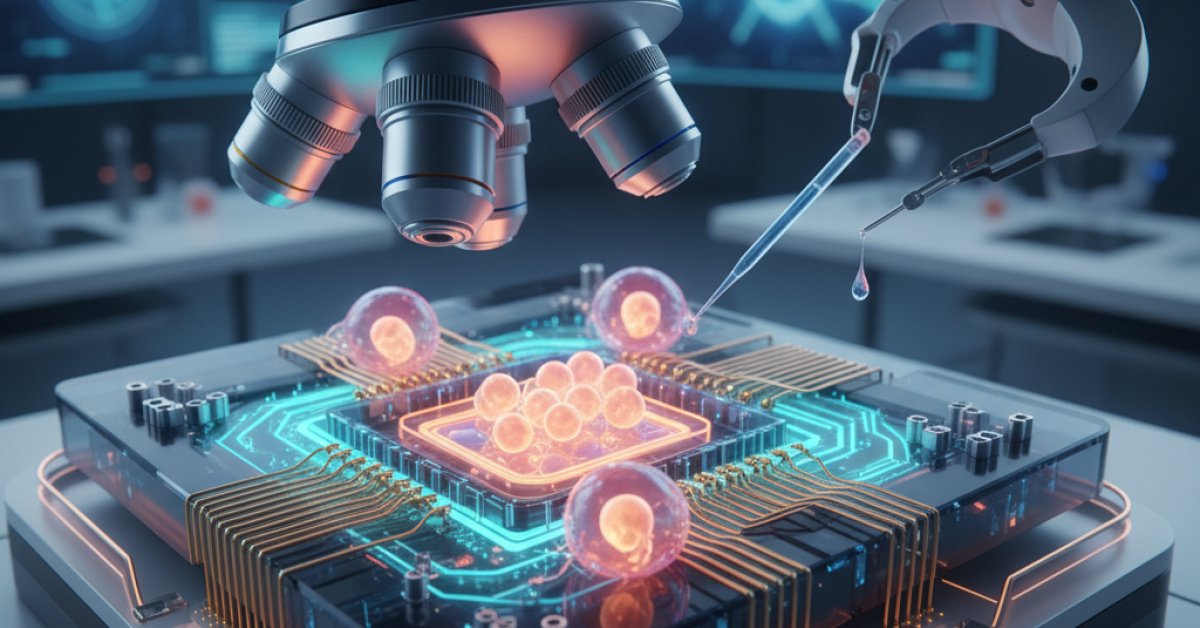
Picture this: a tiny, ball-shaped human embryo nestles into what looks like the lining of a uterus. It latches on, burrows in, and the very first cells of a future placenta begin to form. This is implantation—the moment a pregnancy officially starts.
Except it’s not happening in a person. It’s happening on a microfluidic chip in a lab in Beijing.
In a series of stunning new papers, scientists have shared what they're calling the most accurate simulation of early pregnancy ever created. They took human embryos from IVF centers and introduced them to "organoids"—tiny, lab-grown models of organs—made from the cells that line the uterus.
And they watched it all happen. It’s a huge leap in understanding the very mysterious first few days of human development. Of course, it also opens up a whole universe of ethical questions about what comes next, which we're all still trying to figure out.
A Quick Update on Offshore Wind Power
While some scientists are building new worlds on a chip, others are trying to build a cleaner one out here in the real world—and hitting some roadblocks.
The US offshore wind industry has had a tough go of it lately, and the new year brought a fresh set of legal headaches. Just before the new year, the Trump administration hit the pause button on five major wind farm leases off the East Coast, ordering developers to stop all work.
The official reason? Concerns that the giant turbines could interfere with radar systems. Now, here's the thing: that's a known issue. It’s something developers and the government have been working on together for years, so the sudden stop order felt a bit out of left field for the industry.
Companies are already suing, and the court battles could have a big impact on the future of clean energy in the US. It's a space we'll be watching closely.
A Few Other Things I've Been Reading
As always, my browser tabs are overflowing. Here are a few other stories that caught my eye this week:
- AI Companions and Accountability: Google and Character.AI just settled a lawsuit related to a teenager's death. It’s one of several suits they've settled recently involving young people, and it puts a sharp focus on the very real-world consequences of AI companions and the growing concern over digital addiction.
- ChatGPT, but for Health: OpenAI is apparently working on a new "ChatGPT Health" feature for analyzing medical results. This is happening at the same time other reports show AI chatbots often give pretty bad advice for women's health questions. It’s a reminder that while AI has huge potential in medicine, we're in a very tricky "buyer beware" phase.
- The Robot Training Data Race: China is building humanoid robot training centers. Why? Because to get robots to do complex tasks, you need massive amounts of data showing them how. This race for training data is becoming the next big battleground in AI.
- Will an AI Take Your Job? Probably not yet. A recent analysis suggests the tech just isn't good enough to fully automate most jobs. The key words there are "not yet."
- The First AI-Generated Movie: The founder of Roku predicts we’ll see the first 100% AI-generated film within three years. That feels… both incredibly fast and totally plausible.
The Big Questions We're Not Talking About Enough
That story about lab-grown pregnancies really stuck with me, especially when you think about this other, related issue: the millions of IVF embryos frozen in time.
They sit in cryopreservation tanks all over the world, these tiny balls of about a hundred cells. But they aren't just tissue; they hold the potential for life. This gives them a special status, but nobody can seem to agree on what that status actually is.
As technology gets better and IVF becomes more common, this number just keeps growing. And these little embryos exist in a strange limbo, forcing patients, doctors, and all of us, really, to grapple with some fundamental questions. What do they mean to us? Who is responsible for them?
It’s one of those areas where our technological capability has sprinted way ahead of our ethical and legal frameworks, and we’re all just trying to catch up.
And Finally, a Few Nice Things
To end on a lighter note, because we all need it:
- I absolutely love hearing musicians talk about their favorite songs. It’s like a little peek into their creative soul.
- If you're planning a trip, here are some great tips for traveling solo.
- I’m a huge bookworm, and this list of excellent-sounding new books coming out this year has my to-read list overflowing.
- Seriously, I could play this spherical version of the classic game Snake forever. It’s mesmerizing.
That's all for now. Talk soon.