So, we’ve all heard the chatter, right? The whispers in Slack channels and the bold headlines proclaiming that AI is coming to make software developers obsolete. It’s a compelling, if slightly terrifying, narrative.
But what if the story isn't about replacement, but about a massive promotion for the entire field?
I just got an early look at the latest Dev Barometer report from BairesDev, a company that has thousands of developers working on projects for huge names like Google and Rolls-Royce. They surveyed over 500 of their senior developers, and the findings paint a picture that’s way more nuanced—and frankly, more exciting—than the whole "robots are taking our jobs" angle.
It turns out, the future of software development isn't about getting replaced by AI. It’s about evolving from a hands-on builder into the lead architect.
From Coder to Architect: The Big Shift is Already Here
Let's get straight to the heart of it. The survey found that a whopping 65% of senior developers expect their jobs to be fundamentally redefined by AI within the next couple of years.
But "redefined" doesn't mean "eliminated."
Instead of spending their days buried in lines of code, they see a different future. Of those who see change coming:
- 74% expect to shift from pure coding to designing high-level solutions.
- 61% are focused on integrating AI-generated code into their projects (notice the word integrating, not just accepting).
- 50% believe they’ll spend more time on big-picture strategy and system architecture.
I had a chance to chat with Justice Erolin, the Chief Technology Officer at BairesDev, and he put it perfectly. "It’s not about lines of code anymore," he told me. "It’s about the quality and type of code, and the kind of work developers are doing."
Think of it this way: AI is becoming an incredibly powerful, incredibly fast apprentice. Erolin mentioned that it's fantastic at things like setting up the basic structure of a project (scaffolding) or writing repetitive unit tests. He estimates it's already saving his developers about eight hours a week.
What do you do with an extra day's worth of work time? You don't just sit around. You use that time for the stuff that actually requires a human brain—strategy, creative problem-solving, and figuring out how all the pieces of a complex system fit together.
Let's Be Real: Almost No One Trusts AI Blindly
Here’s the stat that really jumped out at me, and it’s a crucial reality check for anyone who thinks AI is a magic bullet.
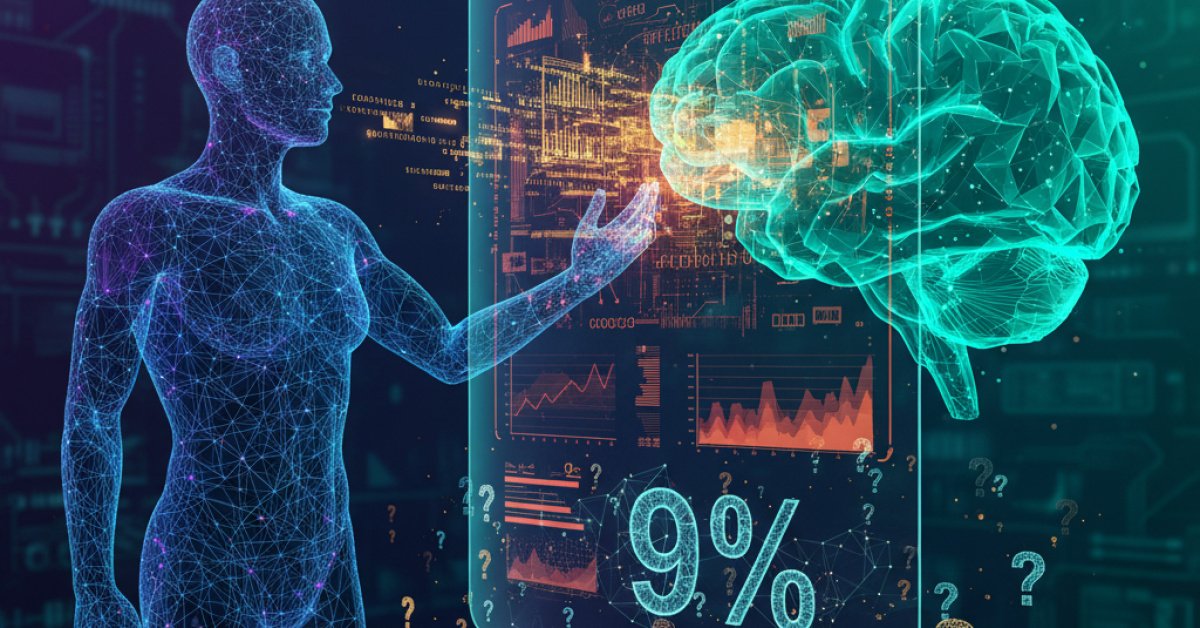
Only 9% of developers think AI-generated code can be used without any human oversight.
Let that sink in. 91% of experienced professionals are saying, "Thanks for the draft, AI, but I'll take it from here." Over half of them described the code as only "somewhat reliable," meaning it absolutely needs a human to check it for accuracy and security flaws.
Erolin completely agrees with this sentiment. "AI doesn’t replace human oversight," he said. He pointed out one of the biggest technical hurdles right now: the "context window" of large language models.
In simple terms, an AI might be great at writing a single, isolated function. But it often struggles to understand how that one function impacts the entire, sprawling application. It's like a writer who can craft a perfect sentence but has no idea how it fits into the rest of the chapter.
That’s where the human developer comes in. You’re the one who holds the entire blueprint in your head. You’re the editor-in-chief, not just the writer.
AI as the Ultimate Learning Tool
One of the most positive takeaways from the report is how developers are using AI to get better at their jobs. It’s not just a productivity tool; it’s a "get smarter" tool.
The survey found that AI integration has already had some pretty amazing professional benefits:
- 74% said it actually strengthened their technical skills.
- 50% reported a better work-life balance (thanks to that extra 8 hours a week!).
- 37% felt that AI tools expanded their career opportunities.
Erolin called AI "a top use case for upskilling." Developers are using it to quickly get up to speed on new technologies or fill in gaps in their knowledge. When you understand how the AI works and where its blind spots are, you can ask it better questions, get better answers, and learn way more efficiently.
But What About the Junior Developers?
Okay, this all sounds pretty rosy for senior engineers, but there’s a potential problem brewing that we need to talk about.
If AI is taking over the repetitive, entry-level coding tasks, what happens to the entry-level people?
This is a huge concern. Erolin warned that if companies stop hiring junior engineers because a senior dev with Copilot can do the work of a small team, we could face a massive shortage of qualified senior engineers a decade from now. You can't become a seasoned veteran if you never get a chance to play in the little leagues.
The survey reflects this anxiety. While developers see teams getting leaner, many are worried that the pipeline for new talent could dry up, which would be a huge problem for the entire industry down the road.
The Rise of the "T-Shaped Engineer"
So, what does the developer of the near future look like? The report points to a concept called the "T-shaped engineer."
Imagine the letter 'T'.
The horizontal bar at the top represents a broad understanding of many different systems, technologies, and business concepts. You know a little bit about a lot of things.
The vertical stem represents deep, specialized expertise in one or two key areas. This is where you’re the go-to expert.
This is the person who will thrive. They can think holistically about the entire system (the top of the T) while also being able to dive deep and solve complex, specific problems (the stem of the T). They are the architects who can also get their hands dirty when needed.
The data backs this up. Developers see the fastest-growing areas for 2026 being AI/ML (67%), data analytics (46%), and cybersecurity (45%)—all fields that require that deep, T-shaped expertise.
It's Not a Fad, It's the New Foundation
The message from this report is crystal clear: AI in software development has moved past the "let's experiment with it" phase. It's becoming a fundamental part of the toolkit, as essential as a keyboard or a compiler.
The game is no longer about who can write the most code the fastest. It’s about who can ask the best questions, design the most elegant systems, and skillfully guide powerful AI tools to create something truly innovative.
The competitive edge will belong to the developers who learn to collaborate with AI, not compete against it. As Erolin said, that's where the real magic happens. The question isn't whether your job will change—it's whether you're ready to change with it.