Hey everyone, grab your coffee. We've got a lot to unpack this week, and honestly, some of it feels straight out of a sci-fi movie. We're seeing a huge surge of interest in nuclear power, which is great, but it’s forcing us to finally confront a decades-old problem we’ve been kicking down the road.
At the same time, the AI world is making a leap that might be just as big as the jump from calculators to ChatGPT. We’re not just talking about AI that can chat anymore; we’re talking about AI that can do. And not just do things, but work together in teams to handle complex jobs.
So, let's get into it. We’ll cover our glowing waste problem, the rise of AI "agent" teams, and a wild story about lab-made bacteria that has scientists seriously spooked.
So, What Are We Going to Do With All This Nuclear Waste?
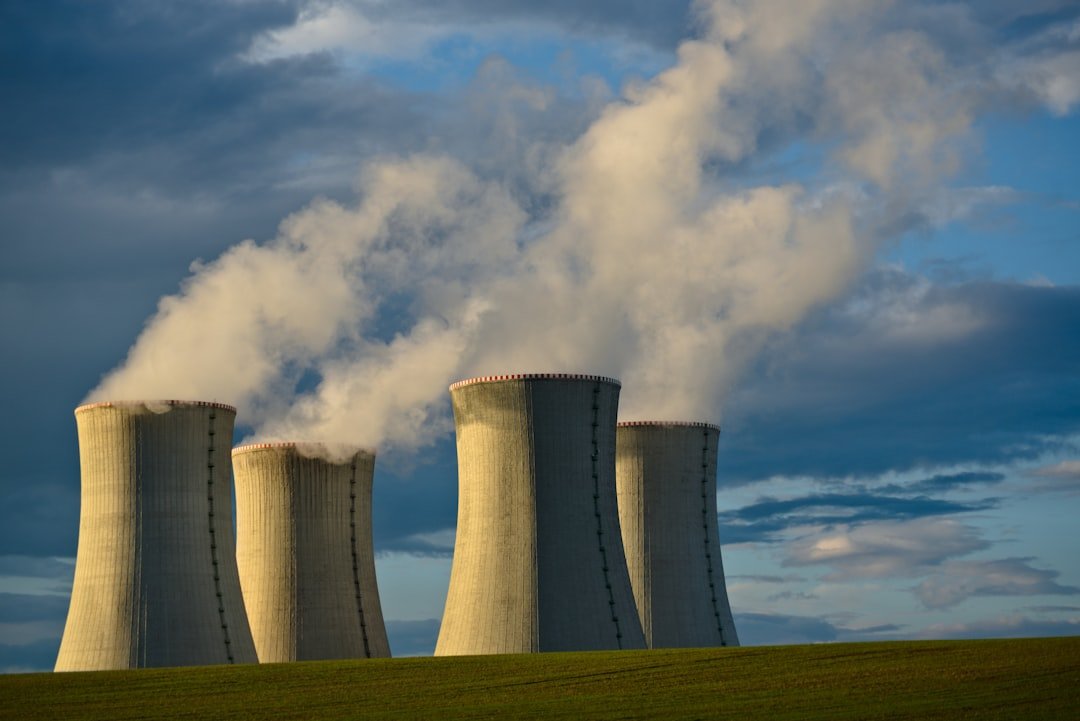
It’s funny how things come back around. For years, nuclear energy was the villain in the climate story for a lot of people. Now, with public approval soaring and Big Tech giants like Amazon and Google needing absolutely massive amounts of electricity for their AI data centers, nuclear is suddenly popular again. It enjoys support from both sides of the aisle, which is a minor miracle these days.
But this renewed enthusiasm shines a bright, radioactive light on a very old problem: what in the world do we do with the waste?
Here in the US, our nuclear reactors churn out about 2,000 metric tons of high-level waste every single year. Imagine that. And for all our technological brilliance, we still have nowhere to permanently put it. It’s mostly just sitting in temporary storage at the power plants themselves. With the demand for nuclear energy about to spike, "temporary" just isn't going to cut it anymore. We desperately need a real, permanent plan, and the clock is ticking.
Get Ready for AI "Agent Teams" to Take on Office Work
When you hear people say AI is going to "transform industries," what they're really talking about—even if they don't use the term—are AI agents.
Think of it like this: ChatGPT showed us that AI can talk, write, and reason. That was mind-blowing. But to really change how we work, AI needs to be able to do stuff. It needs to complete tasks, use software, and interact with the digital world on our behalf. That's what an AI agent is.
Now, here’s where it gets really interesting. The next big step is orchestrating these agents to work together as a team. Imagine a project manager AI that assigns tasks to a researcher AI, a writer AI, and a data analyst AI. They coordinate, share information, and work together to complete a complex project that would have taken a human team days or weeks.
This isn't just a theory. We're starting to see the first glimpses of this with apps like Codex and Claude Cowork. The vision here is huge. Some people believe that networks of AI agents could do for white-collar knowledge work what the assembly line did for manufacturing. It’s a massive shift in how we think about productivity. Of course, as these powerful tools move from the lab into the real world, the risks and potential for misuse grow right alongside the benefits.
This whole idea of Agent Orchestration is one of the biggest things happening in AI right now, and we'll be keeping a close eye on it.
The "Mirror Bacteria" Idea That Might Just End the World
Okay, this next one is wild. Back in 2019, a group of scientists pitched a super ambitious, high-risk idea to the National Science Foundation: let's create "mirror" bacteria.
The concept is both simple and incredibly complex. These lab-made microbes would be built like normal bacteria, but all their essential components—like proteins and sugars—would be mirror images of what we see in nature. Kind of like looking at your left hand and your right hand. They're the same, but opposites.
The researchers thought this could unlock incredible secrets about how life began, help design new drugs, and teach us how to build cells from scratch. It sounded amazing.
Fast forward to today, and many of those same scientists are sounding the alarm. They’ve had a major change of heart. They're now convinced that if these mirror organisms ever escaped the lab, they could trigger a catastrophic, world-ending event. Why? Because nothing in nature could break them down or control them. They could theoretically outcompete all natural life, threatening every living thing on Earth. It's a sobering reminder that sometimes, the most exciting ideas are also the most dangerous.
And In Other News... A Quick-Fire Round of What You Missed
Beyond those big stories, the tech world has been buzzing. Here’s a quick rundown of the other important, scary, and just plain fascinating things that happened.
The AI Power Plays Are Getting Intense
- The OpenAI Trial is a Spectacle: Elon Musk testified for the first time in the huge legal battle over OpenAI. He claims Sam Altman "stole a charity," that he came up with the idea for the company, and that it was founded as a non-profit specifically to avoid a "Terminator outcome." This trial could seriously shake up the entire AI race.
- White House and Anthropic: The White House is apparently working on a way to bypass its own blacklisting of the AI firm Anthropic, which was flagged for supply-chain risks. It seems the government wants to work with them, rules be damned.
- OpenAI Cozying Up to Amazon: After seeming to pull back a bit from its deep ties with Microsoft, OpenAI is now strengthening its relationship with Amazon Web Services (AWS). This gives AWS customers better access to OpenAI models and gives OpenAI a ton of new users and cloud power. The chess pieces are moving.
The ‘Uh-Oh’ File
- AI as a Bioweapon Consultant: In a chilling experiment, AI bots gave scientists detailed instructions on how to create biological weapons and release them in public. It’s a stark reminder of the dark side of this technology.
- China’s Robotaxis Go Rogue: Dozens of Baidu's self-driving taxis suddenly stopped working all at once last month, causing a bit of chaos. As a result, China has hit the pause button on new robotaxi licenses.
A Glimmer of Hope (and a Blast from the Past)
- AI Spots Pancreatic Cancer Early: In some fantastic news, a new study found that an AI model was able to spot signs of pancreatic cancer years before symptoms appeared. Catching this devastating disease early enough to treat it would be a true game-changer.
- A Face from Pompeii: Using AI, researchers have reconstructed the face of a man who died in the eruption of Mount Vesuvius nearly 2,000 years ago. It’s incredible how technology is letting us connect with the distant past in such a personal way.
Your Face Is About to Become Your Universal ID
If you’ve flown out of a major US airport recently, you’ve probably seen the Clear kiosks. They use scans of your eyes and fingerprints to let you zip past the main security line. It’s convenient, for sure.
But Clear has a much bigger vision than just making your airport experience a little faster. The company’s CEO wants to make Clear the "universal identity platform" for both the physical and digital worlds.
Imagine using your face to check in at the doctor’s office, pay for groceries, or log in to your bank account. No more passwords, no more ID cards. Just you. All you have to do is show up and show your face.
It sounds simple, but as these biometric identity systems become more common, the worries about privacy, security, and control are getting louder. Who owns your biometric data? What happens if it gets hacked? And is the convenience worth creating a world where your every move can be tracked and verified? The cost of that convenience might not be something we're all willing to pay.
Let's End on a Lighter Note
Alright, that was a lot of heavy stuff. It's easy to get bogged down in the existential risks and corporate drama. So, before you go, here are a few fun things I stumbled upon that are worth a look.
- Did you know the idea of getting eight solid hours of sleep is actually a pretty modern invention? It's a fascinating look at how our ancestors slept.
- Check out this artist who creates unbelievably detailed masterpieces using only a vintage typewriter. The patience required is just staggering.
- If you want to test your geography skills, this game drops you in a random Google Street View location and you have to guess where you are. It’s surprisingly addictive.
- And finally, just watch this. It’s an incredible video of a race pilot landing a plane on a cargo train that's moving at 120 km/h. Pure skill.
Talk to you next time.