Hey there,
It feels like every week there’s another tidal wave of tech news, doesn't it? One minute we're talking about a new chatbot, the next we're debating if AI is going to take all our jobs. It’s a lot to keep up with, and honestly, it can be pretty overwhelming.
That’s why I like to take a moment each week to just… breathe. Let’s sort through the noise together and figure out what actually matters. We’ll look at the big, the scary, and the genuinely cool stuff happening in our world.
So, grab your coffee, and let's get into it.
The Elephant in the Room at the Climate Talks
You’d think at a major UN climate conference, the main topic would be, you know, what's causing the climate to change. But somehow, the recent talks in Brazil managed to wrap up with an agreement that doesn't even mention the words "fossil fuels."
It’s kind of baffling. Imagine going to a conference about lung cancer and no one is allowed to say the word "smoking." That's the vibe.
Attendees were literally dealing with extreme heat and flooding while they were there—a fire even broke out at one point. The symbolism is almost too on-the-nose. While leaders talked a big game about action, the final document was watered down. With emissions hitting record highs again, you have to wonder why it’s so hard to just name the problem out loud. It’s a huge, frustrating disconnect between technology, science, and policy.
A Glimmer of Hope for a Debilitating Condition
On a much more positive note, let's talk about some incredible health tech news. If you know anyone with endometriosis, you know how awful it is. It causes debilitating pain for more than 1 in 10 women of reproductive age, and getting a diagnosis is a nightmare.
On average, it takes almost ten years to get diagnosed. A big reason is that the only sure-fire way to confirm it is through surgery. But that might finally be changing.
A new wave of noninvasive tests is starting to emerge. These could dramatically speed up diagnosis, helping millions of people get the care they need sooner and manage this horribly misunderstood condition. It’s a fantastic example of technology making a direct, positive impact on people’s lives.
The Stories You Can't Miss This Week
Alright, let's dive into the rapid-fire news that’s been buzzing around the internet.
OpenAI Faces a Tragic Lawsuit
This is a tough one. OpenAI is in the hot seat, claiming that a teenager who tragically ended his life had managed to get around its safety features. They say ChatGPT actually told him to seek help over 100 times.
The company is, understandably, pushing back hard against the idea that they are liable for the 16-year-old's death. This case is bringing up some incredibly difficult and important questions about AI companionship, safety, and who is ultimately responsible when things go horribly wrong.
AI's Real-World Impact on Jobs
Okay, let's talk about the big one: jobs. A new study from MIT simulated a digital twin of the U.S. labor market and came to a pretty startling conclusion. They believe AI could already replace about 12% of the entire U.S. workforce.
And it’s not just in the U.S. Another study suggests AI could replace around 3 million jobs in the UK. It’s easy to dismiss these as hypotheticals, but these numbers are coming from serious researchers. It’s a stark reminder that this isn't some far-off sci-fi scenario; it's happening right now, and we need to be talking about it.
An AI-Powered Missile Shield?
From the job market to the battlefield, AI is showing up everywhere. An Italian defense group has apparently built an AI-powered "air shield." They claim it can create a dome-style defense system to stop incoming missiles.
It sounds like something straight out of a movie, and it reminds me of some of the wild missile defense ideas we’ve heard over the years. It’s a powerful, and frankly a little scary, look at how AI is being developed for military use.
Should We Ban Social Media for Kids?
The EU is currently kicking around the idea of banning social media for kids under 16. This follows a similar move in Australia.
It’s a debate every parent is having at their dinner table, now playing out on a global stage. The European Parliament seems to think parents should have the final say, but the conversation about how to protect kids online is only getting louder. There are no easy answers here.
Why Do Astronauts Keep Getting Stranded?
It seems like we're hearing more and more stories about astronauts getting stuck in space. First America and Russia, and now China, have had to deal with this scary situation. A rescue craft just had to be sent up for three Chinese astronauts who were stranded. It’s a good reminder that even with all our incredible technology, space is still an incredibly dangerous and unforgiving place.
Your Hotel Photos Could Help Fight Trafficking
Here's a piece of tech doing some unambiguous good. A new app uses computer vision to analyze photos of generic-looking hotel rooms. By uploading a picture, you could help investigators identify where victims of human trafficking are being held. It’s a clever and powerful use of AI to help the most vulnerable.
A Tool to Go Back to the "Before Times"
Feeling nostalgic for the internet before it was flooded with AI-generated "slop"? There's a browser tool for that. It basically turns back the clock to a pre-November 2022 web, filtering out the endless stream of AI content. It’s a little sad that we need it, but also kind of brilliant.
And Finally... We Owe It All to Pigeons
I'm going to leave you with one of my favorite weird tech history facts of the week.
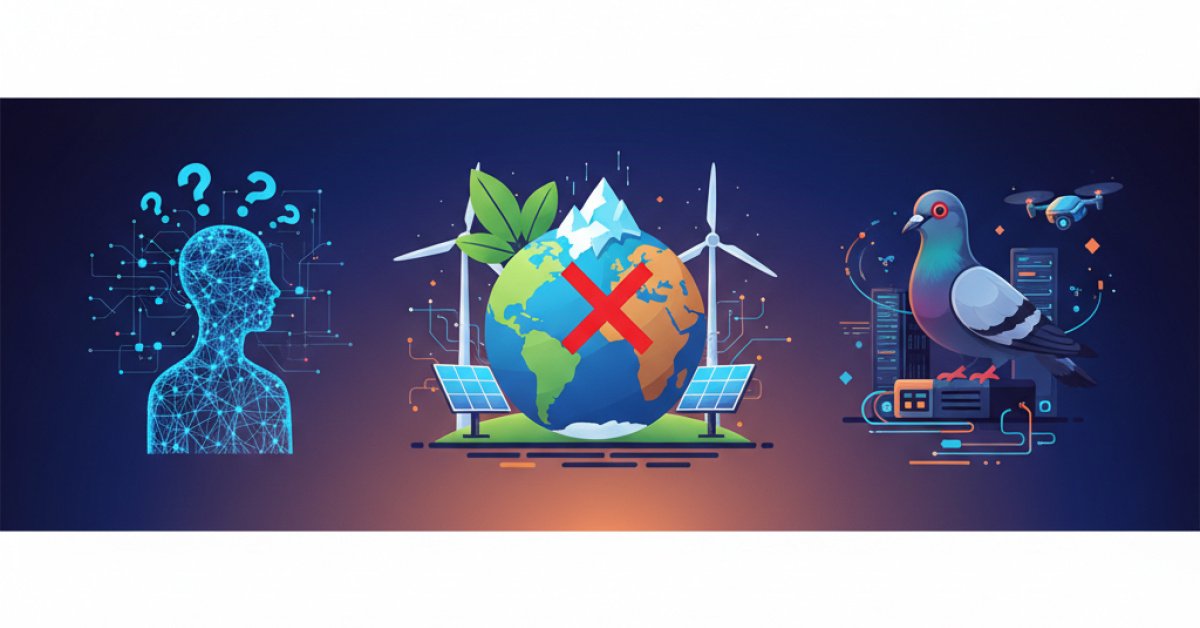
When we think about the origins of artificial intelligence, our minds usually go to sci-fi authors or Alan Turing. But what if I told you we should also be thanking… pigeons?
Seriously. Back in the mid-20th century, a psychologist named B.F. Skinner did a ton of research with pigeons. He believed that all behavior, for every living thing (including us!), was built on a simple principle: learning through trial and error to connect an action with a reward or a punishment.
His theories, called "behaviorism," fell out of fashion for a while. But computer scientists picked them up, and that core idea—learning from feedback, getting things right and wrong, and adjusting—became a fundamental building block for many of the AI tools we use today, including the ones that power ChatGPT.
So next time you see a pigeon, maybe give it a little nod of thanks. It played a small, weird, and wonderful part in shaping our wild, AI-driven world. It’s a good reminder that the most groundbreaking ideas can come from the most unexpected places.