It’s hard to overstate just how deeply ChatGPT has woven itself into our digital lives. In what feels like the blink of an eye, it went from a tech demo to a daily utility for hundreds of millions of people. We use it to draft emails, debug code, plan vacations, and settle trivia debates. It’s a productivity tool, a creative partner, and for many, a constant companion.
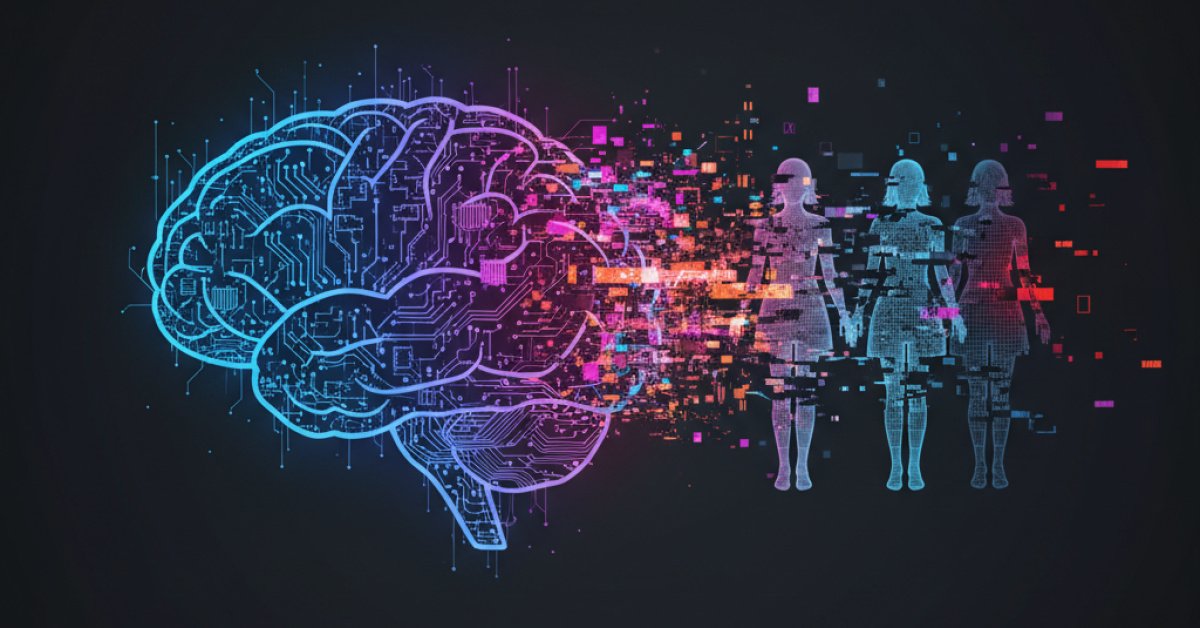
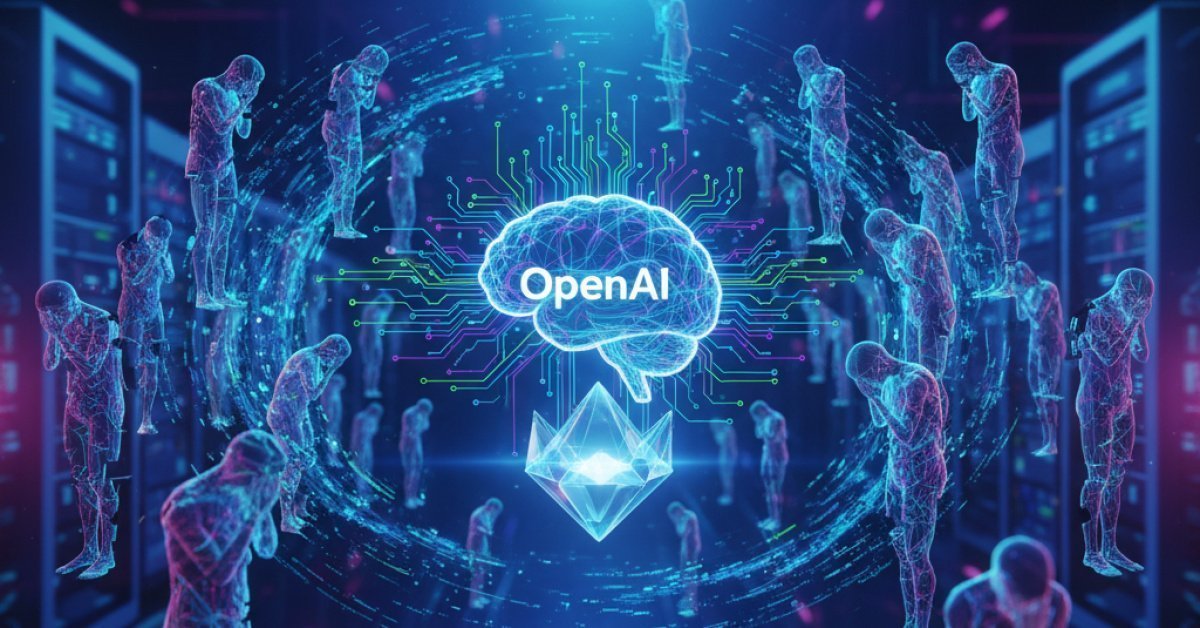
But behind the curtain of summarization and code generation, a much more profound human drama is unfolding. People aren’t just asking for recipes or marketing copy; they’re pouring out their hearts, fears, and darkest thoughts. Now, for the first time, OpenAI has pulled back that curtain, and the view is sobering. The company released initial estimates suggesting that every week, hundreds of thousands of users are showing signs of a serious mental health crisis while talking to its AI. This isn't about someone having a bad day; we're talking about symptoms of mania, delusional thinking, and even suicidal ideation.
This revelation forces us to ask some uncomfortable but necessary questions. What happens when our most powerful AI becomes an accidental first responder in a global mental health epidemic? And what is the responsibility of the companies building these tools when they become a silent confidant for people in their most vulnerable moments?
The Startling Scale of an Unseen Problem
Let's take a moment to really let that number sink in: hundreds of thousands of users per week. That’s the population of a mid-sized city turning to a large language model during a potential mental health emergency, every seven days. This isn't a fringe issue; it's a significant, recurring pattern of behavior happening at a massive scale.
OpenAI’s research identified users expressing thoughts that align with severe psychological distress. This includes:
- Delusional Thinking: Expressing beliefs that are not based in reality.
- Mania: Showing signs of abnormally elevated energy, mood, and frantic thinking.
- Suicidal Ideation: Voicing thoughts about self-harm or ending one's life.
This isn’t a flaw in the AI, but rather a reflection of its role in society. ChatGPT has become one of the most accessible, non-judgmental "listeners" on the planet. For someone in crisis, the allure of a seemingly intelligent entity that’s available 24/7, offers complete anonymity, and will never get tired or judgmental is incredibly powerful. They are turning to the machine because, for a variety of reasons, turning to a human feels impossible.
Why AI Has Become a Crisis Confidant
It might seem strange to confide in a machine, but when you break it down, the logic is clear. The traditional avenues for mental health support, while essential, are often fraught with barriers.
The Anonymity Factor
There's still a powerful stigma surrounding mental health. Admitting you need help can feel like a personal failure to some, or they may fear professional or social repercussions. Talking to an AI chatbot completely removes that social risk. There are no raised eyebrows, no worried looks, no fear of your words being repeated. It’s a sterile, confidential environment to say the unsayable.
24/7 Availability
A mental health crisis doesn't operate on a 9-to-5 schedule. It can strike at 3 AM on a Tuesday, when friends are asleep and therapists' offices are closed. ChatGPT is always on. That immediate availability can be a critical lifeline for someone feeling isolated and desperate for any form of connection or outlet.
The Perception of Unbiased Logic
For individuals experiencing delusional thoughts or paranoia, a human therapist might be viewed with suspicion. An AI, on the other hand, can be perceived as a purely logical, unbiased entity. They might turn to it to "fact-check" their delusions or seek validation in a way they believe is free from human emotion and bias. This is a dangerous path, but it highlights the unique psychological niche that AI now occupies.
The Double-Edged Sword of an AI Listener
The fact that people feel safe enough to share these thoughts with an AI is, in a strange way, a testament to the technology's conversational abilities. But it's also where the danger lies. ChatGPT is a sophisticated pattern-matching machine, not a licensed medical professional.
The risk is immense. An AI that doesn't understand the nuance of a mental health crisis could inadvertently make things worse. It could validate a harmful delusion, offer simplistic and unhelpful advice, or fail to recognize the urgency of a user's statements. Imagine an AI trying to "brainstorm solutions" for someone expressing suicidal thoughts—the potential for a catastrophic misunderstanding is terrifying.
This is the problem OpenAI is now facing head-on. The company has acknowledged that its models weren't explicitly designed for this role, and a passive approach is no longer an option. The sheer scale of these interactions means they have an ethical obligation to act.
Engineering a Safer Response: How GPT-5 is Being Retrained
Acknowledging the problem is the first step. The second, much harder step is doing something about it. OpenAI has stated that it's actively tweaking its next generation of models—what many assume is the precursor to GPT-5—to handle these sensitive situations more responsibly.
So, what does that "tweaking" actually look like? It's not about turning the AI into a therapist. That would be irresponsible and dangerous. Instead, the focus is on training the model to be a better and safer bridge to real, human help.
Step 1: Better Crisis Detection
The first priority is getting better at recognizing the signs of a crisis. This involves training the model on vast datasets, likely developed in consultation with psychologists and mental health experts, to accurately identify language and patterns associated with mania, delusion, or suicidal ideation. The goal is for the AI to reliably distinguish between a user writing a fictional story about a crisis and a user experiencing a real one.
Step 2: Shifting to a Supportive, Non-Prescriptive Role
Once a crisis is detected, the model's protocol needs to change. Instead of its default behavior of trying to answer a question or solve a problem, it will be trained to respond with carefully crafted, supportive language. The key is to be helpful without being prescriptive. It won't offer medical advice, but it will offer immediate, actionable resources.
Step 3: Guiding Users to Human Help
This is the most critical part of the new strategy. The primary goal of the AI in a crisis situation will be to connect the user with professional human help. This means providing, clearly and directly, resources like:
- The National Suicide Prevention Lifeline (988 in the US) or equivalent international hotlines.
- Contact information for local emergency services.
- Links to reputable mental health organizations.
The AI's new job isn't to solve the crisis, but to make sure the user knows where to find the people who can. It's moving from being a conversationalist to a responsible referral service.
The Ethical Tightrope and the Future of Responsible AI
OpenAI's findings are a watershed moment for the AI industry. It’s a stark reminder that you can't release a technology used by nearly a billion people and pretend it's just a neutral tool. These systems are becoming integral parts of the human experience, and with that comes immense responsibility.
This isn't just an OpenAI problem; it's an issue for Google, Meta, Anthropic, and every other major player in the field. As conversational AI becomes more capable and more integrated into our lives, these human-centric safety issues will only become more common and more critical. We're moving past the era of simply asking, "Can we build it?" and into the much more important era of asking, "How do we build it safely and responsibly?"
The work being done to retrain these models is a crucial first step. It shows the industry is waking up to its role not just as an innovator, but as a steward of digital public spaces. The goal can't be to create AI therapists—that's a minefield of ethical and practical problems. The true goal is to build AI that is smart enough to know its own limitations and responsible enough to guide users toward the human care they need when it matters most. This is the new frontier of AI safety, and it's one we absolutely have to get right.