Have you ever stopped to wonder where ChatGPT actually lives? Or where all those AI-generated images come from? It’s not just floating around in some digital cloud. It lives in a real, physical place.
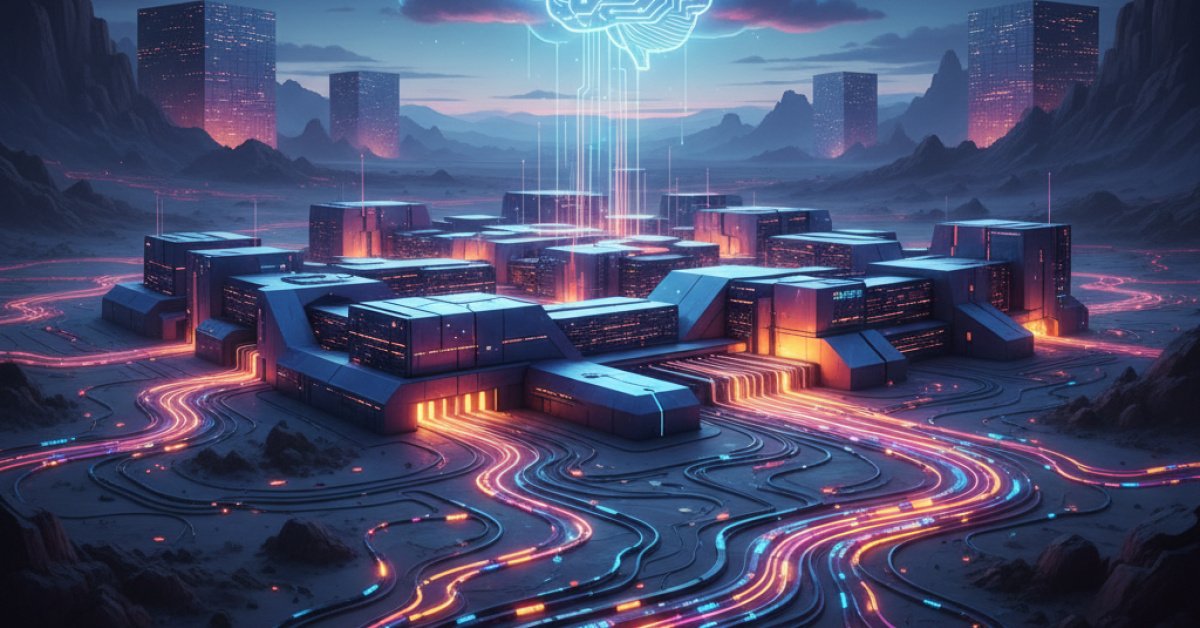
And right now, a construction boom of almost unbelievable scale is happening across the country to build more of these "homes" for AI. We're talking about massive, windowless buildings popping up in places you might not expect, from rural Ohio to desert towns in Arizona.
This isn't just a niche tech story. It's quickly becoming one of the most powerful forces shaping the entire US economy. And the companies footing the bill are the ones you’d expect: Microsoft, Google (Alphabet), Meta, and Amazon. They're pouring tens of billions of dollars into this, and it’s creating some seriously strange ripples.
So, What's Fueling This Insane Spending Spree?
It all comes down to one thing: a ravenous, almost insatiable hunger for computing power.
Think of it like the California Gold Rush in the 1800s. Back then, the precious resource was gold. Today, it’s computational power—the raw horsepower needed to train and run these incredibly complex AI models. The companies that have the most of it will win the future.
And let me tell you, training something like GPT-4 takes an astronomical amount of energy and processing. It’s not something you can do on your laptop. You need a warehouse full of the most powerful computer chips on the planet, all working together, all cooled so they don’t literally melt.
That warehouse is a modern data center. And the tech giants are in an all-out arms race to build them bigger, better, and faster than their rivals.
This Is Way Bigger Than Just a Tech Thing
Here's where it gets really interesting. This AI infrastructure build-out is no longer just a line item on a tech company's budget. It has become a legitimate, measurable driver of the entire U.S. economy.
When you see reports about economic growth, you probably think about things like consumer spending or manufacturing. But now, a significant chunk of that growth is coming directly from companies building these massive AI factories.
It creates a fascinating ripple effect:
- Construction: You need thousands of workers to build these behemoths. We’re talking concrete, steel, electrical systems—it’s a massive undertaking.
- Manufacturing: These data centers need to be filled with stuff. Specialized servers, networking gear, and most importantly, those ultra-expensive AI chips from companies like NVIDIA.
- Energy: The power consumption is mind-boggling. A single data center can use as much electricity as a small city. This is putting a huge strain on local power grids and forcing utility companies to rethink their entire future.
It's a modern-day industrial revolution, but instead of steam engines and factories, we're building server racks and fiber optic cables. The scale of investment is just staggering to think about.
Who Are the Kings of This New Kingdom?
The main players here are the "hyperscalers"—the giants of cloud computing. They're the ones with the cash and the need to build on a global scale.
Microsoft: They’re going all-in, largely to power their partnership with OpenAI (the creators of ChatGPT) and to integrate AI into every single product they offer, from Windows to Office.
Alphabet (Google): Google has been an AI-first company for years. Their own models, like Gemini, require a colossal infrastructure, and they’re not about to let Microsoft eat their lunch.
Meta: You might think of them as a social media company, but Mark Zuckerberg has bet the entire farm on AI and the metaverse. That requires a hardware foundation that they are building at a furious pace.
Amazon: Through Amazon Web Services (AWS), they are the biggest cloud provider in the world. They host the AI ambitions of thousands of other companies, so they have to keep building just to keep up with their customers' demand, on top of their own AI work.
For these companies, owning the infrastructure is everything. It's a strategic moat. If you own the digital real estate where AI lives, you get to set the rules and rent it out to everyone else.
But Is It All Good News?
Honestly, it’s complicated.
On one hand, this is a huge injection of capital into the economy. It’s creating jobs and pushing technological boundaries forward. That’s undeniably a positive thing.
But on the other hand, let's be real about what these data centers are. They are giant, energy-sucking buildings that, after the initial construction phase, don't actually employ a ton of local people. They're mostly automated.
So a small town might get a huge economic boost for the two years it takes to build one, but what happens after that? They’re left with a massive building that consumes a huge amount of their local power and water resources without contributing a lot of long-term, high-paying jobs. It’s a trade-off that a lot of communities are starting to grapple with.
It's a new kind of economic engine, and we're still figuring out the rules of the road. It doesn't look like the factories of the past, and its impact on communities is totally different.
So, the next time you ask an AI to write an email or create a picture for you, take a second to think about the sheer physical reality behind it. Think about the concrete being poured, the cables being laid, and the power grids being strained, all to deliver that answer in a few seconds.
This AI revolution isn't just happening on our screens. It's happening out there, in the real world, and it's changing our economy in ways we're only just beginning to understand. It really makes you think, doesn't it?