Have you ever read a sentence that was technically correct, but just felt… weird?
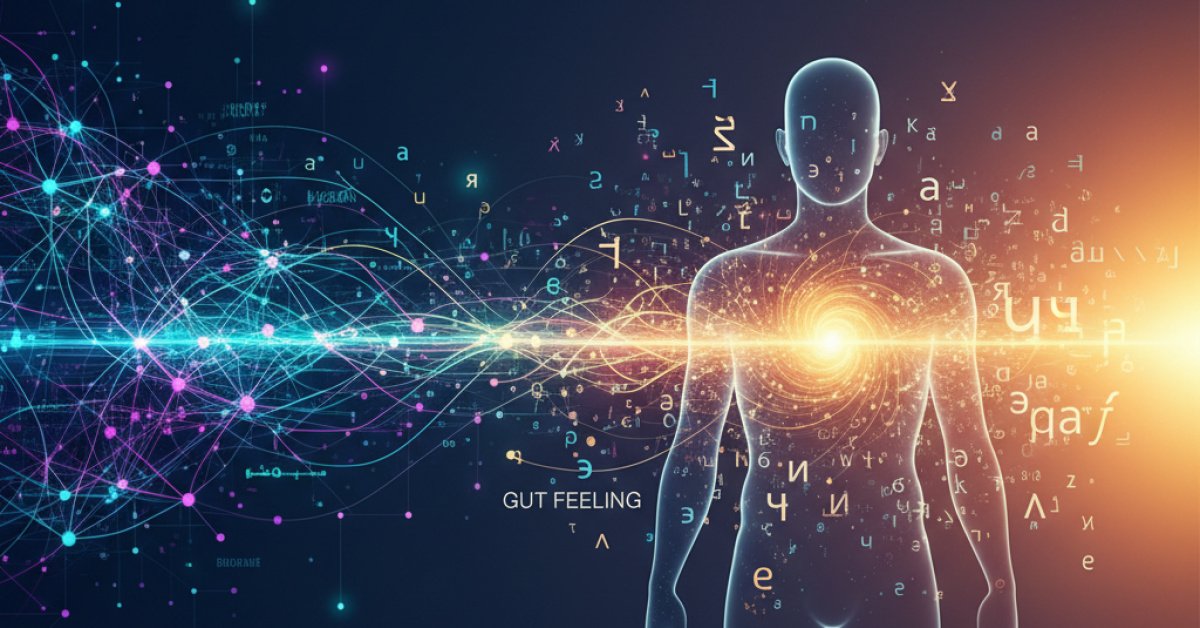
You know the kind. Maybe it was a clunky marketing email or a bizarrely phrased instruction manual. All the words were spelled right, the grammar was perfect, but it just didn't sound human. It lacked a certain flow, a natural rhythm. That gut feeling you get—that sense of "yeah, nobody would actually say it like that"—has always been one of our uniquely human superpowers.
It’s the kind of thing that separates a poet from a spell-checker.
Well, it looks like we might have to share that superpower now. New research shows that the big AI models, the brains behind tools like ChatGPT, have developed what's called "metalinguistic" ability. And honestly, it’s a much bigger deal than it sounds.
Let's Back Up: What on Earth is a "Metalinguistic" Skill?
I know, it sounds like something straight out of a sci-fi novel. But the idea is actually pretty simple and incredibly familiar.
Metalinguistic skill is the ability to think and talk about language itself. It’s not just about using language; it’s about understanding its structure, its quirks, and its unwritten rules.
Think of it like this:
- Linguistic skill is knowing how to drive a car. You know how to use the gas, the brake, the steering wheel.
- Metalinguistic skill is being a master mechanic. You not only know how to drive, but you understand why the engine makes a certain noise, what makes one car handle better than another, and how all the parts work together in a beautiful, complex dance.
It’s the reason you can hear a sentence like "The colorless green ideas sleep furiously" and know, instantly, that it’s nonsense, even though it follows every rule of English grammar. Your brain flags it as a violation of meaning, not a violation of syntax. That’s a metalinguistic judgment.
Until now, this was our domain. AI could check our grammar and suggest synonyms, but it couldn't tell you if a sentence just felt wrong. It was the mechanic who could only read the instruction manual, not listen to the engine.
The Moment Everything Changed
So, what happened? Researchers put some of the most advanced large language models (LLMs) to the test. They didn't ask them to write a poem or summarize an article. Instead, they gave them the same kinds of tricky tasks that linguists use to study how humans process language.
They showed the AI pairs of sentences, some perfectly natural, others subtly awkward or nonsensical, and asked it to pick the one that a native speaker would prefer. This is a classic test of that "gut feeling."
And the results were, frankly, stunning.
The top-performing AI models were just as good at this as human experts. Let me say that again: the AI performed on par with people who have dedicated their lives to studying the nuances of language. It could spot the awkward phrasing, the illogical sentence, the subtle error that your high school English teacher would have circled in red ink.
How is This Even Possible?
Here’s the fascinating part. The AI wasn't explicitly programmed with a giant list of obscure linguistic rules. No one sat down and taught it, "Okay, this kind of sentence structure sounds clunky to a human ear."
Instead, the AI learned it through sheer, brute-force exposure.
These models have been trained on a staggering amount of text from the internet—books, articles, conversations, you name it. By analyzing trillions of words and sentences, they started to pick up on the incredibly subtle patterns, the context, and the invisible web of connections that we humans absorb naturally as we grow up.
It developed its "gut feeling" not through understanding, but through recognizing patterns on a scale we can't even comprehend. It's less like a student learning a language and more like a detective who has analyzed every conversation ever recorded.
Okay, So What Does This Mean for You and Me?
This is where it gets really interesting, and maybe a little bit weird. This isn't just some academic curiosity; it has real-world implications that we'll start seeing very soon.
The Good Stuff First
On the bright side, this could make our interactions with technology feel a whole lot more natural.
- Smarter Assistants: Imagine a Siri or Alexa that doesn't just hear your words but understands your intent, even if you phrase something awkwardly. No more repeating yourself in "robot-speak" to get it to understand.
- Translation That Actually Works: We could finally get translation tools that capture the nuance, humor, and cultural context of a language, not just the literal meaning.
- Incredible Creative & Accessibility Tools: Think of AI-powered writing assistants that can help you improve the flow and impact of your writing, not just fix typos. Or tools that can help people with language disorders communicate more effectively by suggesting more natural ways to phrase their thoughts.
The Big, Philosophical Question Mark
This development really starts to blur the lines. If the ability to dissect and understand the very fabric of language is a hallmark of human intelligence, what does it mean that a machine can now do it too?
I don't think this means AI is "conscious" or "sentient" in the way we are. It's still a hyper-advanced pattern-matching machine. It doesn't feel the beauty of a poem; it just recognizes that the pattern of words is statistically similar to other patterns that humans have labeled "beautiful."
But it does force us to ask some tough questions about what makes us unique. Maybe it's not just our ability to use tools (or language), but our reasons for using them—our emotions, our creativity, our desire to connect.
This is a huge step forward, and it’s genuinely exciting. We've created a tool that can understand the nuances of our most important tool: language. But like any powerful new technology, the real question isn't what it can do, but what we'll choose to do with it. It's a whole new conversation, and it seems the AI is finally ready to participate.