It’s easy to get lost in the noise. Every day, a new AI model drops, a new gadget is announced, and the tech world spins a little faster. But beneath the surface-level hype, some genuinely game-changing shifts are taking place—innovations and controversies that could redefine everything from how we power our factories to how we interact with information itself.
We’re going to cut through that noise. Let’s talk about what’s really going on. We're talking about turning scrap metal into clean energy, storing power in giant boxes of hot bricks, and the messy, complicated legal brawls that will determine the future of AI. This isn't just a list of headlines; it's a look at the foundational changes happening right now.
So, grab your coffee. Let's get into it.
Turning Scrap Metal into Clean Energy? The Promise of Aluminum Fuel
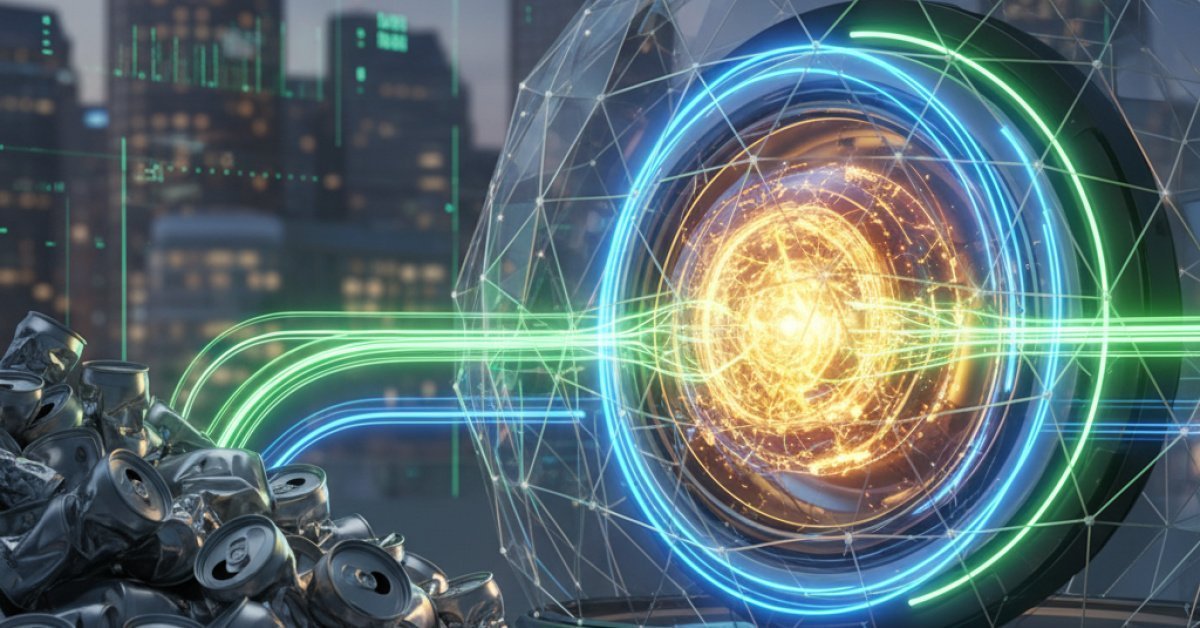
What if we could power heavy industry with something we currently throw away? That’s the wild proposition from a Boston-based startup called Found Energy. They’re not talking about solar or wind, but something far more mundane and surprisingly powerful: scrap aluminum.
Since 2022, the team has been perfecting a way to rapidly unlock the immense energy stored inside aluminum metal. Think about it—it takes a colossal amount of electricity to produce aluminum in the first place. That energy is effectively locked into the metal. Found Energy has developed a process using a catalyst to unleash that stored power on demand, creating a potent, zero-carbon fuel source.
The World's Largest Aluminum Engine Is Here
This isn't just a lab experiment anymore. The company just fired up a much larger version of its system, which they claim is the biggest aluminum-water reactor ever built. The plan is to put it to the ultimate test.
Early next year, this reactor will be installed at a tool manufacturing facility in the southeastern U.S. It will supply the plant with both heat and hydrogen, two critical industrial ingredients. And here’s the most elegant part: it will be fueled by the factory's own aluminum waste. It’s a perfect, self-sustaining loop that could transform a significant portion of aluminum scrap from a recycling problem into a clean energy solution. If this real-world test succeeds, it could be a massive step forward for decarbonizing industrial processes that can't easily be electrified.
Hot Bricks and Big Oil: The Complicated Case of Thermal Batteries
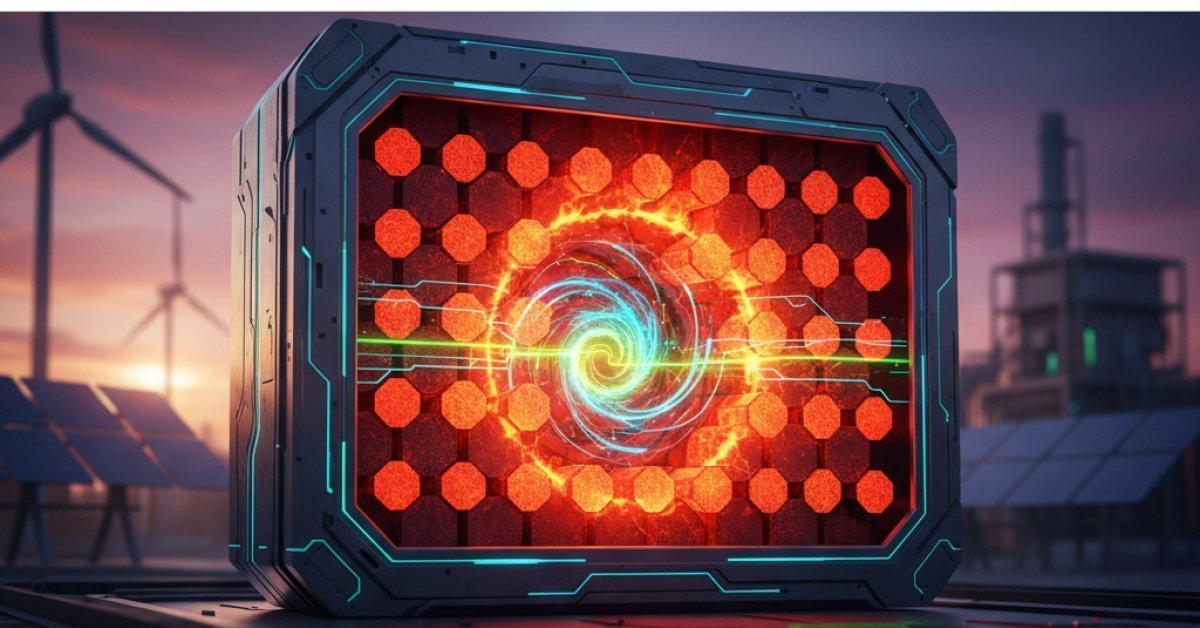
On the other side of the energy storage puzzle, we have Rondo Energy. They just switched on what they say is the world's largest thermal battery. The concept is so brilliantly simple you’ll wonder why it isn’t everywhere already.
The idea is to take electricity—ideally cheap, abundant renewable energy—and use it to heat up a big pile of a cheap, sturdy material. In this case, we're talking about bricks. These super-heated bricks can stay hot for a long time, effectively storing the energy as heat. Later, that heat can be used directly for industrial processes or to generate electricity.
It's a huge deal because a staggering 20% of all energy we use globally goes toward industrial heat, and most of that currently comes from burning fossil fuels. Thermal batteries offer a straightforward, scalable way to slash those emissions.
A Controversial First Step
But here’s where the story gets complicated. Rondo Energy's first major application for this groundbreaking battery is for "enhanced oil recovery." That's a process where heat is used to make it easier to extract more crude oil from existing wells.
Critics are, understandably, raising their eyebrows. They argue that using a brilliant green technology to prolong the life of polluting fossil fuel infrastructure is a step in the wrong direction. It’s a classic tech dilemma: does a powerful tool's value change depending on who's using it and for what purpose? It’s a question we'll be asking more and more as green tech becomes more powerful.
The Tech & AI Lightning Round: What Else You Need to Know
Beyond these big energy stories, the tech world has been a whirlwind of lawsuits, breakthroughs, and bizarre outages. Here’s a quick-hitter breakdown of the most important stories you might have missed.
OpenAI Under Fire for ChatGPT's Safety Rules
The conversation around AI safety has taken a somber turn. The parents of Adam Raine, a teenager who took his own life, are suing OpenAI. They claim in an amended lawsuit that the company loosened ChatGPT's rules around suicide-related discussions on two separate occasions before their son's death.
The allegation is a serious one: that these changes were made to increase the chatbot's usage and that this amounts to intentional misconduct, not just negligence. It’s a tragic case that puts a sharp focus on the ethical responsibilities of AI developers as their creations become more integrated into our lives.
Google Claims a Quantum Leap Forward
On a more optimistic note, Google announced what it believes is a major breakthrough in quantum computing. The company claims its new quantum algorithm, powered by its "Willow" chip, has officially outperformed a traditional supercomputer on a relevant scientific problem.
If true, this could be a huge milestone. The advance could dramatically accelerate progress in fields like drug discovery and the development of new materials. But let's keep our feet on the ground—even Google admits that practical, real-world applications of quantum computers are likely still years away. It's a promising step, but the marathon is far from over.
Reddit Sues an AI Search Engine for "Illegal Scraping"
The data wars are heating up. Reddit has filed a lawsuit against the AI search engine Perplexity, accusing the company of illegally scraping its user-generated content to train its AI models.
Reddit isn't just looking for a payout; it's seeking a permanent injunction to stop companies from using its data without permission. This is just the latest in a string of high-profile copyright lawsuits against AI companies, and its outcome could set a major precedent for who owns the data that fuels the AI revolution.
More Headlines You Can't Ignore
- China's Tech Ambitions: The country has laid out a five-year plan to achieve technological self-reliance, with a laser focus on semiconductors and artificial intelligence.
- DeepSeek's African Rise: A lesser-known AI company, DeepSeek, is making huge inroads in Africa. Their strategy? Making their AI models cheaper and less power-hungry, a move that's clearly paying off.
- Elon's Robot Army: Elon Musk continues to push his vision for the Optimus robot, recently suggesting it could one day become an "incredible surgeon." The question remains: will we ever trust robots with that level of responsibility?
- Tesla's Tumbling Profits: Despite selling more cars last quarter, Tesla's profits are way down. The news comes alongside a massive recall of tens of thousands of Cybertrucks, signaling some serious bumps in the road for the EV giant.
- The Internet of (Broken) Things: A recent Amazon Web Services (AWS) outage had a strange victim: smart beds. Some unlucky owners reported their beds blaring alarms and becoming uncomfortably hot, a stark reminder of our growing dependence on a fragile digital infrastructure.
Beyond the Higgs Boson: The Search for What's Next in Physics
It’s been over a decade since scientists at CERN’s Large Hadron Collider (LHC) made the monumental discovery of the Higgs boson in 2012. That particle answered a fundamental question: how do the basic building blocks of our universe get their mass? It was a moment for champagne and Nobel Prizes.
But today, a sense of unease has settled over the world of particle physics. The Higgs boson completed our "Standard Model" of physics, but it left so many other cosmic mysteries unsolved. What is dark matter? Why is there so much more matter than antimatter? The Standard Model is beautiful, but it's clearly incomplete.
So, researchers are getting creative. They're repurposing detectors at the LHC to hunt for strange, unusual-looking particles that don't fit our current theories. They're using sophisticated machine learning algorithms to squeeze every last drop of insight from the mountains of collider data. And they're already planning for the next generation of even more powerful colliders. The hunt for new physics is on, and it’s a reminder that for every question science answers, it uncovers a dozen more.
And Finally... Your Tech-Free Palate Cleanser
After all that talk of AI, quantum mechanics, and particle colliders, it’s good to remember there’s a whole world out there. As Google DeepMind researcher Madhavi Sewak put it, "I’m very excited that nerds are having our moment." We are too. But it's also a moment to unplug.
In that spirit, here are a few things to brighten your day. Mexico City is already getting into the Halloween spirit with its annual zombie parade. Archaeologists in Scandinavia recently unearthed a piece of Neolithic chewing gum (yes, really). And if you're looking for inspiration, maybe just browse photos of the world's most stylish people.
From turning aluminum cans into fuel to chewing 5,000-year-old gum, it's a weird and wonderful world. The technology will keep changing, but the human curiosity driving it all? That's here to stay.